Development and implementation of an animal-inclusive Community-Led Total Sanitation program for rural Mali
Abstract
Background
Community-Led Total Sanitation (CLTS) does not formally include animal feces management, despite its goal to prevent fecal matter from entering the environment. By integrating animal feces management into an existing community-level program to safely manage human feces, greater reductions in exposure to feces may be achieved, supporting improvements to both human and animal health.
Methods
We adapted the CLTS intervention to be animal-inclusive and piloted the resulting intervention in twenty-five villages; ten villages received an integrated human and animal feces CLTS program (A-CLTS), ten villages received standard CLTS followed by animal feces intervention components (CLTS+A), and five villages received only the standard CLTS program. Open-defecation free (ODF) status was assessed at the community level, using both human feces and animal feces indicators.
Results
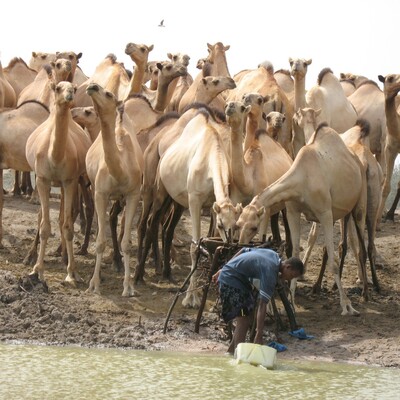
Our animal-inclusive CLTS intervention included development and promotion of animal confinement structures (with separate locations for sick animals); training on improved composting, manure application, hygienic milking, and hygienic birthing; and education on zoonotic diseases, animal disease management (vaccination and deworming), and the risks posed to children by close contact with animals and animal feces. Of the five villages that received standard CLTS only, only one met all ODF criteria when it was evaluated 1.5 years after CLTS triggering. The other villages were evaluated using animal-inclusive indicators for ODF and evaluated 5-6 months after triggering; four of ten CLTS+A villages and six of ten A-CLTS villages met all of the animal-inclusive ODF criteria.
Conclusion
An animal-inclusive version of CLTS that included triggering activities focused on increasing awareness of the risk of both uncontained animal and human feces in the environment, proposed interventions to improve human and animal health, established village sanitation committees, and included supportive follow-up visits the potential to support participating communities achieve ODF status for both human and animal feces.
Citation
Dione, M., Sow, A., Thomas, E.D., De La Cruz, N., Ouedraogo, H., Dearden, K. and Kwong, L.H. 2026. Development and implementation of an animal-inclusive Community-Led Total Sanitation program for rural Mali. One Health 22:101449.
Authors
Related Publications
Prevalence, quantification, and household-level risk factors associated with Salmonella spp. infection in chickens in Boussouma commune, Burkina Faso
Impact evaluation of a small ruminant flock health intervention on animal health, welfare, and farmer income in Ethiopia
Restoration of Livestock Services in Conflict and Drought-Affected Areas of Ethiopia (RESTORE): General and animal health baseline assessment report