Livestock, Climate, and Environment

Livestock, Climate, and Environment

Co-creating climate innovations for resilient and low-emissions livestock systems

Challenges

Farmers and livestock keepers across Africa and Asia face mounting climate change impacts. Changing weather patterns and climate shocks threaten the incomes, livelihoods, health, and nutrition of millions.

More frequent droughts and floods challenge farmers’ access to animal feed and water. Rising temperatures and heat stress increase animal mortality, decrease productivity, and result in changing disease patterns. Overgrazed and degraded landscapes have lost their capacity to support productive livestock herds, leading to competition and conflict over resources. Compounding climate change impacts also increase vulnerability, marginalization, and inequality in livestock-rearing communities. At the same time, livestock systems contribute to climate change by generating greenhouse gasses such as methane.

Countries with large livestock populations are committed to sustainably managing rangelands and farming landscapes as well as to decreasing their environmental and carbon footprints. This means finding low-emissions approaches to livestock production while boosting productivity to decrease net emissions per liter of milk or kilogram of meat produced. Innovations that both increase productivity and reduce emissions are essential to meet global goals on nutrition, livelihoods, and climate.

Goal

To collaborate with partners to build capacity, establish an enabling environment, and develop and deploy innovations that enable livestock-rearing communities to boost their productivity and resilience while lowering emissions, optimizing the co-benefits of climate adaptation and mitigation.

Objectives

  • To develop risk management approaches that build resilience for smallholder farmers and livestock keepers in marginalized farming and pastoral communities.
  • To build tools and approaches for restoring and sustainably managing rangelands and sustaining pastoral livelihoods.
  • To maximize co-benefits of climate adaptation and mitigation through circular, intensified, and diversified low-emissions crop–livestock systems.
  • To build and apply digital innovations in agriculture and livestock systems.
Anthony Whitbread

Anthony Whitbread

Program Leader, Livestock, Climate, Environment (LCE)

Abdrahmane Wane

Abdrahmane Wane

Regional Representative for West Africa

Todd Crane

Todd Crane

Principal Scientist, Climate change adaptation & Head of delegation UNFCCC

Fiona Flintan

Fiona Flintan

Rangelands & Pastoralism Scientist

Rupsha R Banerjee

Rupsha R Banerjee

Senior scientist- Institutions and Innovation

Ram Kiran Dhulipala

Ram Kiran Dhulipala

Senior Scientist - Digital Agriculture and Innovation

Claudia Arndt

Claudia Arndt

Senior Scientist - Team Leader of the Mazingira Centre

Ambica Paliwal

Ambica Paliwal

Senior Scientist- Remote Sensing

Dawit Solomon

Dawit Solomon

Regional Program Leader for Eastern and Southern Africa

Omonlola Nadine Worou

Omonlola Nadine Worou

Scientific coordinator

Kindu Mekonnen

Kindu Mekonnen

Senior Scientist, Crop-Livestock Systsems

Laura Cramer

Laura Cramer

Scientist - Policy Engagement for Climate Action

Related Publications

Progress_report_PAASS.pdf.jpg

Progress Report: Ethiopia’s Partnership for Accelerating Agricultural Solutions Scaling (PAASS)

  • Gebreyes, Million
synthesis4_derbyshire.pdf.jpg

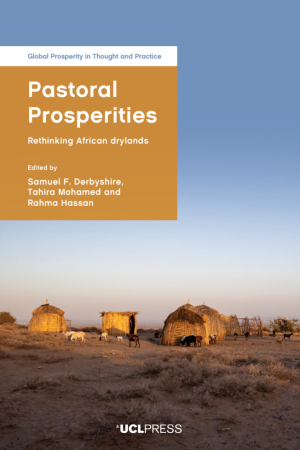
Anticipatory action for pastoralists: Charting new approaches in the drylands

  • Derbyshire, Samuel F.
Reproductive_Biology.jpg

Biochemical profile of fetal fluids in alpacas (Vicugna pacos) during pregnancy and immediate postpartum

  • Pacheco, J.I.
ScienceOfTheTotalEnvironment.jpg

Elevated organic carbon in African Dark Earths is not exclusively attributable to pyrogenic organic matter

  • Slocum, M.P.
AnnualReviewAnimalBiosciences.png

Transforming Livestock Systems with Better Feeds: A Triple Win for Food and Nutrition Security, Climate Resilience, and Women and Youth Empowerment in Low- and Lower-Middle-Income Countries

  • Ludgate, N.
busara_bookchapter_tahira_feb2026.pdf.jpg

Resilient livelihoods: Social protection and collective solidarity for climate change adaptation in East Africa's drylands

  • Mohamed, Tahira Shariff

You may also like

CapDev Participants learning about how the Eddy Covariance Tower works in measuring methane carbondioxide and vegetative cover profile at Kapiti

ILRI News

CapDev program builds skills to better position livestock development in African national priorities

Farmer Kebebush Admasu

ILRI News

In Ethiopia, bundled forage innovations are closing the livestock feed gap

Brachiaria grass in full bloom at Kapiti Ranch (photo credit: Sita Ghimire/ILRI).

ILRI News

Closing the silage quality gap: A demand-driven study with smallholder dairy farmers in Kenya

Group photo

ILRI News

Asia-Pacific countries gather in Hanoi to tackle the future of livestock as food demand, climate pressures and disease risks grow

IYRP pastoralists Meeting at Kobebe Karamoja 03

ILRI News

IYRP 2026: Young pastoralists lead the charge toward a prosperous future for rangelands

Eddy Covariance tower at Kapiti Research Station during the wet season

New science

Filling in the blanks for carbon and water cycling in East African drylands

Africa–Asia Bioscience Challenge Fund Meeting (photo credit: Frank Mwangi)

ILRI News

Africa–Asia Bioscience Challenge Fund: Building the next generation of bioscience leaders for climate-resilient livestock systems