International Livestock Research Institute

Secondary navigation

  • Search
  • Microsites

Main navigation

  • About
    • Overview
    • People
    • Supporters
  • Research
    • Impact areas
      • Climate adaptation and mitigation
      • Environmental health and biodiversity
      • Gender, equality, youth and social inclusion
      • Nutrition, health and food security
      • Poverty reduction, livelihoods and jobs
    • Research support
      • Research compliance
      • Communication and knowledge management
      • Intellectual property and legal unit
      • Data and research methods
    • Themes
      • Health
      • Livestock, Genetics, Nutrition, and Feed Resources
      • People, Policies, and Institutions
      • Livestock, Climate, and Environment
    • Projects
    • CGIAR research initiatives
    • BecA-ILRI Hub
    • Innovations scaling and impact
    • Capacity development
    • Facilities
      • Centre for tropical livestock genetics and health
      • ILRI Genebank
      • Kapiti research station
      • Mazingira centre
      • One health centre
      • Poultry facility
      • The CGIAR AMR hub
      • Tick unit
      • Bioscience facility
      • Genomics platform
      • ILRI-Hyderabad livestock research facilities
  • Where we work
    • Eastern and southern africa
      • Kenya
      • Ethiopia
      • Tanzania
      • Uganda
      • Zimbabwe
      • Burundi
    • West Africa
      • Burkina Faso
      • Mali
      • Nigeria
      • Senegal
    • South Asia
      • India
      • Nepal
    • East and Southeast Asia
      • Vietnam
    • Explore our work in the countries
  • News & Events
    • News
    • Events
    • ILRI in the media
  • Knowledge
    • Outputs
      • Publications
      • Journal articles
      • Presentations
      • Infographics
      • Browse archive
    • Data
      • Datasets
      • Apps
    • Multimedia
      • Videos
      • Podcasts
      • Stories
  • Join Us
    • Careers
    • Subscribe
International Livestock Research Institute
  • Overview
  • People
  • Supporters

CGIAR RESEARCH INITIATIVES

ILRI is actively engaged in several CGIAR initiatives and platforms.

  • Impact areas
    • Climate adaptation and mitigation
    • Environmental health and biodiversity
    • Gender, equality, youth and social inclusion
    • Nutrition, health and food security
    • Poverty reduction, livelihoods and jobs
  • Research support
    • Research compliance
    • Communication and knowledge management
    • Intellectual property and legal unit
    • Data and research methods
  • Themes
    • Health
    • Livestock, Genetics, Nutrition, and Feed Resources
    • People, Policies, and Institutions
    • Livestock, Climate, and Environment
  • Innovations scaling and impact
  • BecA-ILRI Hub
  • CGIAR research initiatives
  • Projects
  • Capacity development
  • Facilities
    • Centre for tropical livestock genetics and health
    • ILRI Genebank
    • Kapiti research station
    • Mazingira centre
    • One health centre
    • Poultry facility
    • The CGIAR AMR hub
    • Tick unit
    • Bioscience facility
    • Genomics platform
    • ILRI-Hyderabad livestock research facilities
International Land Coalition Rangelands Initiative

International Land Coalition Rangelands Initiative: Making rangelands secure

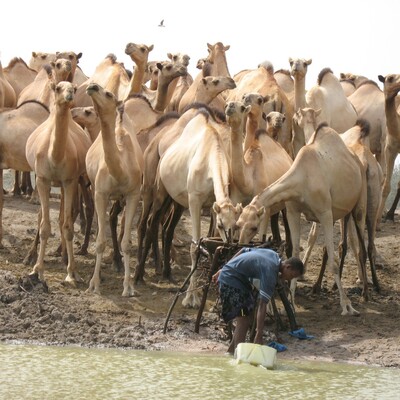
Camels drinking at a water pan in Wajir County, Kenya

ACTIVE Feb 2028

Emerging public health threats in Africa’s drylands

  • Eastern and southern africa
    • Kenya
    • Ethiopia
    • Tanzania
    • Uganda
    • Zimbabwe
    • Burundi
  • West Africa
    • Burkina Faso
    • Mali
    • Nigeria
    • Senegal
  • South Asia
    • India
    • Nepal
  • East and Southeast Asia
    • Vietnam
  • Explore our work in the countries
  • News
  • Events
  • ILRI in the media
SAAF_ActivityReport_AdoptingTechnologies.pdf.jpg
2025

Adopting technologies to enhance productivity, resilience and equity in ruminant livestock resources under pastoral systems of Africa

  • Ojango, Julie M.K.
two_pager_ strategy.pdf.jpg
2024

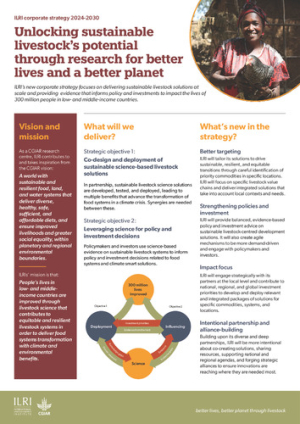
Unlocking sustainable livestock’s potential through research for better lives and a better planet: ILRI Corporate Strategy 2024–2030

  • International Livestock Research Institute
  • Outputs
    • Publications
    • Journal articles
    • Presentations
    • Infographics
    • Browse archive
  • Data
    • Datasets
    • Apps
  • Multimedia
    • Videos
    • Podcasts
    • Stories
  • Careers
  • Subscribe
International Livestock Research Institute

Main navigation

  • About
    • Overview
    • People
    • Supporters
  • Research
    • Impact areas
      • Climate adaptation and mitigation
      • Environmental health and biodiversity
      • Gender, equality, youth and social inclusion
      • Nutrition, health and food security
      • Poverty reduction, livelihoods and jobs
    • Research support
      • Research compliance
      • Communication and knowledge management
      • Intellectual property and legal unit
      • Data and research methods
    • Themes
      • Health
      • Livestock, Genetics, Nutrition, and Feed Resources
      • People, Policies, and Institutions
      • Livestock, Climate, and Environment
    • Projects
    • CGIAR research initiatives
    • BecA-ILRI Hub
    • Innovations scaling and impact
    • Capacity development
    • Facilities
      • Centre for tropical livestock genetics and health
      • ILRI Genebank
      • Kapiti research station
      • Mazingira centre
      • One health centre
      • Poultry facility
      • The CGIAR AMR hub
      • Tick unit
      • Bioscience facility
      • Genomics platform
      • ILRI-Hyderabad livestock research facilities
  • Where we work
    • Eastern and southern africa
      • Kenya
      • Ethiopia
      • Tanzania
      • Uganda
      • Zimbabwe
      • Burundi
    • West Africa
      • Burkina Faso
      • Mali
      • Nigeria
      • Senegal
    • South Asia
      • India
      • Nepal
    • East and Southeast Asia
      • Vietnam
    • Explore our work in the countries
  • News & Events
    • News
    • Events
    • ILRI in the media
  • Knowledge
    • Outputs
      • Publications
      • Journal articles
      • Presentations
      • Infographics
      • Browse archive
    • Data
      • Datasets
      • Apps
    • Multimedia
      • Videos
      • Podcasts
      • Stories
  • Join Us
    • Careers
    • Subscribe

Secondary navigation

  • Search
  • Microsites
  1. Home
  2. Knowledge
  3. Publications

Profils hydriques du sol sous cultures de mil ou de niebe

Working Paper
Published on January 1985
byCIPEA

Authors

  • Hulet, H.
  • forages
  • livestock
  • animal feeding
ILRI publication cover

Permalink

https://hdl.handle.net/10568/11011

Series/Report No.

CIPEA Mali-Document de Programme

Accessibility

Limited Access

Related Publications

Agrosys Geosci Env.jpg
2026

Effects of intercropping desho grass (Pennisetum glaucifolium) with vetch (Vicia villosa) on soil fertility, forage accumulation, and nutritional composition

  • Berhanu, M.
ILRI publication cover
2026

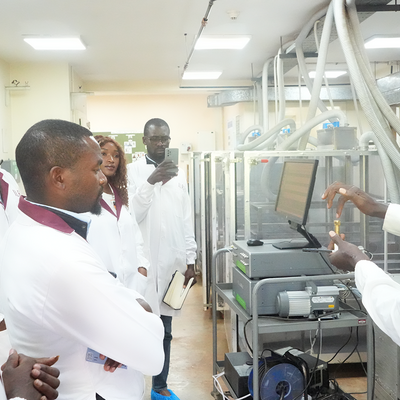
Inside the Mazingira Centre Lab: HABITAT Project Students Experience

  • Mwaura, S.
ILRI publication cover
2026

Hidden in Plain Sight: Pastoralist ‘pioneers’ redefining resilience

  • Abiy, Rahel
ILRI publication cover
2026

Bridging silage quality gap: A study with smallholder dairy farmers

  • Maiyo, Nathan
PLOS ONE.jpg
2026

Genetic diversity and population structure in Ethiopian Urochloa brizantha genotypes uncovered using inter simple sequence repeat (ISSR) markers

  • Meheret, F.
Dev Practice.jpg
2026

Integrating gender considerations in feed and forages research

  • Njuguna-Mungai, Esther
ILRI logo

ILRI Kenya

PO Box 30709
Nairobi 00100, Kenya
  • +254-20 422 3000
  • +254-20 422 3001
  • ILRI-Kenya@cgiar.org

ILRI Ethiopia

PO Box 5689
Addis Ababa, Ethiopia
  • +251-11 617 2000
  • +251-11 617 2001
  • ILRI-Ethiopia@cgiar.org

Get Involved

  • Subscribe to our Newsletter
  • Facebook
  • Twitter
  • Slideshare
  • Flickr
  • Youtube
  • Linkedin
  • Pinterest
  • Instagram

We would like to thank all funders who supported this research through their contributions to the CGIAR Trust Fund.

CGIAR logo
  • Copyright and permissions
  • © 2026 International Livestock Research Institute
  • Creative commons