SLICK Cattle Dairy Project Tick Count Data
Abstract
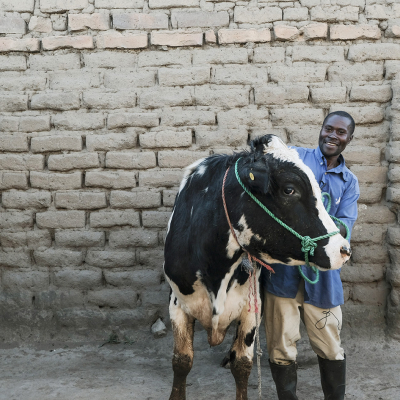
This dataset captures species-specific tick attachment on cattle heterozygous for the SLICK 1 mutation under natural tick exposure conditions at the ILRI Kapiti Research Station, Kenya, over a 7-week monitoring period during both the dry and wet seasons. Weekly tick counts were conducted from 13 September to 25 October 2024 (dry season) and 6 February to 20 March 2025 (wet season) to evaluate differences in tick burden associated with the slick hair phenotype. To minimize residual acaricide effects while permitting natural infestation, the last acaricide treatment was administered 7 days before the start of monitoring (day −7), with tick assessments conducted weekly from day 0 to day 42. Data were collected electronically using an Open Data Kit (ODK) tool by two trained field teams, which remained consistent across both study periods to ensure standardized data collection. A total of 38 cattle were monitored during the dry season and 64 cattle during the wet season. The longitudinal design enables assessment of species-specific, seasonal, and temporal patterns of tick attachment across host phenotypes, providing insights into the potential contribution of the cattle heterozygous for the SLICK 1 mutation to host resilience and its application within integrated tick management strategies under natural grazing conditions. This work was conducted as part of the CGIAR Sustainable Animal and Aquatic Foods (SAAF) Science Program. CGIAR research is supported by contributions to the CGIAR Trust Fund. CGIAR is a global research partnership for a food-secure future dedicated to transforming food, land, and water systems in a climate crisis. We also acknowledge support from International Livestock Research Institute (ILRI) Kapiti Plains Estate Ranch for animal management.
Citation
Marshall, K. and Malinga, S. 2026. SLICK Cattle Dairy Project Tick Count Data [Observation data]. Nairobi, Kenya: ILRI.