National Conference on Food Systems Transformation in Ethiopia
Themes of the conference From Food Systems Transformation Pathway to Impact: Aligning Evidence, Innovation, and Investment for Ethiopia’s Food Systems Transformation
Organizers
Program: Day 1, December 3, 2026
Integrated detailed program, Plenary architecture, Session objectives and Outputs
Day 1 establishes a common evidence base and develops priorities across four conference pillars.
08:30 - 09:00
Arrival and registration
Registration desk / foyer
09:00 - 09:35
Opening ceremony: Ethiopia’s food systems transformation moment
Main hall
09:35 - 10:25
Opening plenary: From pathway to impact: progress since 2021 and the way forward
Main hall
10:25 - 10:55
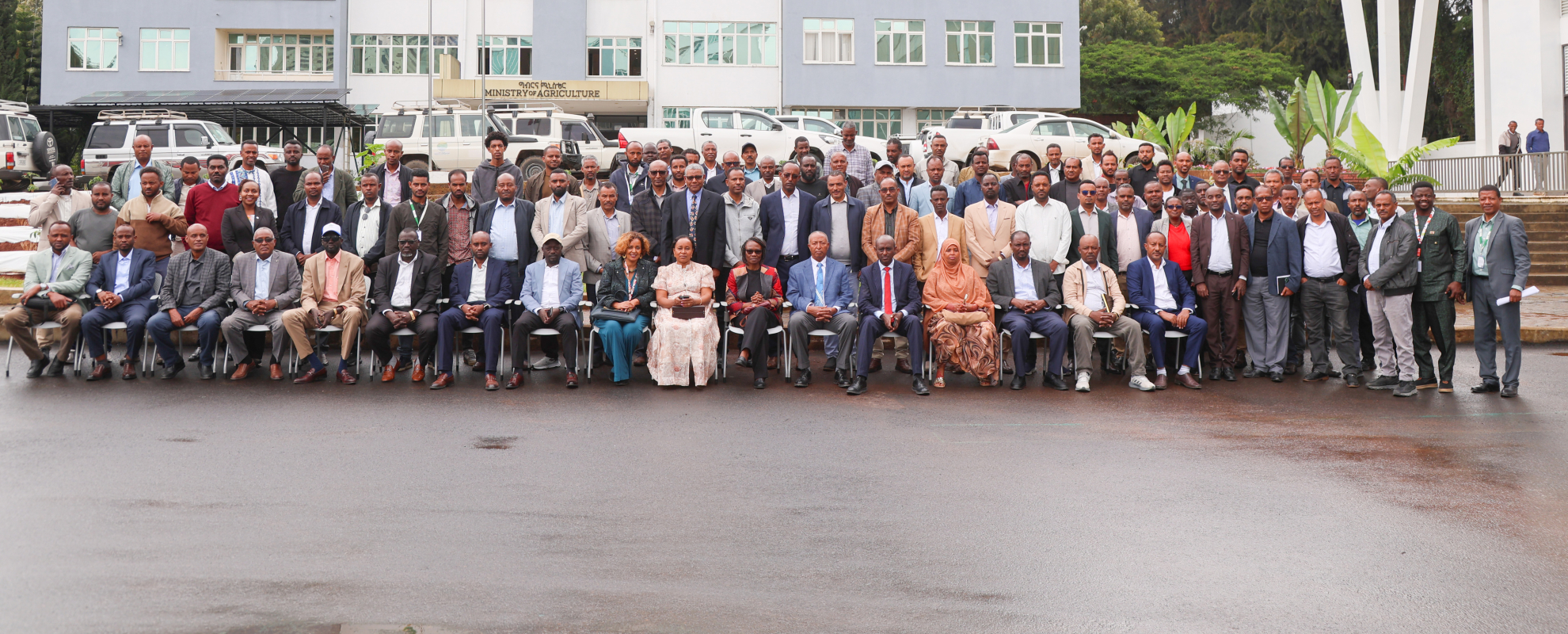
Coffee, group photo and exhibition spotlight I
Exhibition area
10:55 - 00:20
High-level policy dialogue: One national food systems agenda
Main hall
Theme: Unleashing National Development Potential through Coherence among Research, Policy and Development in Implementing Food Systems Transformation
12:20 - 12:25
Conference challenge statement and instructions for parallel sessions
Main hall
12:25 - 13:00
Guided exhibition
Exhibition area
13:00 - 14:00
Lunch
Dining / networking area
14:00 - 16:50
Parallel 1: Evidence From Evidence to Action: Measuring Progress and Closing Ethiopia’s Food Systems Knowledge Gaps
Parallel room 1
14:00 - 16:50
Parallel 2: Innovation Scaling Innovations for Productive, Nutritious, Safe and Climate-Resilient Food Systems
Parallel room 2
14:00 - 16:50
Parallel 3: Investment and Markets Financing Transformation: From Public Programs and Pilots to Competitive Value Chains, Decent Jobs and Trade
Parallel room 3
14:00 - 16:50
Parallel 4: Coherence and Systems Thinking Implications for Continental Agri-Food Systems Transformation
Parallel room 4
15:30 - 15:50
Coffee, live demonstrations and investor matchmaking
Main hall
16:55 - 17:30
Day 1 synthesis plenary: Messages, Commitments and Questions for Day 2
Main hall
17:30 - 18:30
Innovation marketplace and networking reception
Exhibition area
Program: Day 2, December 4, 2026
Integrated detailed program, Plenary architecture, Session objectives and Outputs
Day 2 converts those priorities into four integrated action-lab implementation packages covering all seven national clusters. Cross-cutting lenses are gender equality, youth employment and skills, climate resilience, regional equity, pastoral and lowland systems, private-sector participation, and measurable implementation results.
08:30 - 03:00
Arrival, coffee and exhibition evidence walk
Exhibition area
09:00 - 22:30
Plenary: Integrated Pathways to Food Systems Transformation and Nutrition
Main hall
10:30 - 11:00
Coffee and exhibition spotlight II
Exhibition area
11:00 - 15:00
Side Session 1: Nutrition, Food Safety and Healthy Diets | Clusters 1 + 2
Side-session room 1
11:00 - 15:00
Side Session 2: Productive, Sustainable and Technology-Enabled Agriculture | Clusters 3 + 4
Side-session room 2
11:00 - 15:00
Side Session 3: Markets, Infrastructure, Urbanization, Energy and Skills | Clusters 5 + 7
Side-session room 3
11:00 - 15:00
Side Session 4: Risk Management, Resilience and Social Protection | Cluster 6
Side-session room 4
12:30 - 13:30
Lunch, exhibition and structured partnership meetings
Exhibition area
15:00 - 15:30
Coffee and exhibition people’s choice showcase
Exhibition area
15:30 - 16:30
Plenary: Research, Innovation, Investment and Skills Demand Marketplace
Main hall
16:30 - 17:30
Communiqué, Commitments, Recognition and Closing
Main hall
Related news
Related publications on food systems


About the CGIAR Country Portfolio Coordination Pilot
This event is being held as part of a CGIAR Country Portfolio Coordination pilot, taking place from December 2026 - February 2027 and providing an opportunity for CGIAR to facilitate engagement with key country partners to move beyond information sharing towards strengthening portfolio coherence, contributing to demand intelligence, and understanding investment gaps aligned to country priorities.
The pilot will include engagements in Ethiopia, Nigeria, Kenya, India and Bangladesh and is being coordinated by the CGIAR Scaling for Impact and Policy Innovations Programs.