Reaching millions of farmers through climate information services
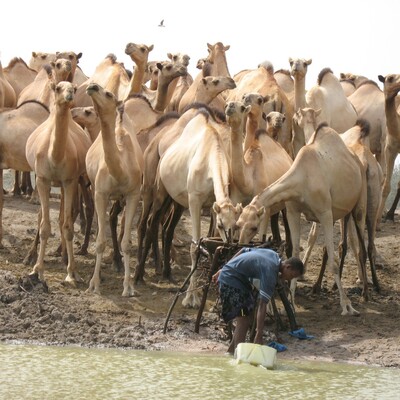
A pastoralist in northern Kenya receives a timely voice alert warning of delayed seasonal rains. A wheat farmer in central Ethiopia accesses localized fertilizer recommendations through a mobile advisory platform. In Senegal, cattle herders use digital climate forecasts to guide grazing movements and plan water-use.
Across Africa’s drought-prone farming and pastoral landscapes, digital climate information services are helping communities and decision-makers to better prepare for uncertainties.
Digital advisories, climate forecasts, and decision-support systems have now reached 1.5 million farmers and livestock keepers—almost a third of them women—in Ethiopia, Kenya, and Senegal. This achievement is a result of collaborations between the International Livestock Research Institute (ILRI), other CGIAR centers, the Accelerating Impacts of CGIAR Climate Research for Africa program (AICCRA), and national public and private sector entities.
On its own, raw climate science isn’t helpful—people on the ground need accessible, easy-to-use services, said ILRI’s Ram Kiran Dhulipala, Senior Scientist for Digital Agriculture and Innovation.
“If we can bridge the climate science with creating usable services for pastoral communities, it will go a long way toward making livestock systems less risky, and improving the lives of pastoral communities whose livelihoods heavily depend on livestock.’’
Why climate information matters now
Pastoral communities and smallholder farmers in Africa are facing tougher and tougher decisions.
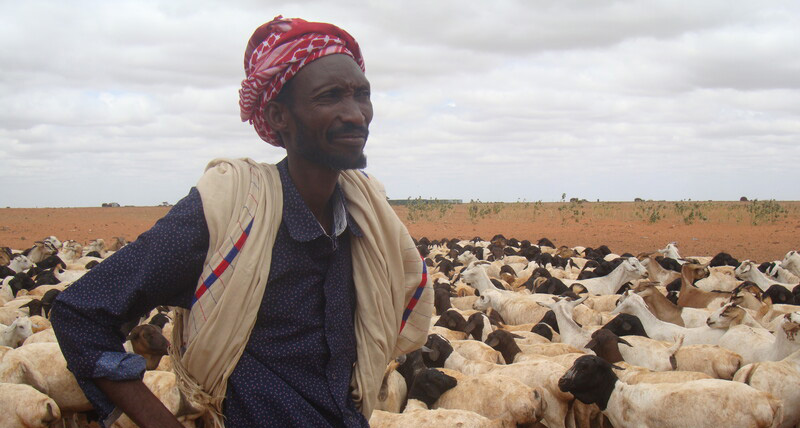
For nomadic pastoralists, the questions concern things like: which livestock breed is safest for the coming season? Which pasturelands are better to feed our cattle herds? Where are the key markets for our livestock? Settled farmers, on the other hand, ask themselves: when should we plant forage crops? Should we invest in fertilizer now or later? Should we try to find better-paying markets for our produce?
In the past, people based those decisions mostly on local information—advice from family or neighbors, traditional weather forecasts, and elders' instincts. As extreme events such as droughts, floods, and pest and disease outbreaks intensify across the continent, pastoralists and farmers need trustworthy, localized advice to complement Indigenous knowledge and address their practical, on-the-ground challenges.
ILRI research shows that climate services can significantly reduce production risks, with timely advisories enhancing productivity and resilience. Moreover, digital tools and innovations play a vital role in overcoming challenges related to distance, literacy, and the delivery of extension services.
Ethiopia: Building a national digital climate advisory ecosystem
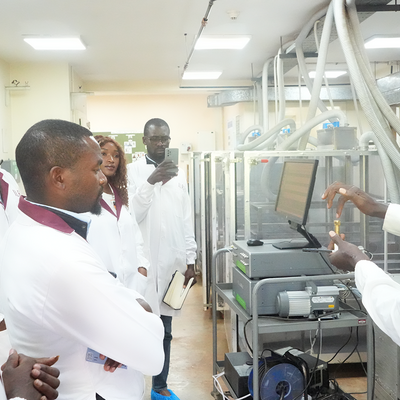
Through the AICCRA program, ILRI partnered with key national agricultural research systems, private sector actors, and CGIAR centers in Ethiopia to develop a digital advisory platform that combines weather forecasts, agronomic data, and tech-backed observations to support farm-level decision-making and increase profit.
At the core of this partnership is the Ethiopian Digital Agro-Climate Advisory Platform, which now produces seamless forecasts, models, and alerts for climate extremes. Through the agency of the Ethiopian Institute of Agricultural Research, the platform provides bi-weekly advisories on sowing, land preparation, fertilizer use, weeding, spraying, and harvesting for farmers.
At the same time, private-sector agri-tech company LERSHA has provided more than 370,000 farmers with agro-climate advisories via voice messages and toll-free call centers.
Kenya: Digital pastoral intelligence through KAZNET
In Kenya, ILRI helped to develop KAZNET, a digital crowdsourcing initiative and decision-support tool that allows pastoralists to share and access real-time information about grazing conditions, livestock health, water availability, market access, and climate risks. The name is derived from kazi kwa net, Kiswahili for “working within a network”.
KAZNET's success relies on over 130 citizen volunteers who input data and share information with communities via smartphones. It uses citizen science to gather data on market trends, grazing conditions, and food security from weekly-monitored sites. This information is then summarized in dashboards to aid decision-making for households and institutions.
ILRI researchers also helped officials set up a national AgData Hub, integrated into the existing Kenya Agricultural Advisory Platform, which reaches 700,000 farmers across Kenya. Kenya Meteorological Department’s Simon Gachuiri said it now includes climate change and drought analysis information as well as farm advice.
ILRI’s research has shown that climate services are more successful when communities actively contribute rather than just receive information. Now, insights from Kenya are shaping regional strategies for climate-smart livestock systems across East Africa.
Senegal: Expanding access through inclusive climate services
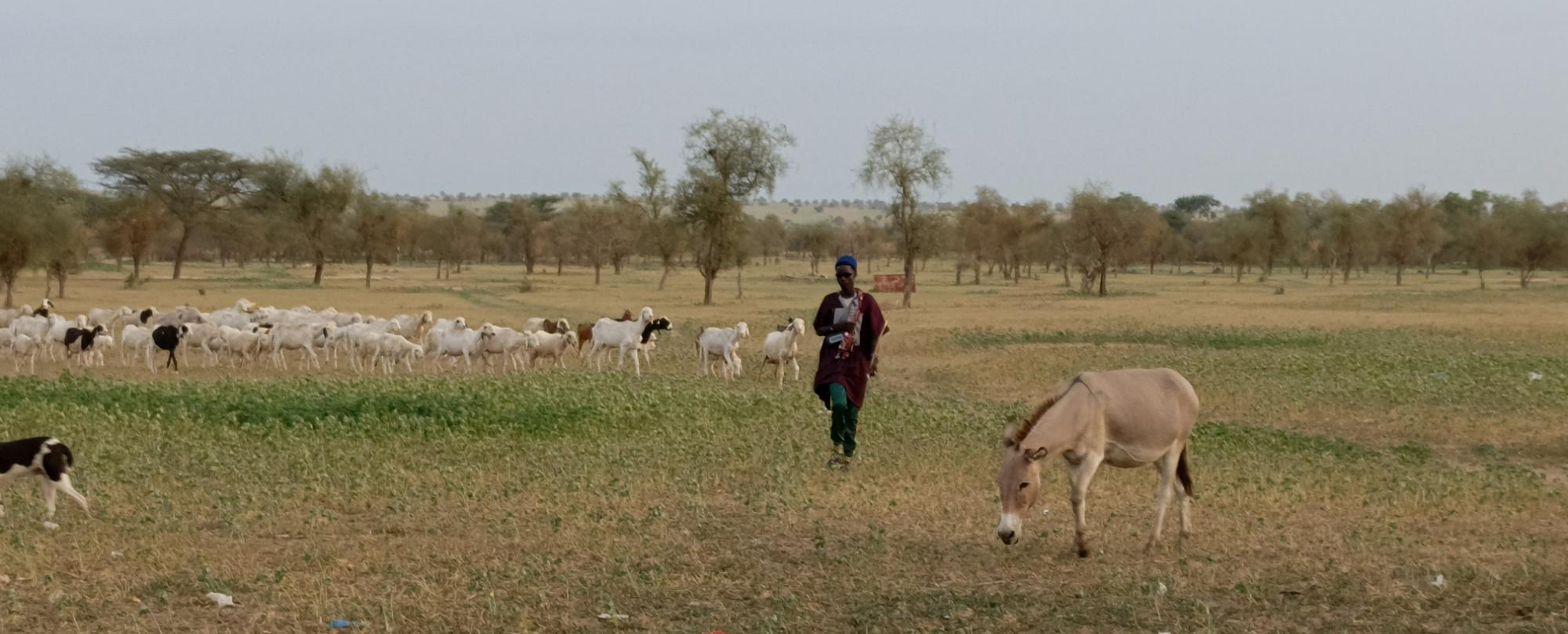
Senegal’s arid Ferlo zone is a challenging environment marred by climate variability, where farmers face prolonged droughts and infrequent rains. Research carried out by ILRI and CGIAR Initiative on Livestock and Climate found that livestock keepers there increasingly require timely, localized, and actionable climate-related information to better manage grazing, water resources, and animal health.
ILRI’s climate information service work in Senegal aims to expand decision-support tools to French-speaking communities. By weaving climate services into local extension programs, the aim is to ensure herders and farmers have access to the latest weather forecasts through SMS advisories and community outreach initiatives.
Launched in May 2023 jointly with AICCRA and the national meteorology agency L’Agence Nationale de l’Aviation Civile et de la Météorologie (ANACIM), Senegal’s own AgData Hub is also ushering in a new generation of agro-climatic services that are faster, more accurate, and locally owned and operated.
“For us farmers and herders, the AgData Hub is a vital input for our sector,” explained Bara Cissé, a meteorological expert at ANACIM. “It is an indispensable tool that allows us to adapt our practices and better anticipate periods of drought or excessive rainfall.”
Delivery, accessibility, and inclusion
Reaching the “last mile users”—the farmers and herders at the end of the information supply chain—has long been one of the challenges for delivering climate information services in Africa. Many rural areas still struggle with limited connectivity, weak support systems, and little access to digital tools. Additionally, climate advisories often come across as too technical, not localized enough, or disconnected from practical farm and livestock management decisions.
The challenge is worsened by literacy and language barriers, gender inequalities, and the seasonal movement of herding communities, whose information needs differ from those who farm in just one place. ILRI’s experience in Africa shows that effective climate information services rely not only on technology but also on trusted local networks, inclusive communication strategies, and strong partnerships that connect climate science to real-world decision-making at scale, said Dhulipala. “Otherwise you won’t reach everyone you need to.”
To improve inclusion and accessibility, it helps to choose communication channels that have the best chance of reaching a diverse audience, he said, whether that’s via radio programs, SMS and call alerts, or through extension agents.
Digital tools for resilient food systems
In the past, technical innovations haven’t always reached the people who need them most—the farmers and herders bearing the brunt of climate change and natural disasters. Now, ILRI has established itself as a reliable technical partner for national-scale climate information services, working to close the gap between information providers and information users.
ILRI’s research has demonstrated that bringing communities into decision-making and embedding local knowledge into technology and data systems can help make climate information services more accessible for all, enabling millions of people to make smarter decisions in an increasingly uncertain climate future.