Gender norms and women’s engagement in informal milk vending businesses
Abstract
Women are central to informal milk vending in Kenya, but restrictive gender norms continue to shape who undertakes different roles, how milk is sourced, who can comply with regulations, and who benefits economically. In the study counties, women were concentrated in retail vending while men dominated transportation and hawking. Domestic care responsibilities, gendered perceptions of appropriate work, and unequal access to productive assets and finance shape the growth of women’s businesses, women vendors’ empowerment and their compliance. Such gendered inequalities in access to finance, safe handling equipment, training, and household decision-making also constrain women vendors’ capacity to invest in safer milk handling and to meet dairy compliance requirements. MoreMilk2 certification scheme, training, and equipment/finance support should therefore be designed to address these gendered barriers so that improvements in milk safety and regulatory compliance and resultant benefits to business.
Citation
Achandi, E.l., Jumba, H., Gatei, R., Galiè A., Kibet, G. and Alonso, S. 2026. Gender norms and women’s engagement in informal milk vending businesses. Research Brief 140. Nairobi, Kenya: ILRI.
Authors
Related Publications
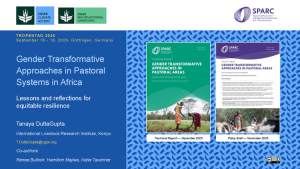
Gender transformative approaches in pastoral systems in Africa: Lessons and reflections for equitable resilience