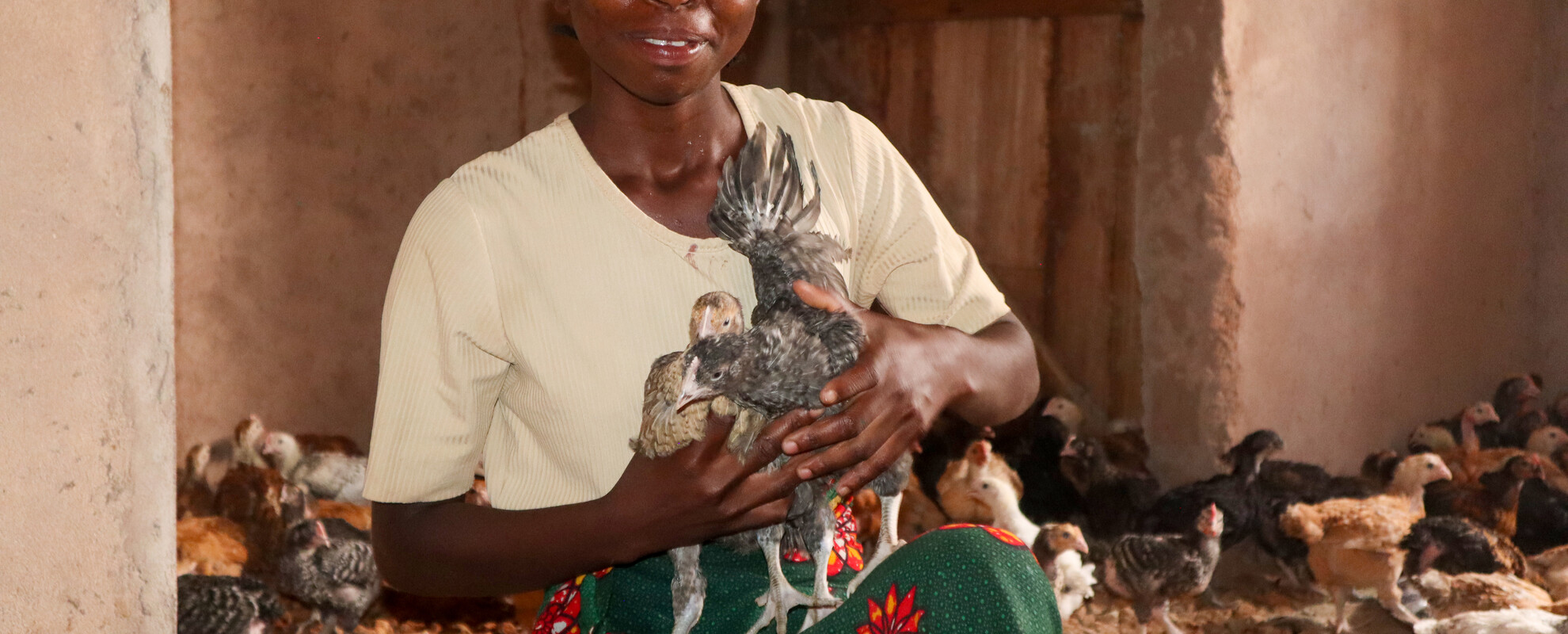
ILRI partnership with private sector turns young woman’s pastime into a thriving poultry agribusiness in Tanzania
In Tanzania, like in many African countries, many women keep poultry as a means of contributing to their households’ incomes and food security. This venture requires relatively low capital investment compared to rearing other livestock, but women farmers still face significant challenges, including high chick mortality rates, poultry disease outbreaks, and limited access to training, veterinary services and inputs.
To improve access to crucial poultry agribusiness resources in Tanzania and Zambia, the International Livestock Research Institute (ILRI) has partnered with Land O' Lakes Venture 37, the private sector and other stakeholders to establish the Accelerated Innovation Delivery Initiative – Livestock (AIDI-L). Focused on women and the youth, this initiative is helping to ensure sustainable access to improved dual-purpose chicken breeds, bundled advisory services, start-up and scale-up financing, vaccines and poultry farm technologies.
‘This project is part of ILRI's partnership with the private sector and other stakeholders in Tanzania to co-design sustainable science-based livestock business models that contribute to the resilience of food systems in Tanzania,’ explains Amos Omore, ILRI regional representative, eastern and southern Africa.
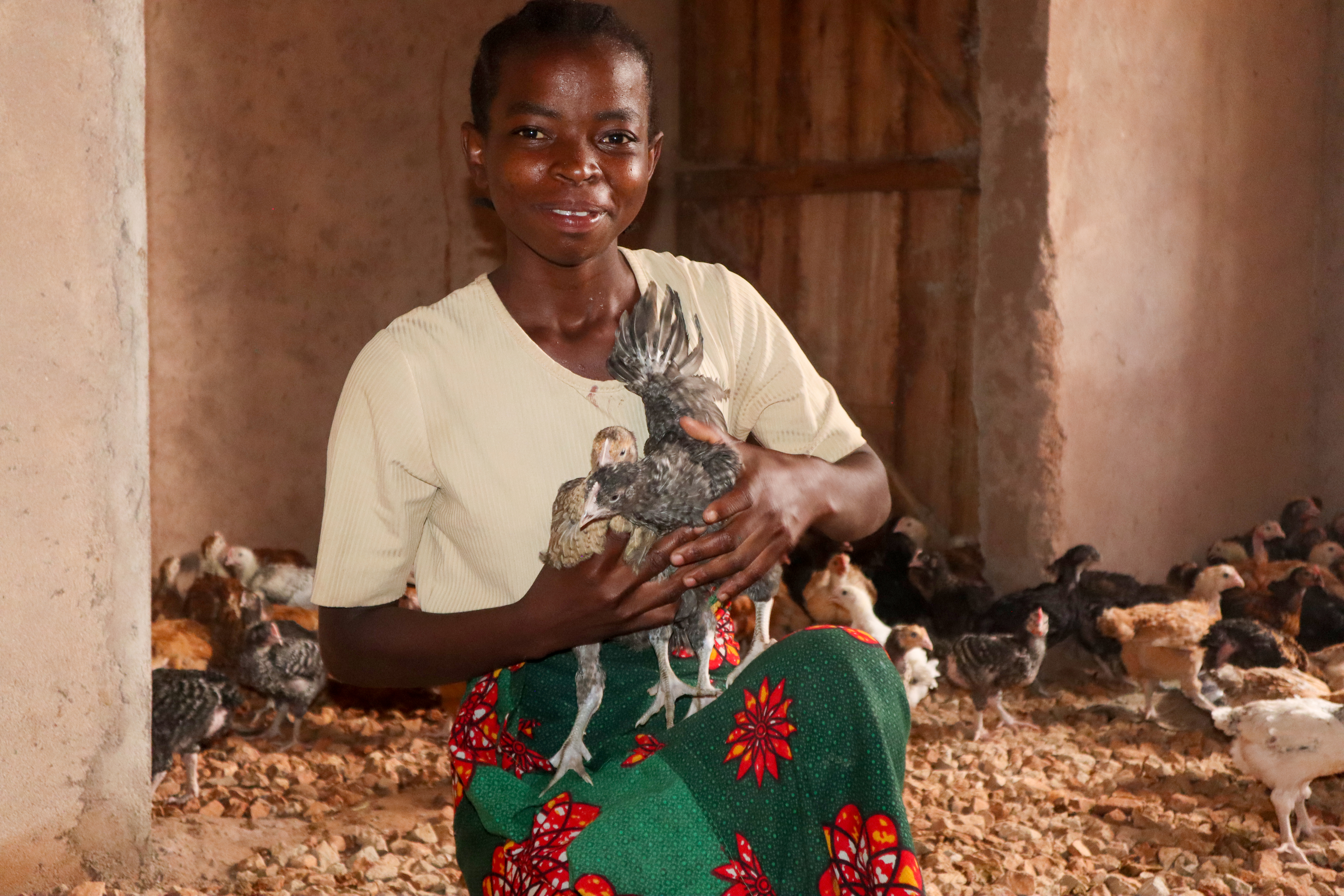
Since its inception in May 2024, the initiative has trained 80 chick brooders—42 men and 38 women, of whom 25 were youth under 35 years old—from four districts in Tanzania’s Dodoma Region. One of these is 20-year-old Grace Mteli, the youngest woman brooder in Iringa Mvumi Village, Chamwino District. Grace has turned what began as a hobby into a thriving business using the knowledge and skills acquired from the AIDI-L training program.
Even before she dropped out of secondary school in 2024, the young farmer would keep a few chickens to supplement her family’s diet and income. After a lack of fees ended her academic pursuits, Grace strived to expand her poultry business to fend for her mother, grandmother and three siblings, but with limited results.
‘I kept a small flock of fewer than 20 local chicks, which took about eight months to grow big enough for sale and earn me a little income,’ she recalls.
A remarkable opportunity
Things took a turn for the better when her community not only nominated her to represent their village in the AIDI-L training program, but also paid her fare to Iringa Region, where the lessons were being held. The five-day training included practical sessions on brooding of dual purpose ‘Sasso’ chickens, as well as biosecurity practices to prevent the introduction and spread of diseases in a poultry flock such as maintaining strict hygiene practices, controlled access to the coop, and proper pest control and waste management.
‘This opportunity has enlightened me on how to properly run a poultry business and renewed my hope. It has also made me famous in our village; they call me “Mama Kuku Mdogo” (young chicken keeper)’, Grace says.
She is now the proud owner of one of about 80 women- and youth-focused brooder units partnering with AIDI-L and around 200 vendors/agents to reach 18,000 farmers in Tanzania with improved dual-purpose chicken breeds. After completing her training, Grace received 510 chicks and 12 bags of chick feed as start-up support from AIDI-L. By the time they were four weeks old and ready for sale, she had 481 chicks worth 2.4 million Tanzanian shillings (USD 900).
Great plans
Her success with her first flock of brooded chicks has reignited Grace’s passion and she has become a proponent of poultry farming among the young people in her locality:
‘I encourage the youth to raise these dual-purpose chickens because they provide high-quality eggs and meat. They are a sustainable source of food and contribute to better health and well-being for the whole family.’
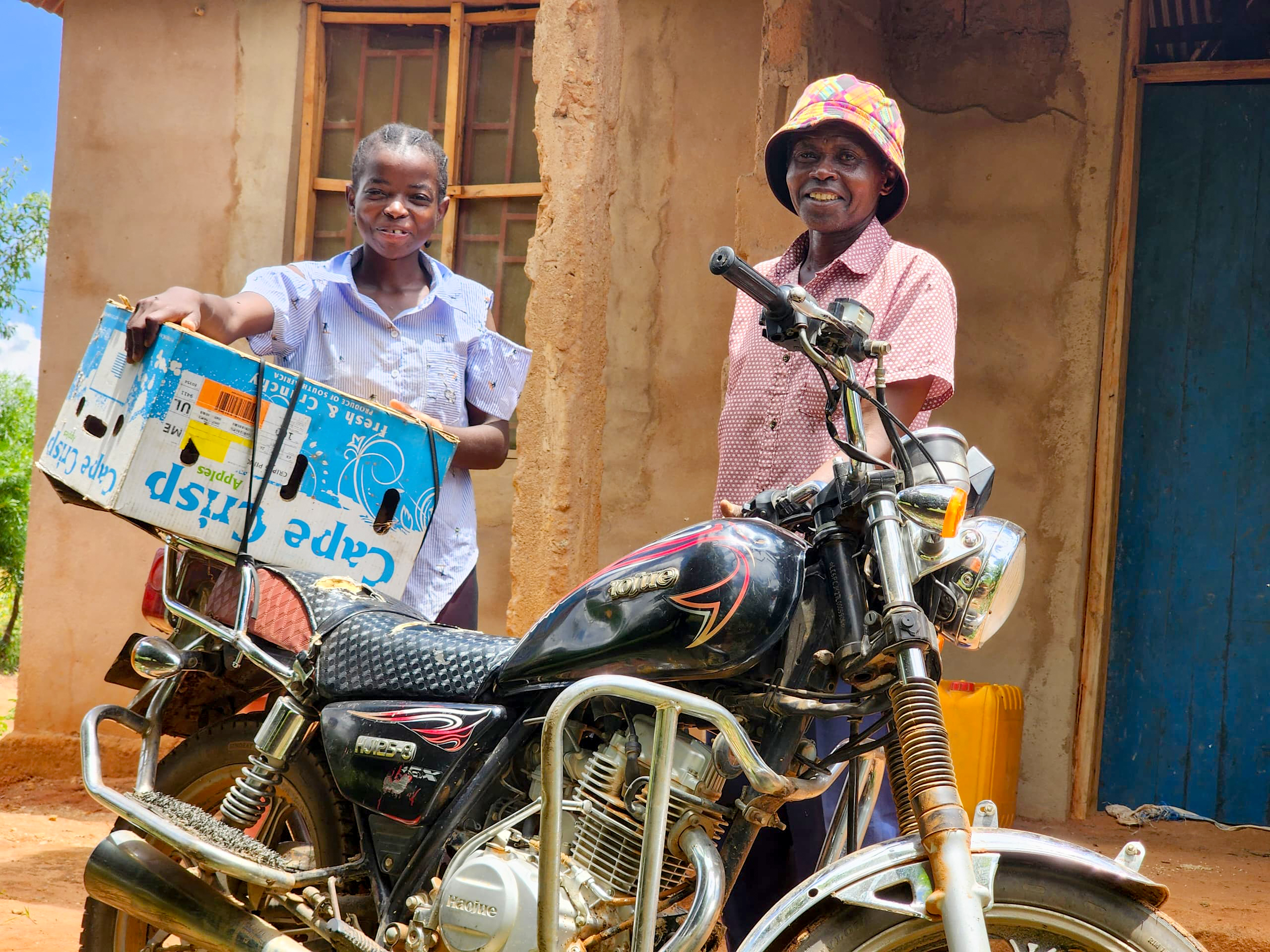
Grace plans to expand her business by using the profit from the sale of her first flock to construct a bigger chicken house on a piece of land she has been given by her parents. She also looks forward to training other young people, especially young women, so that they can start their own poultry businesses.
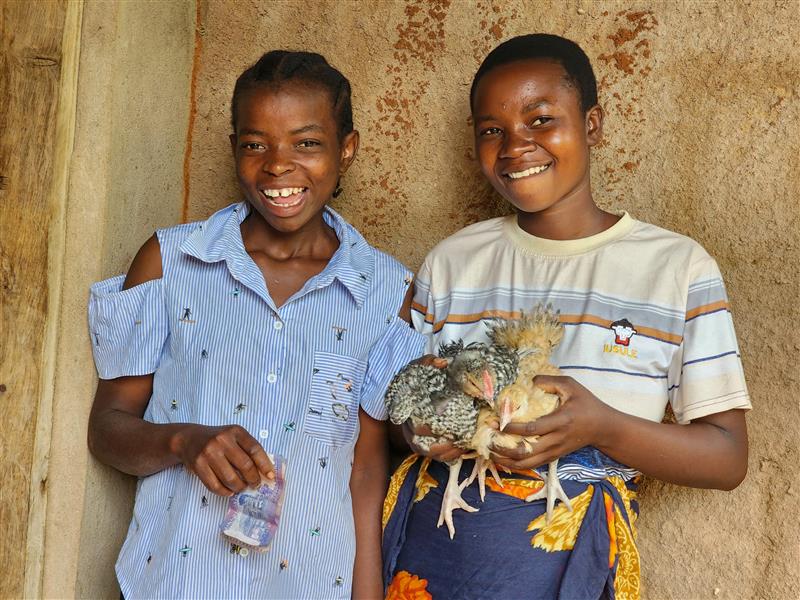
The young farmer expects her agribusiness to be further strengthened by her enrollment into a digital platform (One Network Ecosystem by Kuza Biashara) that will work with AIDI-L to enhance agribusiness through delivery of bundled inputs and services to farmers. From 27 April to 8 May 2025, Grace was one of more than 130 agripreneurs on-boarded onto an eight-week digital incubation program through this platform. After completion of their training, through the KUZA One network, they will be linked with inputs suppliers such as agrovets around them, day-old chick suppliers and feeds and vaccines suppliers.
Acknowledgments
We would also like to thank International Maize and Wheat Improvement Center (CIMMYT), Land O'Lakes Venture37, Silverlands Tanzania, President’s Office - Region Administrative and Local Government ministry (PO-RALG), Ministry of Livestock and Fisheries (MLF), Kondoa District Council, Chamwino District Council, Mpwapwa District Council and Kongwa District Council for partnership and collaboration to ensure smooth implementation of this project.