
ILRI Forage Genebank
Database management system
A comprehensive data management and information system supports effective management of the germplasm collection. The data maintained include passport data, germplasm inventory, viability, health status, and characterization datasets. These records are systematically curated, updated, and linked to global platforms such as Genesys PGR, the FAO Global Information System, and the Multilateral System of Access and Benefit-sharing of the International Treaty on Plant Genetic Resources for Food and Agriculture. To enhance accuracy, tracking, and long-term traceability, each accession is assigned a digital object identifier (DOI).
The system is further enhanced by integration of barcoding in the laboratory and field, cloud-based mobile data collection via Kobo-Collect, and extensive imaging resources mapped to Genesys.
Information management standard operating procedures provide a clear framework that ensures consistency, accuracy, and efficiency in data management.
Research activities
Poor-quality feed and fluctuating supply, mainly associated with seasonal feed shortages, hamper livestock productivity in many tropical countries. Understanding and managing forage diversity is essential for the development of new forage genetic resources to alleviate these constraints and to maintain diversity in forage/pasture ecosystems.
At the genebank, research focuses on the agronomic performance of forage resources and their potential use as livestock feed. This involves assessing variation in phenotypic and nutritional traits, climate adaption and resistance to pests and diseases. Information generated from this research is used to identify superior accessions or “best bets” for further agronomic evaluation and utilization as part of sustainable farming systems.
Beyond their uses as feeds for livestock, forages play a key role in nature. They have been shown to improve soil fertility through nitrogen fixation/leaf drop; reduce erosion through increased ground cover, especially on slopes; help control insect pests; and provide environmental services (such as enhanced biodiversity, carbon sequestration and water productivity) leading to improved system resilience. They are also an important land use strategy for marginal lands and steep slopes that are not suitable for crop production.
Subset and core collection development
In collaboration with other projects, the genebank has characterized and evaluated a number of forage species. The generated data and information were used to develop subsets and best-bets of tropical and sub-tropical forage species, including accessions for drylands; accessions for highlands; a lablab core collection; promising disease resistant/tolerant Napier grass accessions ; and promising drought-resistant Rhodes grass accessions. These collections provide a valuable resource for further research, breeding programs, and the development of resilient forage production systems tailored to specific environmental conditions.
Distribution
Each year, the ILRI genebank distributes seeds, cuttings and root splits to requestors who agree to the terms of the ITPGRFA standard material transfer agreement for evaluation and further development and use by smallholder farmers. So far, hundreds of thousands of samples have reached users in more than 115 countries.
Researchers, farmers, research institutions, universities, and other interested parties can access germplasm information and request seeds online through the genebank’s website, Genesys and/or GRIN-GLOBAL .
Research Facilities
The genebank has advanced research facilities and laboratories to support forage research on seed processing, germination, taxonomy, disease diagnostics, molecular characterisation and evaluatio:
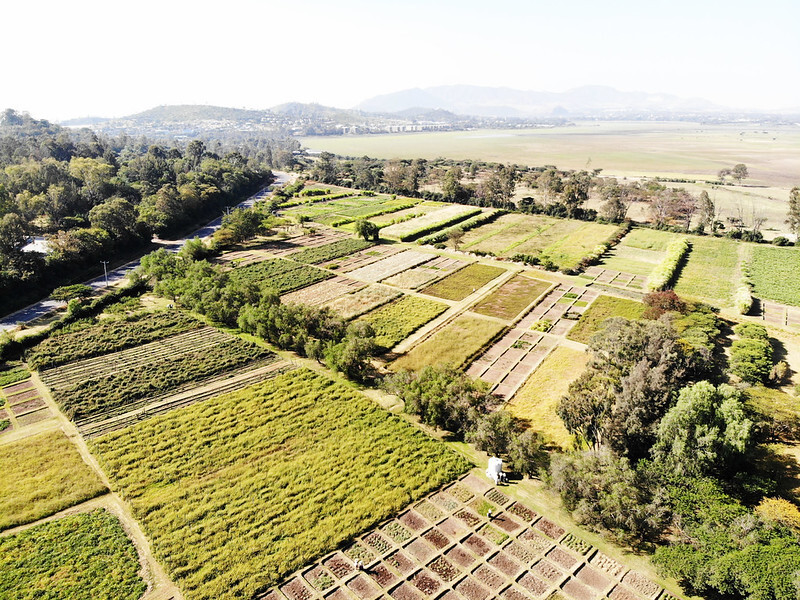
- Field sites in Shola, Bishoftu, Zwai and Soddo are used not only for regeneration of seeds, but also for the conservation of live plants, especially species that do not produce seeds or produce short-lived seeds. The sites are used to screen collections to identify promising lines for further evaluation.
- Seed processing and conservation facilities ensure that samples are prepared and stored under optimal conditions.
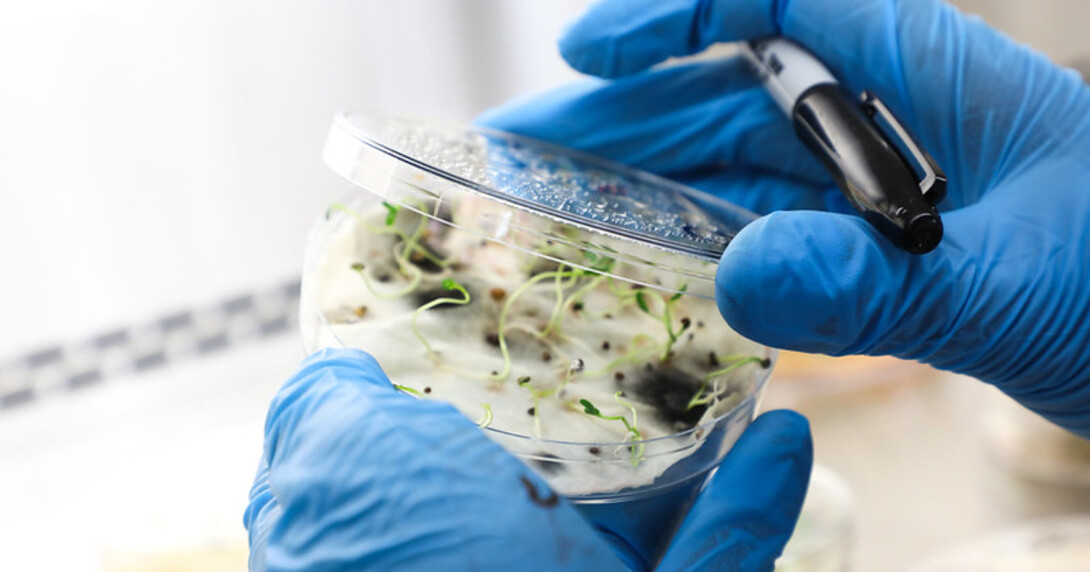
- A dedicated germination laboratory, equipped with various incubators and facilities for seed pretreatment, conducts germination tests to assess the viability and longevity of seeds.
- Herbarium and taxonomic resources are used to study and classify plant species, contributing to the accurate identification and documentation of genetic resources.
- Laboratories and greenhouses in the germplasm health unit support the diagnosis and identification of plant diseases and seedborne pathogens. This ensures that the genebank produces, conserves and distributes pathogen-free seeds.
- A molecular laboratory for the genetic characterization and evaluation of plant materials supports advanced research in plant breeding and conservation.
- The genebank also collaborates with the ILRI nutrition lab to generate and understand the feed quality of the forage species, aiding in the selection and improvement of forage varieties with better feed quality.
These facilities are also accessible to other projects and partners on a cost recovery basis, ensuring that a wider scientific community can benefit from the genebank’s resources while maintaining operational sustainability.
Capacity building
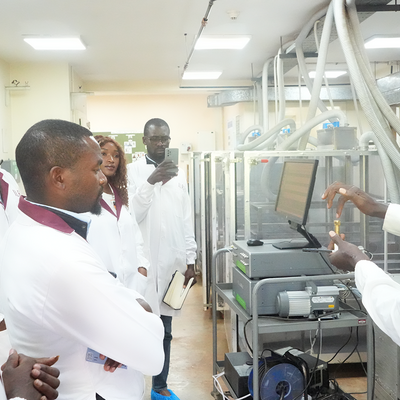
The genebank is committed to strengthening the capacity of national partners, visiting scientists, and students through comprehensive training programs and development of traning manuals. These programs cover key areas such as genebank and germplasm management, seed production, seed quality testing, germination, seed health testing, molecular techniques, data management and analysis.