ILRI’s mission is to improve food and nutritional security and to reduce poverty in developing countries through research for efficient, safe, and sustainable use of livestock — ensuring better lives through livestock. The institute’s research for development agenda addresses the complex mix of challenges and opportunities faced by small- and medium-scale livestock operators who are currently providing most of the meat, milk, eggs as well as staple cereals across the diverse mixed and pastoral husbandry systems of Africa and Asia. Such enterprises present multiple and synergistic opportunities to meet the rising demand for milk, meat and eggs; while simultaneously improving incomes, livelihoods and nutrition for poor households, strengthening adaptive capacity and resilience (especially to climate change) and alleviating the threats posted by livestock farming to human and environmental health.
The livestock challenge in Nigeria
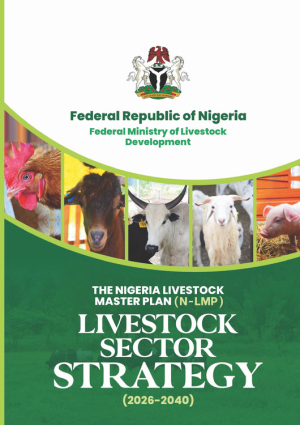
Nigeria’s livestock sector plays a vital role in the economy, contributing about 17% of the agricultural GDP and 5% to the national GDP. However, it faces challenges that impact productivity, sustainability, and food security. Inadequate feed resources contribute to farmer-herder conflicts, while low local breed productivity and diseases hamper growth. Lack of data and inefficiencies are further hurdles. Downstream, insufficient support and extension services limit the adoption of modern techniques by livestock farmers. Coordination within livestock value chains is lacking. Addressing these issues requires better resource utilization, funding access, marketing and favorable policies. Research for alternative feed resources and indigenous breed improvement is crucial to boost productivity amid growing demand for livestock products.
The International Livestock Research Institute (ILRI) has the capacity to play a significant role in supporting Nigeria’s livestock sector through research, technical assistance and evidence-based policy frameworks. By closing production gaps and fostering sustainable growth, ILRI and its partners are helping to build resilience in Nigeria’s livestock sector and unlock its potential for a prosperous future.
‘As an experienced poultry farmer who has tested and adopted the use of HQCP, I am encouraging ILRI to push and get more people to be trained and certified on the processing. I am ready to be an ambassador and tell all poultry farmers that HQCP is a good alternative to Maize and can help reduce the price of poultry products.’
Engineer John Olateru
Poultry farmer