Research Compliance
The International Livestock Research Institute (ILRI) is committed to promotion of the highest standards for research by ensuring both ethical and legal obligations are met. The Research Compliance (RC) unit facilitates ILRI's research compliance programs by providing oversight and coordination of research compliance related activities including research ethics (animal and human) related approvals, biosafety and biosecurity related approvals, research licenses and permissions for moving research materials including research animals.
It is expected that all persons involved in research clearly understand and meet their obligations in relation to research compliance when engaged in research activities. ILRI has established specific research compliance committees that review and approve all ILRI research related activities. The committees cover areas that include human ethics, animal ethics and welfare, and biosafety and biosecurity. These committees are Institutional Animal Care and Use Committee (IACUC) for animal related ethics and welfare, Institutional Biosafety Committee (IBC) for biosafety and biosecurity, and Institutional Research Ethics Committee (IREC) for human related ethics.
Institutional Animal Care and Use Committee
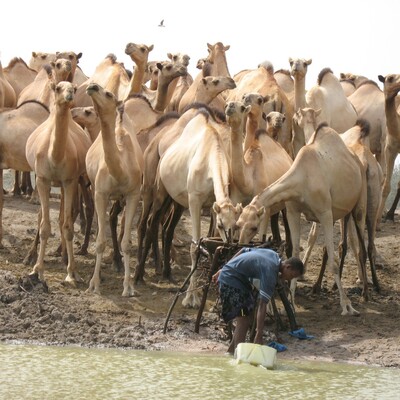
ILRI has established The Institutional Animal Care and Use Committee (IACUC) to review and approve all activities that involve use of animals. The use of animals is defined as any activity involving vertebrate animals in which the natural lifestyle or movements of the animals is materially altered. Use of animal carcasses, tissues, and fluids obtained specifically for research or testing purposes are subject to review according to applicable regulations and may be determined to be 'use of animals'.
ILRI IACUC’s mandate includes review of all research projects to be conducted at ILRI or any other premises or field sites for which ILRI is responsible, and also to review any research projects which are led by ILRI scientists or have involvement of ILRI scientists as part of their duties as an ILRI employee. This is irrespective of the funding agency or the place of research and irrespective of the scope or nature of the research. Where the research proposal is being led by another institute then ILRI approval will not be granted unless the proposal has been approved by the relevant committee of the lead organization. The IACUC’s responsibility also involves carrying out post approval monitoring of research projects or activities and undertaking periodic review of its own policies, procedures and performance.
Refer to the ILRI animal care and use operational guidelines (cgiar.org) for more information regarding how ILRI IACUC operates. You can also write to ILRI IACUC for further information required and or report any concerns regarding the use of animals in research to ILRIResearchCompliance@cgiar.org
ILRI IACUC released the second edition of the ILRI animal care and use manual (cgiar.org). As with the previous edition, it serves as a resource and guide to all personnel working with animals and presents standard operating procedures (SOPs) that are currently in use at ILRI. They are significant in number and have been broken down into the 12+ species worked with at different ILRI locations.
ILRI IACUC Application Process
To submit a new application, requests for minor amendments and renewals to ILRI IACUC, go to ILRI Research Compliance portal. Follow guidance provided in the IACUC Applicant Training Manual. For queries you may have, reach out to the research compliance team vide ILRIResearchCompliance@cgiar.org
To submit project close report, download, complete and submit the IACUC PI Report Back Form (cgiar.org) to ILRIResearchCompliance@cgiar.org
Animal Welfare Body (AWB)
The Animal Welfare Body (AWB) has been created to support the continuous improvement of animal welfare at International Livestock Research Institute (ILRI). It collaborates with, and works independently of, IACUC and the institutional veterinarian. The AWB aims to provide active support to research projects in relation to the ‘Four R Principles’ (Replacement, Reduction, Refinement and Responsibility), and to establish an exceptional culture of good animal welfare at ILRI.
What AWB does
- Provides support and advice on the 4Rs
- Develops plans and actions for animal welfare improvement
- Works in collaboration with animal care staff, researchers and IACUC (Institutional Animal Care & Use Committee)
What AWB does not do
- Approves animal research – we are not a replacement for IACUC
- Provide veterinary or animal technical support – we are not replacing the roles of the institutional vet team, or animal facilities team
- Police and punish – we provide support, monitoring and advice for issues raised
Key activities of AWB include:
- Proactive planning to improve welfare of ILRI’s animals. For example, assessing and refining the environmental enrichment provided to research and stock/colony animals
- Incident investigation and support: responding to incidents raised, whether it is related to animal welfare, monitoring of specific study procedures or assistance in refinement technique
- Available advisory capacity: for example, to assist study personnel in replacement, reduction, and refinement techniques
- Education and awareness raising: when 4R principles are applied, AWB will assist in communicating the purpose and value of these changes to relevant staff
How to contact AWB
- Email us at ‘ILRI Animal Welfare Body’ ILRI-AnimalWelfareBody@cgiar.org
- Submit an issue anonymously Animal Welfare Body Anonymous Feedback
Institutional Biosafety Committee
The Institutional Biosafety Committee (IBC) is responsible for approval of all ILRI research (by ILRI principal investigators or research staff or a system component with a signed Memorandum of Understanding with ILRI) that involves the use of biological agents.
Projects using non-pathogenic biological agents or those categorized as Biosafety Level 1 only need to notify the committee. The biosafety program team reviews applications and gives feedback to applicants within five working days and notifies the committee.
Research that involves any of the agents listed below must be approved by the committee before the work starts:
- Pathogens and potential pathogens of humans, animals, or plants
- Materials potentially containing human pathogens (including human blood, tissue and cell lines; non-human primate blood, tissue and cell lines)
- Recombinant DNA (and RNA), including creation or use of transgenic plants and animals
- Any material requiring an import or export license or a permit
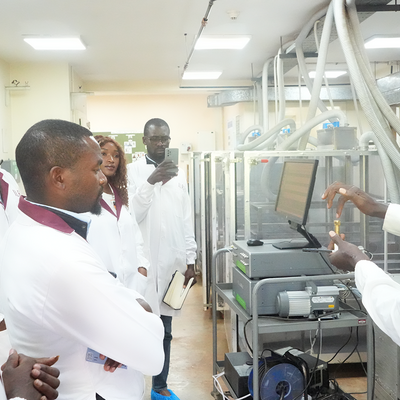
The committee is responsible for reviewing and approving biological research projects and oversees ILRI's biosafety program. The committee coordinates application procedures for biological research to ensure that research personnel have adequate occupational health monitoring and training in safe work practices, including how to handle emergencies and use of personal protective equipment.
As well as considering new proposed activities, the committee also reviews ongoing research for changes which would necessitate use of different procedures. The committee ensures that laboratory activities are planned and executed so that every reasonable precaution is taken to protect the health and safety of employees, visiting scientists, students and the public and to prevent damage to property and the environment. The committee carries out these functions in accordance with national and international laws.
ILRI IBC Application Process
To submit a new application, requests for minor amendments and renewals to ILRI IBC, go to ILRI Research Compliance portal. Follow guidance provided in the IBC Applicant Training Manual. For queries you may have, reach out to the research compliance team vide ILRIResearchCompliance@cgiar.org
Institutional research ethics committee
ILRI has established Institutional Research Ethics Committee (IREC) to review and consider for approval all ILRI research proposals with a view to safeguard the dignity, rights, safety and well-being of all actual and potential research participants and the wider community. The ILRI IREC ensures that the cardinal principles of research ethics (autonomy, beneficence, non-maleficence and justice) are followed in planning, conduct and reporting of ILRI research.
The mandate of the ILRI IREC is to review all research projects to be conducted at ILRI or any other premises or field sites for which ILRI is responsible, and also to review any research projects which are led by ILRI scientists or have involvement of ILRI scientists as part of their duties as an ILRI employee. This is irrespective of the funding agency or the place of research and irrespective of the scope or nature of the research. Where the research proposal is being led by another institute then ILRI approval will not be granted unless the proposal has been approved by the research ethics committee of the lead organization.
Refer to the ILRI IREC Operational Guidelines (cgiar.org) for more information regarding how ILRI IREC operates. You can also write to ILRI IREC for more information you may require and or report any concerns to ILRIResearchCompliance@cgiar.org
ILRI IREC Application Process
To submit a new application, requests for minor amendments and renewals to ILRI IREC, go to ILRI Research Compliance portal. Follow guidance provided in the IREC Applicant Training Manual. For queries you may have, reach out to the research compliance team vide ILRIResearchCompliance@cgiar.org
Permits and Licenses
After approval(s) from the ILRI RC committee(s), your research project may need an overall approval in the country of implementation prior to commencement. This approval is usually given by a government authority mandated to do so in that country, usually in the ministry of science and technology. Note that some countries may require an additional research ethics approval from a locally registered research ethics committee in that country. For guidance and support in this process, please write to ILRIResearchCompliance@cgiar.org
In some countries, you may also be required to get approval or notify relevant government lead agency(ies) before commencing research. Also, if accessing genetic material, permission to access and utilise and/or transfer must be obtained from relevant government agency(ies) in that country. For guidance, please write to ILRIResearchCompliance@cgiar.org.
If moving research materials, in-country and/or inter-countries, permits and licenses may be required. Download, complete and submit Movement (shipping) of research materials form (cgiar.org) and send to ILRIResearchCompliance@cgiar.org. The RC team will then coordinate the acquisition of permits and licenses from the relevant government authorities.