West Africa

West Africa

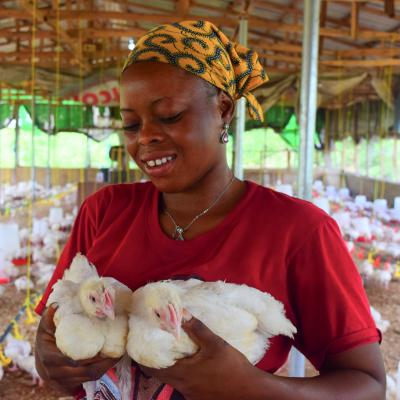
In West Africa, ILRI has offices in Burkina Faso, Mali, and Nigeria with the office in Senegal serving as the regional hub.

For this region, ILRI’s major objectives are:

  • To sustainably intensify smallholder crop-livestock production systems through innovative livestock practices thereby improving productivity, food security and nutrition.
  • To enhance resilience of livestock production systems to better adapt to climate change and variability and improve market participation by smallholder livestock producers.

To address these objectives, the priority research areas identified for the region are:

  • Closing the livestock productivity gap through sustainable intensification of mixed crop-livestock systems.
  • Enhancing the consumption of animal source foods and food safety.
  • Livestock value chain development and better market access for smallholder producers.
  • Evolution of livestock systems and assessment of natural resource base. This includes analysis of pastoral and agro-pastoral systems in West Africa Sahel with focus on technical, social and institutional aspects like conflict management, natural resource governance, analysis of local conventions governing natural resource management, transhumance and enhancing the value of ecosystems services in pastoral systems.
  • Building resilient livestock systems in response to climate change. This entails adapting livestock production systems to climate change and climate smart livestock interventions that enhance adaptation to climate change, and to reduce vulnerability of smallholder farmers to climate change and variability.
ILRI STAFF

Dolapo Enahoro

Dolapo Enahoro

Senior Agricultural Economist

You may also like

GLF Africa 2026: Stewarding Our Rangelands

Global Landscape Forum Africa 2026: Stewarding Our Rangelands

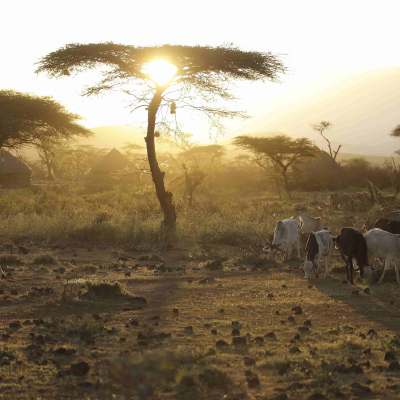
Cattle breed Boran. Location Nr Mega, southern Ethiopia (photo credit: ILRI/ Stevie Mann)

2026: International Year of Rangelands and Pastoralists

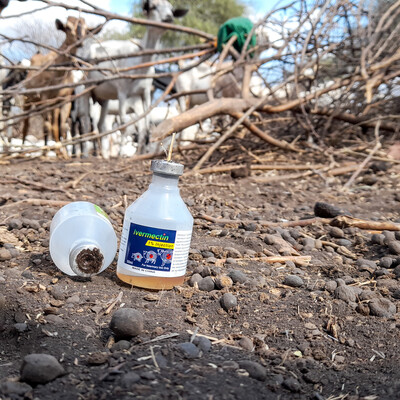
Discarded bottles of a parasiticide used for the treatment and control of internal and external parasites

Common livestock dewormers may be failing across Africa. Here’s why that matters

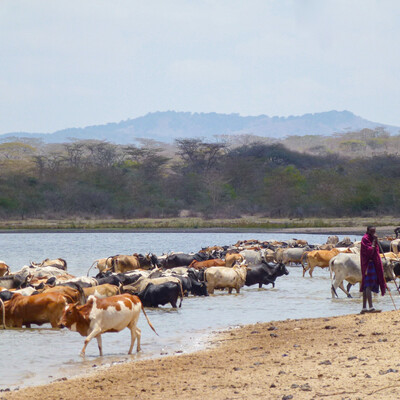
A Maasai pastoralist taking livestock to drink from the Olkitikiti Dam, Kiteto, Tanzania.

New science

Why Kenyan rangeland cattle need new methane emission factors

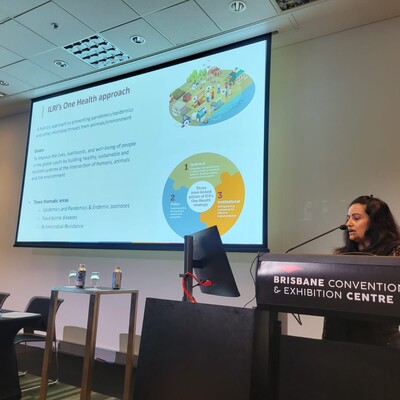
ILRI’s One Health work

ILRI News

From forests to forks: Addressing wild meat trade and health risks across Africa and Asia-Pacific

Christine Muhonja and Tsehay Gashaw at ACAT 2025 Credit: Saleef Nyambok/ILRI

ILRI News

NextGen Ag-Tech Solutions for Africa’s Farmers: Reflections from ACAT2025

N-LMP team with the Nigerian Minister of Livestock Development

ILRI News

Nigeria LMP – Aligning science, strategy and political will

Related Publications

Poultry Sci Man.jpg

Factors influencing Newcastle disease vaccine use in village chicken flocks in rural Burkina Faso

  • Ouedraogo, Brice
ILRI publication cover

Economic potential and production determinants of selected neglected and conventional livestock species in Ogun and Oyo States, Nigeria: A comparative case study

  • Oguche, M.
J Food Prot.jpg

Microbial safety of tomatoes in Burkina Faso: Estimating prevalence and concentration of Escherichia coli and non-typhoidal Salmonella enterica via pooled sampling

  • Ganser, C.
REMVPT.png

Chaîne d’approvisionnement en vaccins contre la maladie de Newcastle dans les systèmes traditionnels de production de poulets au Burkina Faso

  • Ouedraogo, Eunice
RVC_FacilitatorGuide_CCsOH.pdf.jpg

Community conversations on One Health and climate change adaptation in Sierra Leone: Facilitator guide

  • Osman, A.Y.
ILRI publication cover

The influence of market access on grain legume adoption and intensity in African small-holder households

  • Barnes, A.P.