New partnership between ILRI and livestock off-takers targets stronger markets, better feeds and climate resilient livestock in Kenya.
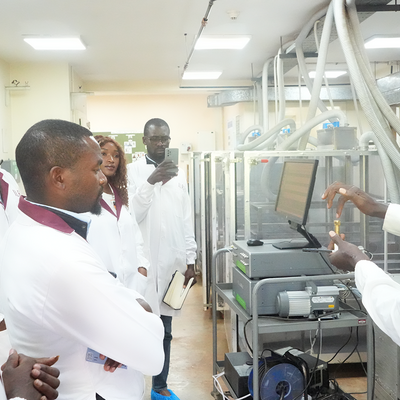
NAIROBI, Kenya, 11 September 2026 - The International Livestock Research Institute (ILRI) hosted representatives from the Kenya Pastoralist Market Development (KPMD) network and its member off taker companies who at its Nairobi campus on 9 September 2026, for a meeting focused on capturing value and building supply-ready herds across Kenya's small ruminant sector. Off-takers included institutions, traders, businesses, processors, and buyers who purchase livestock from farmers and move them into the next stage of the value chain.
This session, themed “Unlocking Value and Bringing Supply-Ready Herds,” brought together off taker companies working in 10 counties in Kenya, and ILRI's research programs and technical teams to discuss how closer collaboration between ILRI and KPMD off takers could strengthen the small ruminant value chain from arid and semi-arid areas to export market.
Discussions throughout the day returned to a single organizing idea: that a resilient supply chain starts with the farmer. Participants examined the technical building blocks of a market-ready herd, from breeding and genetics to the forage and nutrition that sustain animal growth, to the health interventions that prevent losses, and the climate resilience needed to withstand an increasingly unpredictable environment.
Off takers raised specific, practical needs: access to animal breeding programs at scale, reliable and climate-smart forage options to meet growing demand, stronger herd health support to reduce losses before animals reach market, and better use of data to inform decisions across the supply chain.
ILRI’s programs director for Livestock Genetics, Nutrition and Feed Resources, Anu Lawale, hailed this partnership as a game changer in the livestock value chain, explaining that the presence of a dependable market affects the economics of livestock farming. He added that, “If farmers are certain that there is a market for quality animals, then they will make investments in feeding and proper care as an economic venture.”
The event featured research and innovations that can assist in preparing livestock for a changing climate and increase their economic value.
Participants explored forage diversity and management, aggregation, livestock nutrition and health, as well as climate risk reduction to meet market requirements. Brian Okello, an off-taker representative from ABF United Company limited agreed that, “Drought resistant and tolerant forage varieties and better feeding practice are crucial. Improved forage does more than helping animals survive the dry season, it sustains their productivity and health, protects them through drought, and increases their sale value”.
The Kenya Pastoral Market Development (KPMD) initiative representative Professor Ruth Kiraka described the partnership as a new dawn in livestock management. She insisted that, “Such an opportunity lies in the formation of a value chain where science, markets, and farmers march together. Where innovation can reach farmers, farmers produce for markets, and markets provide the incentive for further investments. Rather than a one-off information session, the meeting was framed as the start of an ongoing relationship. Participants agreed that translating ILRI's research into practical, will be central to how the partnership develops.”
ILRI, KPMD network and off takers agreed to continue the conversation with a structured collaboration framework, covering genetics, forage and nutrition, health, and climate resilience.