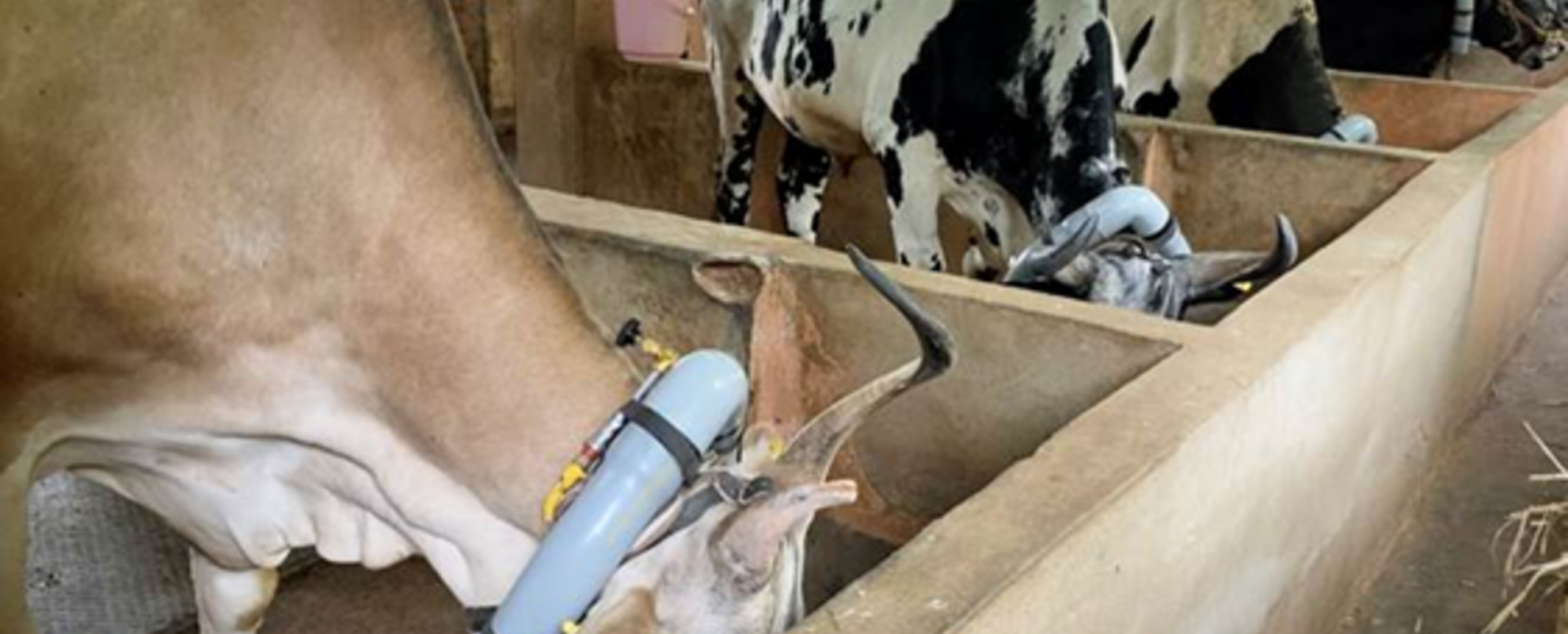
Assessment of Spatio-Temporal Variation in Enteric Methane Emissions and Development of Primary Data Based Inventory
Feeding practices have a more pronounced impact on the daily enteric methane emission and microbiota composition. India, a tropical country, have different seasons. Therefore, distinct types of feeds and fodders are available to feed livestock across the seasons based on the cropping patterns. As methane emission is a cumulative function of feed intake and diet composition, the emission even from the same animal will never be uniform throughout the year. This variability in methane emission could be attributed to the seasonal disparity in the feed resources.
Moreover, the disparity in the feeding practices among the regions should also greatly impact the enteric methane emission. Thus, it is warranted to consider the seasonal and regional variabilities in the feed resources while developing enteric methane emission database for a highly diversified country like India. Feed types and feeding duration should not only be the criterion for extrapolating the enteric methane emission; instead, it should be based on the real-time data obtained from the cattle and buffalo being fed in a natural habitat.
Objectives:
- Development of country specific empirical model for assessing enteric methane emission from livestock
- To study the seasonal feeding practices in cattle populated states and assessment of the seasonal variation in annual enteric methane emission
- To study the seasonal feeding practices in buffalo populated states and assessment of the seasonal variation in annual enteric methane emission
Expected Outcomes:
- Region specific empirical model for the prediction of enteric methane emission
- Season and diet specific empirical model for the prediction of enteric methane emission within the region/state
- Country specific empirical model for enteric methane emission having consideration for the regional, seasonal and dietary variation
- Impact of ruminal microbiota on the regional and seasonal variation in enteric methane emission.