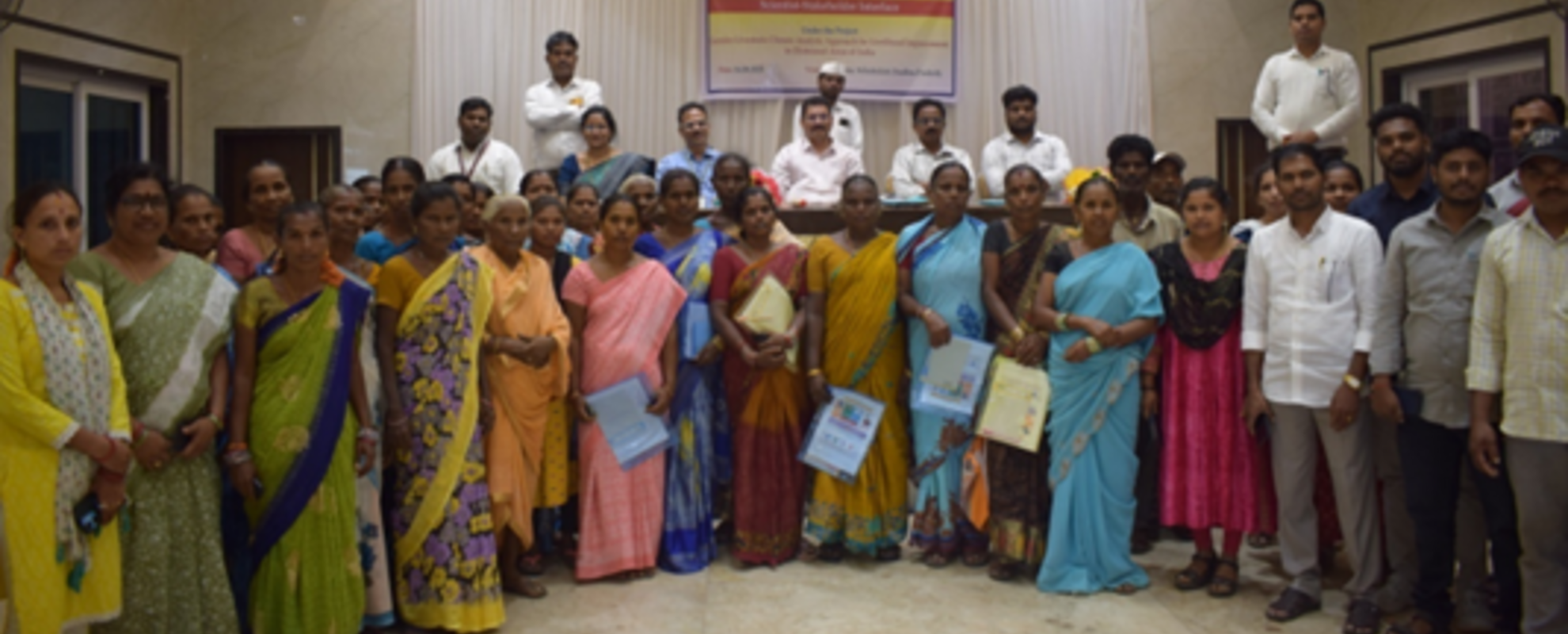
Gender-Livestock-Climate Analytic Approach (GLCAA) for livelihood improvement in distressed areas of India
Unlike other sectors, livestock sector provides opportunities to support women’s livelihood and empowerment because women can own livestock more than other assets; they can make decisions on them (particularly the smaller species); they can source nutritious food on a daily basis which they need in their role as family nutrition providers; they can sell animal source food to earn an income. As livestock is kept within home premises it is a productive activity compatible with local gender norms which reduce women’s mobility. In India, women not only contribute to animal care but also play significant role in production, processing, marketing, and overall livestock management. As livestock production increases, more employment will be generated for women. Dairy cooperative societies played instrumental role in women’s economic and social empowerment in India. It has been observed that women are more vulnerable to climate change as compared to men in terms of livelihood opportunities.
Objectives:
- To understand the key gender issues in livestock sector due to climate change
- To integrate gender-responsive approaches in designing, implementing, and monitoring livestock interventions in distressed areas
- To assess the impact of such interventions on women’s social and economic empowerment
Expected Outcomes:
- Climate resilient livestock production FOR increased productivity
- Enhanced capacity building in women to adapt climate smart livestock practices
- Enhance household income