


The Second Africa Climate Summit
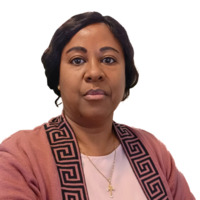
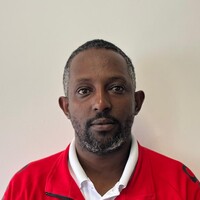
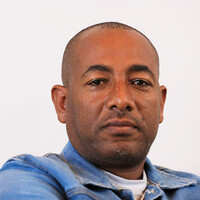
ILRI delegates







ILRI-led Side Events
ACS2 promises to be a key platform for bringing together leaders, policymakers, development partners, and continental allies to shape a unified African position on the global climate agenda. The summit aims to promote bold commitments, transformative partnerships, and innovative solutions to tackle the continent’s most urgent climate issues.
As ILRI is positioned to play a catalytic role in climate-smart agriculture and climate information services, it will be an excellent opportunity to demonstrate our achievements and share our future plans.
14:00 - 15:00
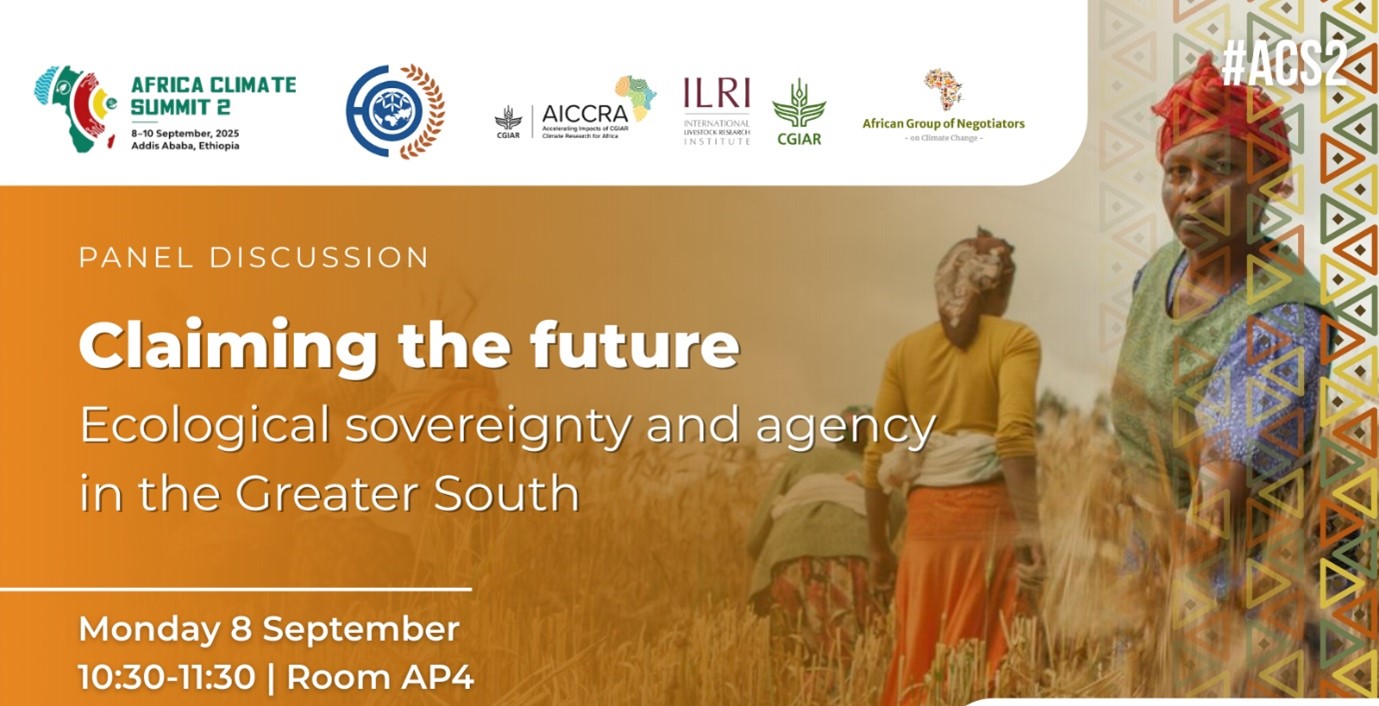
Claiming the future: Ecological sovereignty and agency in the Greater South
Room: AP4
What: Organisation of Southern Cooperation (OSC) is co-hosting a high-level panel on ecological sovereignty and agency with the African Group of Negotiators (AGN) and Accelerating Impacts of CGIAR Climate Research for Africa (AICCRA).
Why it matters: Equitable, locally driven just transitions in energy, food, and urban systems.
Expected Outcome: stronger networks for regional collaboration, clear implementation pathways for ecologically-driven strategies, and momentum for a Southern-led “1.5°C Survival Pact” ahead of COP30 and other global negotiations.
Speakers:
- H.E. Manssour Bin Mussallam – Secretary-General of the Organisation of Southern Cooperation (OSC)
- Dr. Richard Muyungi – Chair of the African Group of Negotiators (AGN) on Climate Change
- Dr. Dawit Solomon – Regional Program Leader – Accelerating Impacts of CGIAR Climate Research for Africa (AICCRA), ILRI
- Rebecca Kalume – Coordinator of the Climate Justice Impact Fund for Africa (CJIFA)
- Dr. Getahun G. Wodaje – Director of the Office of Climate Action and Resilience Enhancement (CARE), OSC
- Dr. Namukolo Covic – Director-General’s Representative to Ethiopia, ILRI
Contact person: Brook Tesfaye Makonnen. Contact email: Brook.Tesfaye@cgiar.org.
10:00 - 11:30
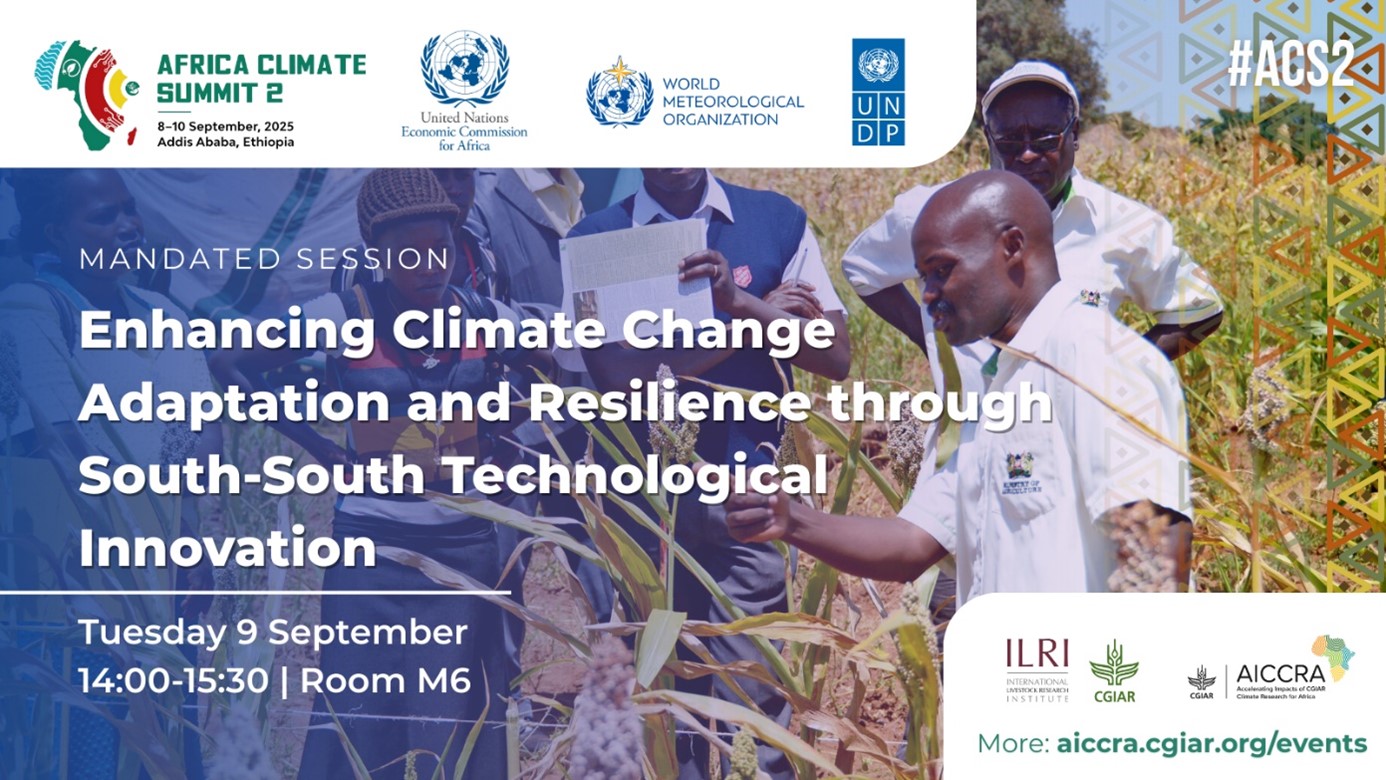
Enhancing Climate Change Adaptation and Resilience through South-South Technological Innovation
Room M6
- What: Mandated Session – Enhancing Climate Change Adaptation and Resilience through South-South Technological Innovation
- Why it matters: This session highlights affordable,
 proven tools (such as drought-tolerant crops, renewable energy systems, and early warning technologies) that can be transferred and localized through South-South Cooperation.
 - Expected Outcome: Policy recommendations, call to action for partnerships to co-develop and deploy, financing models and scalable solutions identified
- Speakers:
- Mr. Thomas Asare – Assistant Secretary General, World Meteorological Organization (WMO)
- Dr. Dawit Solomon – Regional Program Leader – Accelerating Impacts of CGIAR Climate Research for Africa (AICCRA), ILRI
- Dr. Abebe Haile-Gabriel – FAO Assistant Director-General and Representative for Africa
- Dr. Edith Ofwona Adera – AAAP Coordinator, African Development Bank Group
- Ms. Doris Mpoumou – UN Women Liaison Office to the AU and UNECA Special Representative
- Dr. Matthias Zana NAAB – Director, Regional Service Centre for Africa (RSCA), UNDP
- Mr. Martin Krause – UNEP Director of Climate Change Division
- Dr. Robert Ackatia-Armah – Head of Programmes, WFP Ethiopia
14:00 - 15:30
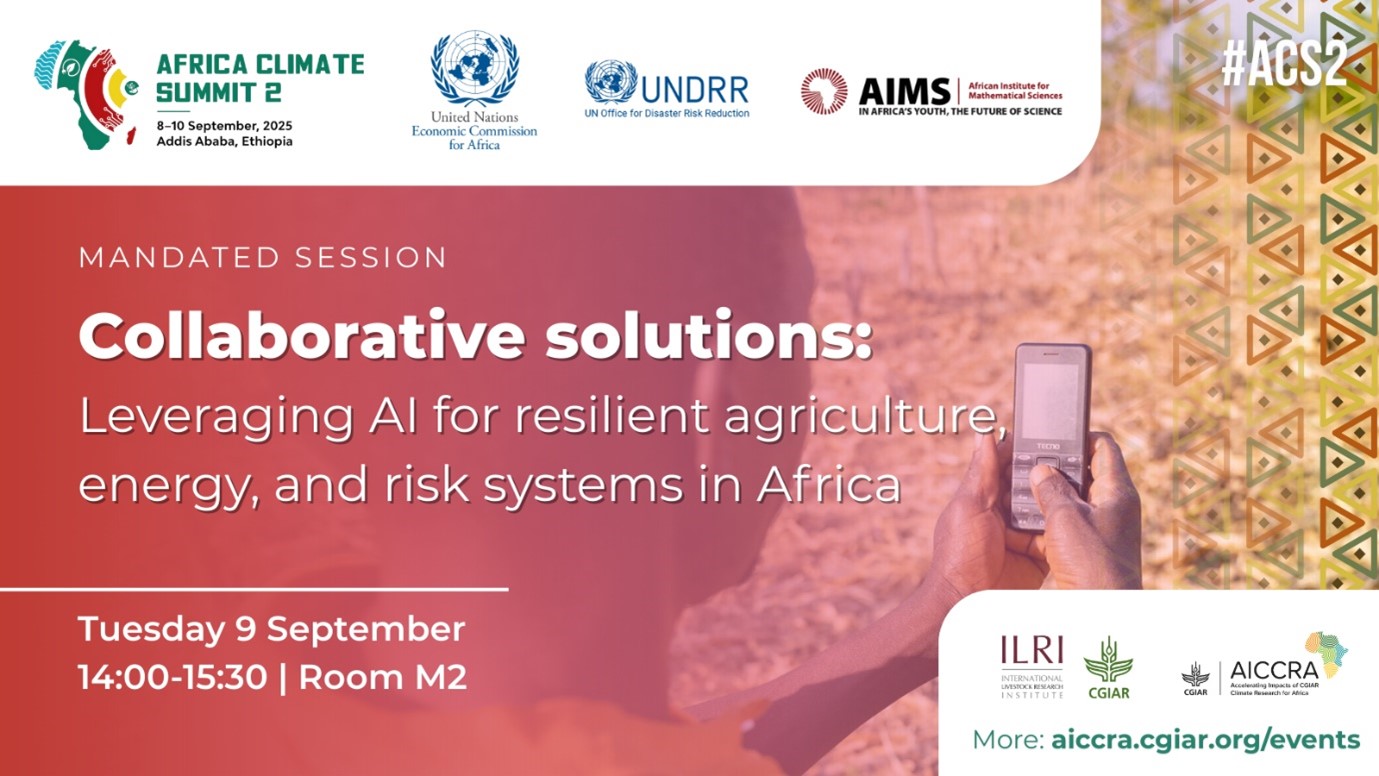
Collaborative solutions: Leveraging AI for resilient agriculture, energy, and risk systems in Africa
Room M2
- What: Mandated Session – Collaborative Solutions: Leveraging AI for Resilient Agriculture, Energy, and Risk Systems in Africa
- Why it matters: AI, Earth Observation (EO), and
 digital innovations hold huge potential for climate adaptation, risk management, and resilient food-energy systems. This session explores how Africa can leverage South-South technological innovation to strengthen decision-making, expand early warning systems, and ensure equitable access to frontier technologies for climate resilience.
 - Expected Outcome: Policy and investment recommendations, concrete partnerships for south-south technology exchange and scaling
- Speakers:
- Dr. Ousmane Ndiaye, Director General, African Centre of Meteorological Application for Development (ACMAD)
- Dr. Amjad Abbashar, Chief, the UN Office for Disaster Risk Reduction (UNDRR), Regional Office for Africa)
- Prof. Wilfred Ndifon, President, African Institute for Mathematical Sciences (AIMS)
- Dr. Namukolo Covic, ILRI Director General's Representative to Ethiopia, CGIAR
- Dr. Fatima Denton, Director, UNU-INRA
- Dr. Emmanuel Manasseh, Regional Director for Africa, ITU
Contact person: Brook Tesfaye Makonnen. Contact email: Brook.Tesfaye@cgiar.org. Room: TBC.
14:00 - 15:30
Endorsement and Launch of the Regional Framework for Climate Services (RFCS) for Great Horn of Africa
Room IGAD Pavilion A2
- What: Ministerial Endorsement and Launch of the Regional Framework for Climate Services (RFCS)
- Why it matters: RFCS-provides a unified regional mechanism to translate climate science into actionable services for agriculture, food security, health, energy, water, disaster risk management, and peace and security
- Expected Outcome: Public launch, partner commitments, media coverage, and launch report.
- Speakers:
- H.E. Dr. Eng. Habtamu Itefa Geleta– Minister of Water and Energy, Ethiopia
- Prof. Celeste Saulo – Secretary General, World Meteorological Organization (WMO)
- H.E. Veronica M. Nduva– Secretary General, East African Community (EAC)
- H.E. Dr. Workneh Gebeyehu – Executive Secretary, IGAD
09:30 - 11:00
Farming the Future: Land, Soil & Crop Hubs for Africa’s Climate-Smart Agriculture Transformation
Room: AP4
- What: A discussion on soil, land, and crop hubs as critical platforms for Africa’s food systems transformation.
- Why it matters: Resilient soils and crops underpin
 sustainable food systems and climate-smart agriculture.
 - Expected Outcome: showcase proven digital innovations, link to regional climate action agendas, and drive institutional collaboration and scaling pathways.
- Speakers:
- H.E. Prof. Eyasu Elias – State Minister of Agriculture, Ethiopia
- Ms. Mirjam Tjassing – Deputy Permanent Representative of the Netherlands to the AU, UNECA & IGAD
- Dr.André Kooiman – Scientific Coordinator, ISRIC – World Soil Information
- Dr. John Recha – Climate-Smart Agriculture Scientist, ILRI
- Dr. Fatunbi Oluwole – Director of Research and Innovation, Forum for Agricultural Research in Africa (FARA)
- Prof. Cliff Dlamin – Executive Director, CCARDESA
- Dr. Anukur Luther Bois – Regional Director, IUCN
Contact person: Dr. John Recha. Contact email: j.recha@cgiar.org.
12:00 - 13:30
Development of early warning systems for dengue and Chikungunya control in the Horn of Africa.
Room: M5
The incidence of arboviral infections is increasing globally due to climate, demographic and land use changes. Since 2013 for example outbreaks of dengue and Chikungunya have intensified in the Horn of Africa yet in many countries in the region these diseases have not received the attention they deserve. In this meeting, we will introduce early warning systems (EWS) for dengue and Chikungunya which the ARBO-WATCH consortium, funded by Wellcome Trust, is developing for Kenya, Ethiopia and Somalia. We will also solicit inputs on how to integrate these tools into public health decision making processes, considering other similar initiatives that are being developed. We will commence the meeting with short presentations to introduce the analyses we are doing and transition into interactive dialogue that aims to gather experiences from similar efforts globally. The presentation will specifically discuss the methods we have used to integrate environmental, socioeconomic and disease surveillance data in the development of EWS. The session is expected to achieve two results – (i) map out concrete steps that the consortium could use to translate its knowledge and EWS outputs into public health decision making, and (ii) establish a wider network that would include critical actors, including the private sector, that can support the development of early warning systems for mosquito-borne diseases across the continent.
Contact person: Bernard Kiprono Bett. Contact email: b.bett@cgiar.org.
12:00 - 13:00
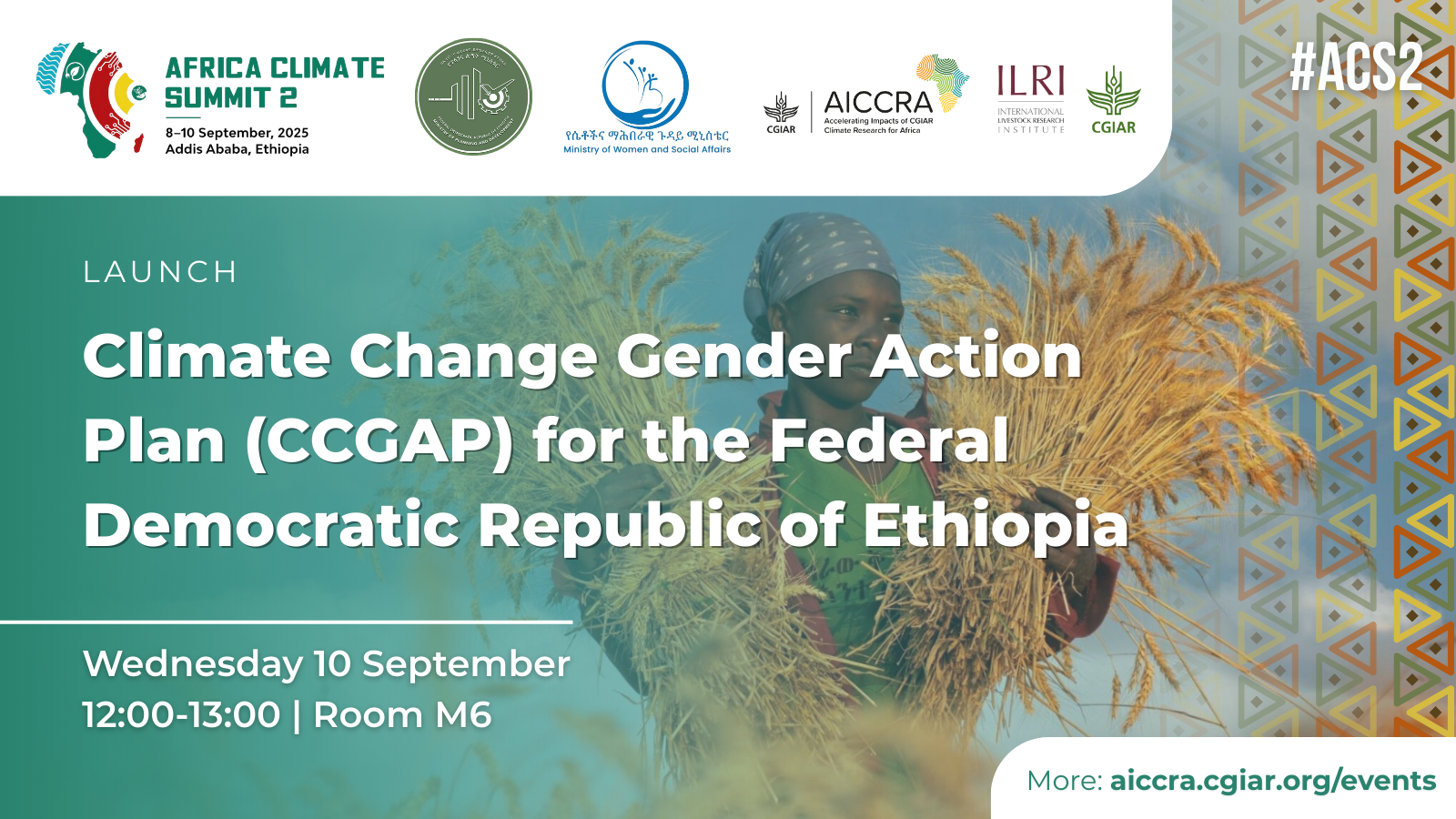
Launch of the Climate Change Gender Action Plan (CCGAP) of the Federal Democratic Republic of Ethiopia
Room M6
What: The official launch of Ethiopia’s Climate Change Gender Action Plan (CCGAP), a landmark framework integrating gender equality into national climate strategies.
- Why it matters: Puts women and vulnerable groups at the center of Ethiopia’s climate response and action.
- Expected Outcome: Public launch, partner commitments, media coverage, and launch report.
- Speakers:
- H.E. Fitsum Assefa – Minister of Planning and Development, Ethiopia
- Ms. Shewit Emmanuel – Country Director – Ethiopia, FARM AFRICA
- Mr. Evans Njewa – Chair of the Least Developed Countries (LDC) Group at UN Climate Change negotiations
- Dr. Sophia Huyer – Gender and Social Inclusion Lead, ILRI
- Ms. Joyce Jelagat – Gender and Climate Expert, IGAD Climate Prediction and Application Centre (ICPAC)
13:30 - 15:00
Scaling Digital Agro-Climate Advisory Services (DACAS) and soil intelligence for resilient food systems in the IGAD Region
Room F2
- What: Interactive dialogue on expanding digital advisory
 services for smallholder farmers across Africa.
 - Why it matters: Farmers equipped with actionable climate information can reduce risks, improve yields, and adapt effectively to climate shocks.
- Expected Outcome: DACAS presentation, scaling partnerships, and knowledge products.
- Speakers:
- Mr. Daher Elmi Houssein – Director, Agriculture and Environment Division, IGAD
- Dr. Dawit Solomon – Regional Program Leader – Accelerating Impacts of CGIAR Climate Research for Africa (AICCRA), ILRI
- Dr. Senait Regassa – Food Systems Resilience Program (FSRP) Coordinator, IGAD
- Dr. Ermias Betemariam – Soil Health Scientist, ICRAF
- Dr.André Kooiman – Scientific Coordinator, ISRIC – World Soil Information
- Dr. John Recha – Climate-Smart Agriculture Scientist, ILRI
- Ms. Evelyn Heyi – FSRP Focal Point for Kenya, Ministry of Agriculture and Livestock Development
- Mr. Denis Kibuuka - Food Systems Resilience Program Knowledge Management, IGAD
- Ms. Gabriella Sirak – Chief of Staff, Green Agro Solution PLC/ Lersha
14:00 - 15:00
Advancing Climate-Informed and Data-Driven Agriculture and Farming for the Future
Room: M7
- What: A panel discussion showcasing digital tools and data-driven solutions co-produced by national and CGIAR partnerships that strengthen
 climate-informed and data-driven agriculture.
 - Why it matters: Demonstrates how climate prediction tools and models, digital services, and farmer-centered technologies build collective resilience and productivity.
- Expected Outcome: Digital tool demonstrations, scaling insights and media coverage.
- Speakers:
- High-level opening and closing remarks by: State Minister of Agriculture and CGIAR Rep. (Namukolo)
- Dr. Teferi Demissie – Climate Scientist, ILRI
- Dr. Jemal Seid – Research Scientist, Alliance of Bioversity & CIAT
- Dr. Degefie Tibebe – Research Scientist, Alliance of Bioversity & CIAT
- Mr. Abrhame Endrias – Managing Director, Green Agro Solution PLC/ Lersha
Contact person: Brook Tesfaye Makonnen. Contact email: Brook.Tesfaye@cgiar.org.
16:00 - 17:00
Integrating Policy Frameworks for Sustainable and Resilient Livestock Development in Africa.
Room: F1.
A recent policy stocktaking analysis across African countries highlights both opportunities and gaps in aligning livestock development with climate adaptation and mitigation goals. This side event will bring together government, research, and development partners to discuss how integrated policy frameworks can support sustainable and resilient livestock systems in Africa.
- Share key findings from a stocktaking analysis of livestock-related policy frameworks in Africa.
- Highlight examples of ongoing initiatives that integrate livestock, climate, and low emissions development.
- Explore opportunities for collaboration between governments, research organizations, and development partners.
- Identify priority actions to strengthen livestock policy integration in Africa’s climate agenda.
Contact person: Laura Cramer. Contact email: l.cramer@cgiar.org.