Innovation places communities at the heart of restoring rangelands in East Africa
Across Africa, communities living in arid landscapes are facing complex challenges—degraded soils, changing climate patterns, and shifting social structures. An innovation called participatory rangelands management (PRM) builds the capacities of communities—including youth and women—to collectively plan for and govern rangelands, while balancing environmental sustainability, livestock production, and social inclusion.
“Healthy rangelands thrive when communities lead the way,” said Jacob Lekaitogo, the president of the African Youth Pastoralist Initiative (Kenya Chapter), an ILRI-supported group that aims to give young pastoralists a voice in policy dialogues. “Participatory rangelands management puts communities at the center of restoring landscapes, strengthening livelihoods and securing the future of pastoralism.”
Today, PRM is being implemented across more than two million hectares of East Africa. New development partners are investing, countries like Mali and Senegal are considering adopting the practice, and a bloc of countries in East Africa are committed to prioritizing and applying the practice as a regional approach.
Community-led restoration delivers results for rangelands
The PRM innovation is rooted in tenets of customary institutions, and was developed by ILRI in collaboration with CGIAR partners and others, including Save the Children and regional policymakers. Together, they first tested the approach in Ethiopia, later scaling it across more than one million hectares. They then piloted it in Kenya and Tanzania with promising results.
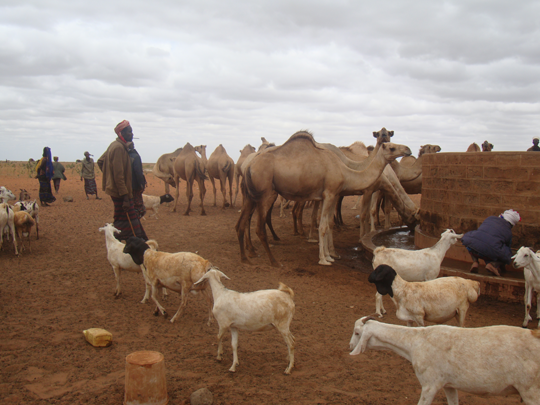
During PRM, communities took part in bush clearing, seeding pastures, improvement of grasses, tree planting, water conservation measures, and demarcation of crop and rangelands. More than 90% of those who participated in the PRM pilots said that the condition of their rangelands improved and they felt greater ownership over them, while more than half said the condition and numbers of their livestock improved after they adopted better breeds of cows.
PRM has also served as a vehicle for women’s empowerment, with increased numbers of women participating in community decision-making processes in Ethiopia. In Kiteto, Tanzania, the community established a women’s forum, jukwa la akina mama, which meets regularly to discuss rangeland resources.
Some counties in Kenya, including Baringo county, have integrated the practice in their development plans after pilot projects yielded positive outcomes there.
East African countries set to scale participatory approach
Due to the initiative’s success, the Intergovernmental Authority on Development (IGAD) is working with ILRI on developing a set of PRM manuals, with the intention to scale the practice across the Horn of Africa.
Ministers from seven IGAD member states—Djibouti, Ethiopia, Kenya, Somalia, South Sudan, Sudan, and Uganda—have committed to prioritize and apply PRM as a regional approach for the governance and stewardship of communal and cross-border rangelands, marking a major milestone for sustainable pastoral development in the region.
The commitment was made during the IGAD Ministerial Conference on Transhumance and Livestock Development held on 21 November 2025 in Addis Ababa, Ethiopia, by the ministers responsible for agriculture, livestock, and arid-lands development from the IGAD member states.
The ministers adopted a regional communiqué outlining collective actions to strengthen pastoral systems, livestock mobility, and climate resilience. Additionally, the agreement serves to implement the IGAD Protocol on Transhumance, a landmark legal framework designed to facilitate the free, safe, and orderly cross-border movement of pastoralists and their livestock across the region.
The signatories recognized the critical role of pastoralism and livestock production in supporting livelihoods and economies, while expressing concern over the growing pressures facing pastoral communities—including recurrent droughts, land degradation, water scarcity, political insecurity, transboundary animal diseases, and climate variability.
“Better-managed rangelands can contribute to a triple-win, by supporting climate change adaptation, mitigation, and improved livelihoods for pastoral communities,” said Dereje Wakjira, director of the IGAD Centre for Pastoral Areas and Livestock Development.
Innovation responds to climate challenges and community needs
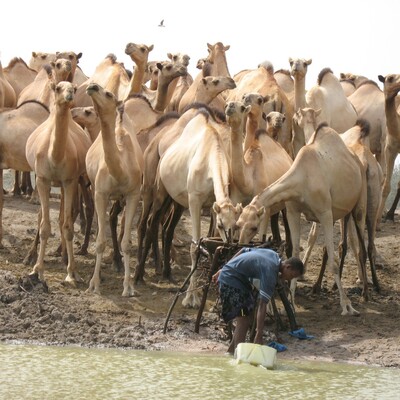
The IGAD region is one of Africa’s most significant livestock zones. It is home to 43% of the continent’s cattle (160 million), 34% of its sheep and goats (308 million), and nearly half of the world’s camels (19 million)—a total of nearly half a billion animals. Pastoralism has great social and economic importance to communities in the IGAD region and contributes between 16% and 60% of the GDP of these nations.
Yet, despite this importance, investment in community-driven development is lacking, said Fiona Flintan, ILRI senior scientist and rangelands governance specialist. Development investments still tend to be top-down and “band aid” in nature, she added, rather than tackling the challenges of tenure insecurity and lack of livestock extension services, or supporting pastoralists to address land degradation challenges such as invasive species.
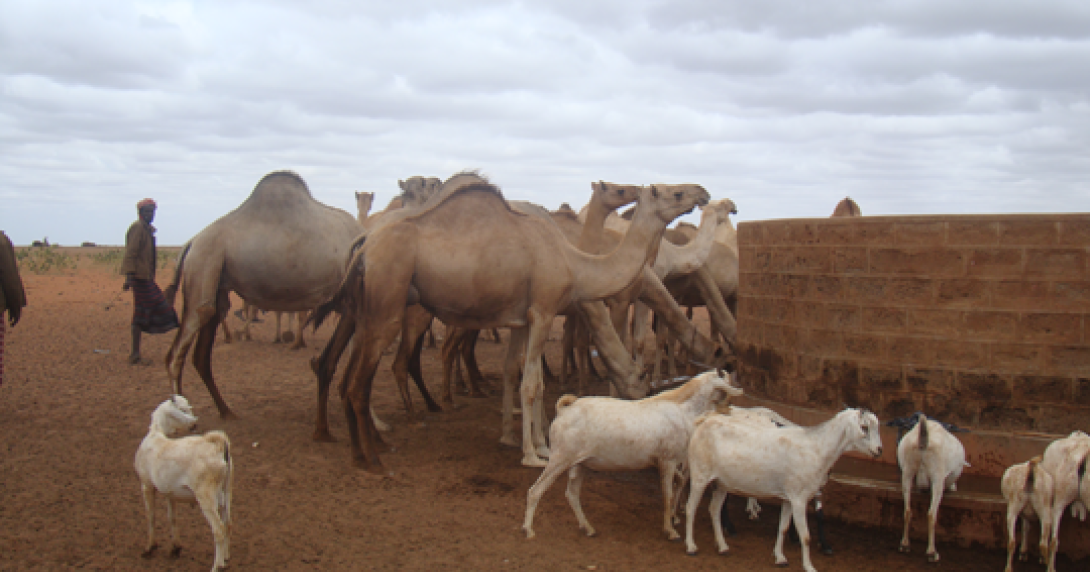
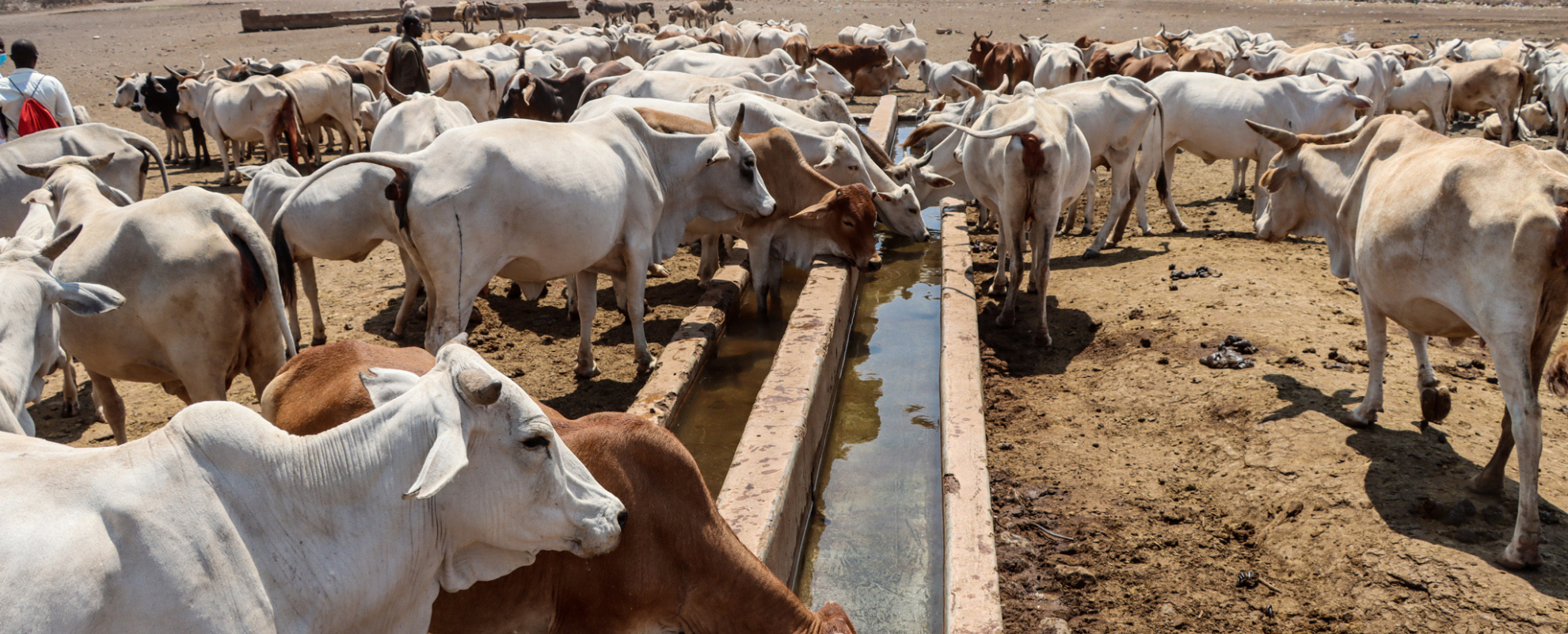
Photo credit: ILRI/Laura Cramer
Livestock at a watering point in Wajir, Kenya.
“Pastoralists are expert risk managers and with the right assistance have the capacity to lead their own development and solve their own problems. PRM helps communities think through their challenges and develop rangeland management plans to address them—plans that are their responsibility to then implement.” - Fiona Flintan, ILRI senior scientist.