Making work for development what works for people: positive deviance for farmer-led adaptation to climate change
Abstract
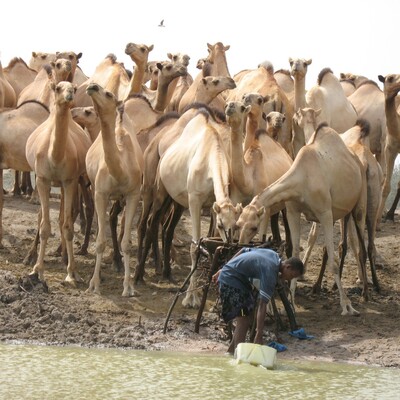
Working with livestock farmers in Kenya, Uganda, and Ethiopia, we explored how extension systems can better support user-oriented, collaborative learning. We focused on adaptation solutions already working for livestock farmers affected by climate change, using positive deviance (PD) to identify effective, place-based solutions. Our main research question was whether PD could help identify adaptation solutions through a co-design process.
Using qualitative and quantitative research methods, we identified PD livestock farmers in Kenya, Uganda, and Ethiopia who were more successful in adapting to climate change and securing their livelihoods. From an initial sample of 112 local innovators, we selected 16 adaptation pioneers across the three countries.
The PD approach effectively identified farmers with high potential for scaling adaptation practices and on-farm innovations. However, we observed that climate change is not always the primary concern for these farmers, as other factors can sometimes take precedence.
The PD approach has strong potential as a co-design process to support research, farmers, and extension services in building climate resilience in East African livestock farming. Adaptation pioneers succeed not just because of external project support but due to their own ingenuity and drive for change. Their ability to innovate—shaped by life histories and unique experiences—offers valuable learning opportunities for others in similar situations. A holistic AR4D approach is needed to better reflect the realities of East African farmers and promote adaptive, collaborative learning.
Citation
Habermann, B., Gichuki, L., Worku, T., Crane, T. A., Mugumya, R., Kiptoo, E., Maiyo, N., Getahun, E., Shenkute, G. and Tugume, G. 2026. Making work for development what works for people: positive deviance for farmer-led adaptation to climate change. The Journal of Agricultural Education and Extension