Not on our watch: Kenya monitors antimicrobial resistance across animals, humans, environment
With support from ILRI researchers, national authorities collect and share the data decision-makers need to understand and curb resistance.
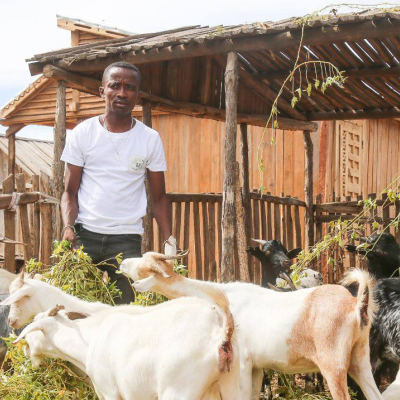
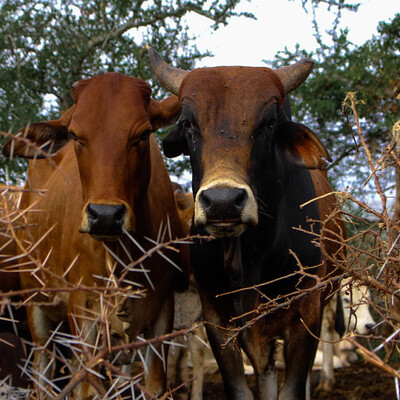
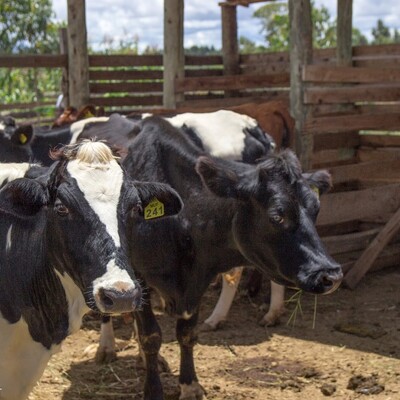
Virtually every rural homestead in Kenya keeps a few head of livestock — mostly chickens, goats or sheep — for food and income. But when animals get sick, smallholder farmers often bypass professional veterinary services in favor of more affordable options.
"A farmer can walk into an agrovet — a farm supply store — and just get an antibiotic without a prescription,” said Mitchelle Kasudi, research associate with the International Livestock Research Institute (ILRI). “The drugs are used not only for treatment, but also as a preventative measure, and sometimes farmers might get the dosage wrong.”
Antimicrobial drugs are a medical wonder, curing deadly diseases in humans and animals alike. But when these drugs are not used as recommended — too much, too little, not right — bacteria can become resistant, leading the drugs to lose their power and the diseases harder to treat.
Growing resistance to anti-microbial drugs affects human and animal health, animal welfare, and food and nutrition security. The World Bank estimated that this global challenge could shrink annual global gross domestic product by more than one trillion USD annually by 2030 and reduce global livestock production by 7.5%.
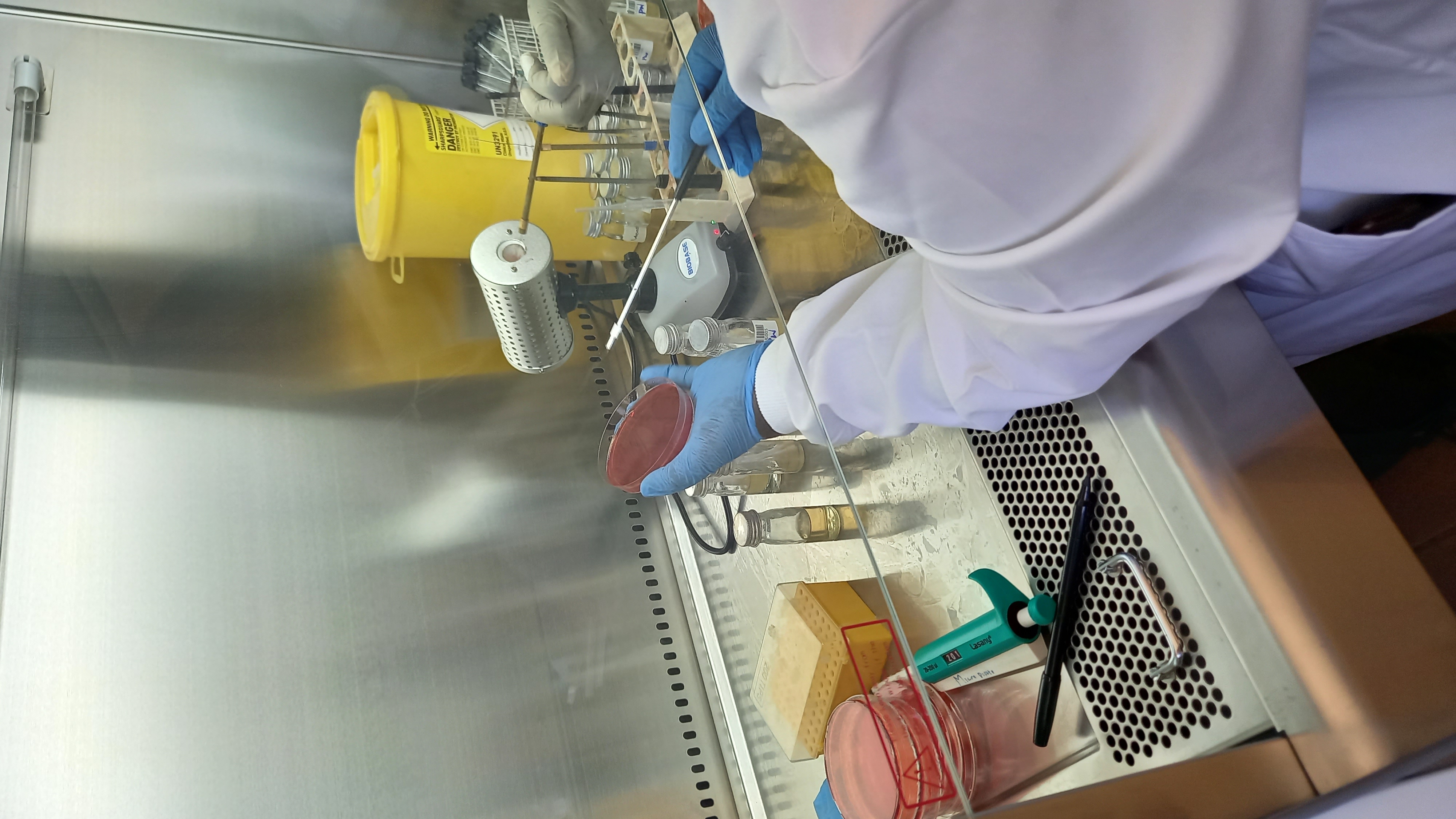
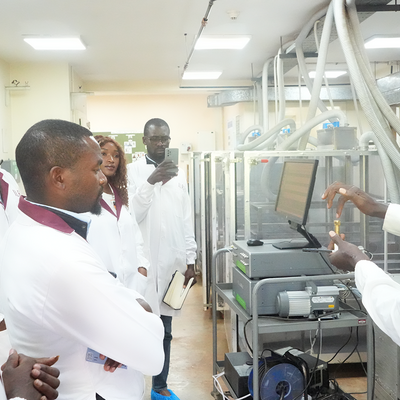
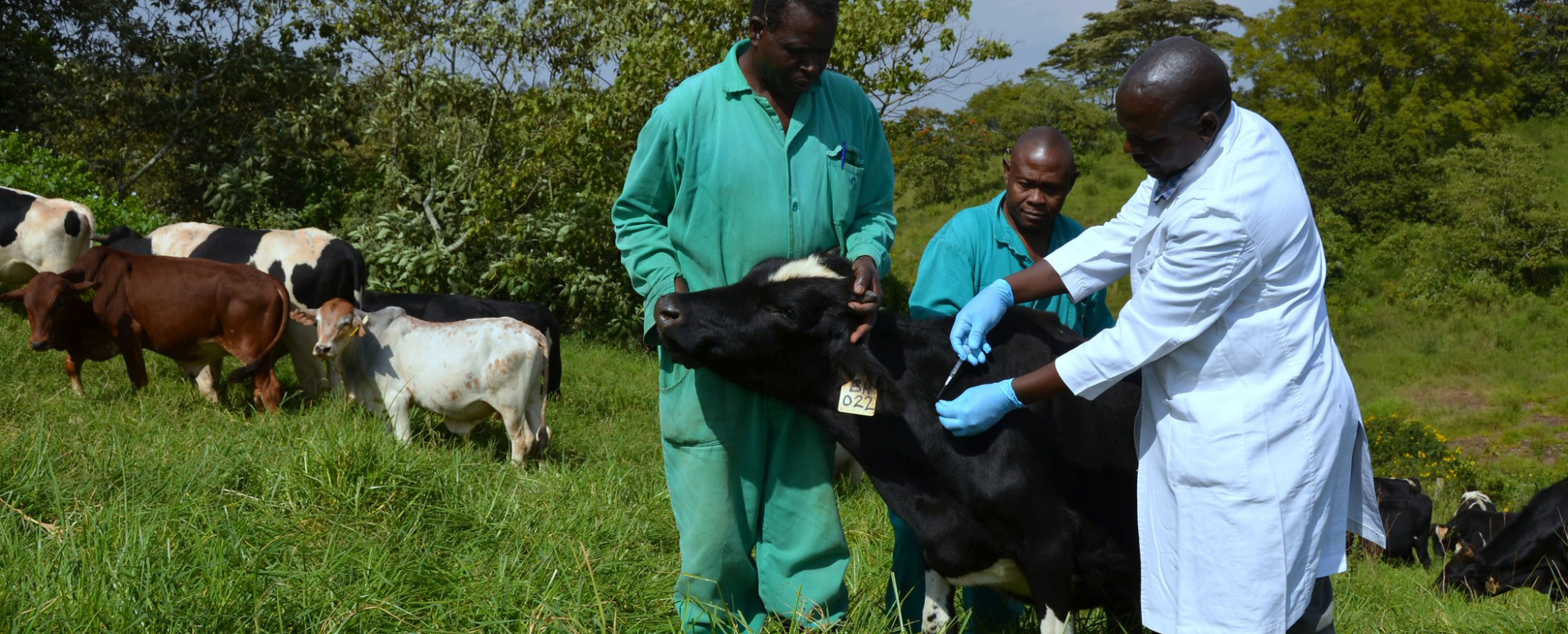
During the past seven years, researchers from ILRI have collaborated with Kenyan authorities and other partners to build greater capacity and stronger infrastructure for antimicrobial resistance surveillance across human, animal, and environmental spheres. With support from the UK Fleming Fund, ILRI furnished eight national veterinary investigation laboratories with better equipment and materials; trained animal health officials across 18 counties; and collected more than 10,000 samples from poultry and dairy cows to evaluate the level of resistance. Kenya is now submitting more antimicrobial resistance data into international databases, contributing to a globally coordinated response.
Building a robust antimicrobial resistance surveillance system
Robust and sustained surveillance across humans, animals, and the environment produces data that can help national and international decision-makers act on this growing issue.
“Fundamentally, the problem is that we don't have an understanding of the scale of antimicrobial resistance,” said Eric Fèvre, a Principal Scientist at ILRI and also the Chair of Veterinary Infectious Diseases at the University of Liverpool, who led the work. “We designed this work essentially to answer that question.”
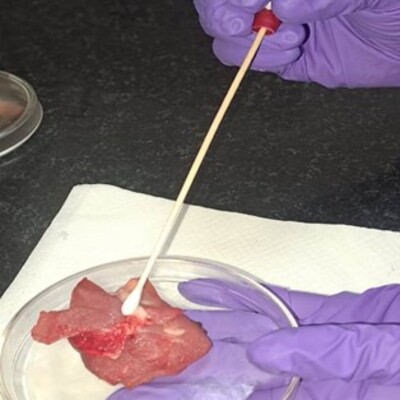
From 2021 to 2025, ILRI researchers worked with the Directorate of Veterinary Services (DVS), part of Kenya’s Ministry of Agriculture and Livestock Development, to collect samples directly from animals on farms. Testing how bacteria respond to antibiotic drugs—whether they are susceptible or resistant—reveals where and to which degree antimicrobial resistance is present.
“When we started doing systemic surveillance, we realized that the trends are alarming because we started identifying and documenting increased cases of multiple-drug resistance,” said Naphtal Mwanziki, deputy director of veterinary services in the DVS.
Through the collaboration with ILRI, and with support from the UK Fleming Fund, the DVS was able to renovate and equip all its laboratories to generate credible data, added Mwanziki. ILRI also aided in developing guidelines, protocols, training manuals, and standard operating procedures.
"Before, these systems were not in place to monitor antimicrobial resistance in an efficient and coordinated way. So, there has been a lot of investment in the physical infrastructure of laboratories, a lot of training of people in the civil service," said Fèvre.
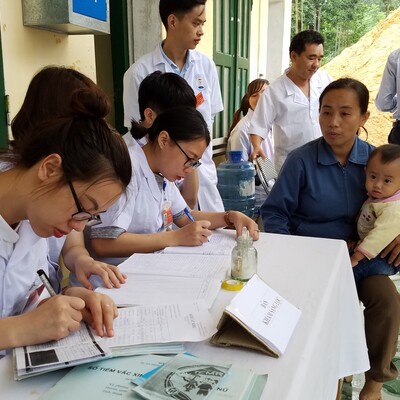
At the same time, and as part of the same program, antimicrobial resistance among humans was being monitored through sample collection at 14 different hospitals, led by the University of Nairobi, while environmental samples collected from rivers were processed by Kenya’s Water Resources Authority Lab in collaboration with the National Environment Management Authority.
Collecting samples from farms, clinics, and rivers has provided a full picture of how the use of antibiotics and other antimicrobial drugs drives resistance—and policymakers and healthcare professionals can use this information to guide infection prevention, control responses, and inform policies. Regulators might, for example, prohibit use of certain anti-microbial drugs that have lost their effectiveness.
Connecting animal, human, and environmental health
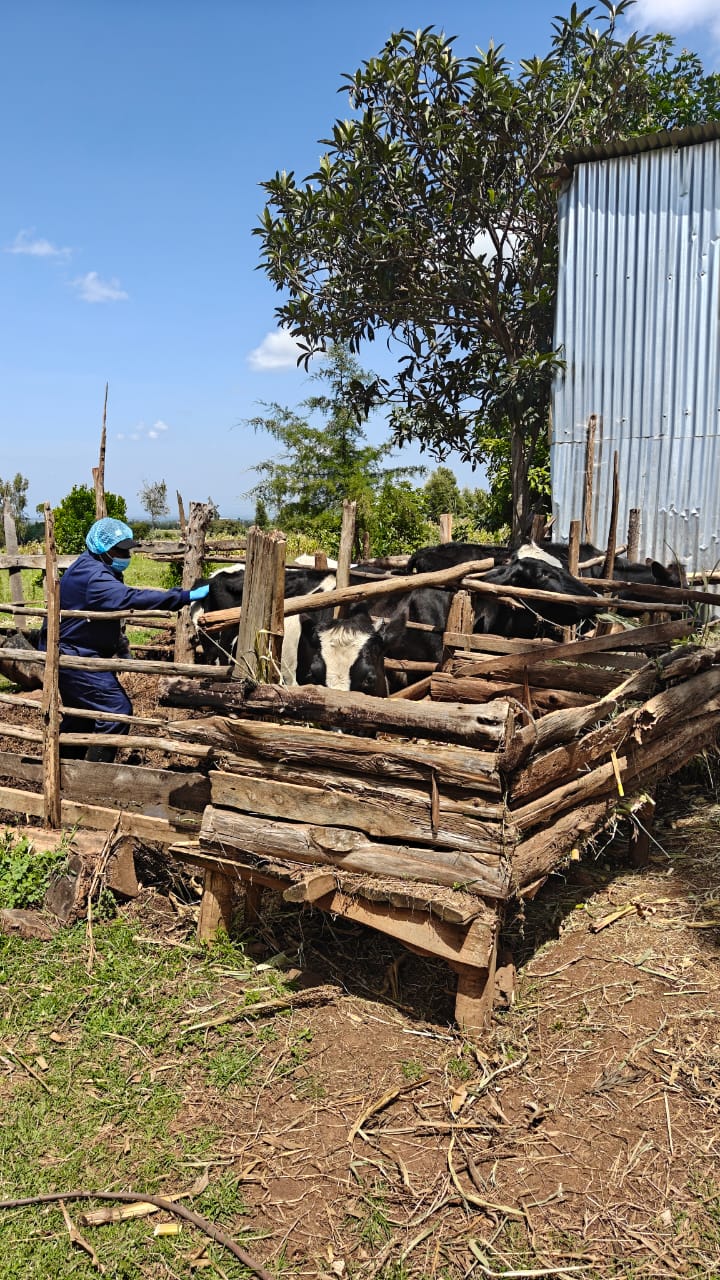
While there is not yet any absolute evidence on how growing antimicrobial resistance among animals affects humans—or vice versa—it is clear that animal, human, and environmental health is intricately linked.
“Speaking from a One Health perspective, it's all interconnected,” said Kasudi. “Resistance genes and resistant bacteria can be passed between animals and humans, and we need to generate data from the animal health sector to determine how best to control increases in antimicrobial resistance.”
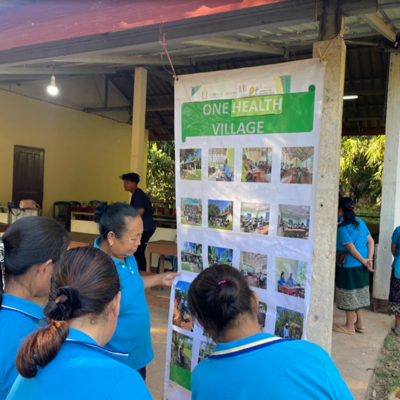
ILRI has long-standing expertise on One Health challenges, acknowledging that human, animal, and environmental health must be managed together to be successful.
“The environment is particularly important because it’s a mediator of transmission,” explained Fèvre.
Agricultural waste—including resistant bacteria—might make its way into rivers and streams, and that further amplifies the problem of resistance. Resistant bacteria contain little bits of bacterial DNA—called mobile genetic elements—that can easily jump from one bacterium to another. Suddenly not just one bacterial strain is resistant to antimicrobial drugs—other strains and other bacteria become resistant too.
In this way, resistance is also generated in the environment, and that’s why it is so important to monitor, concluded Fèvre.
Enabling an internationally coordinated response to a global problem
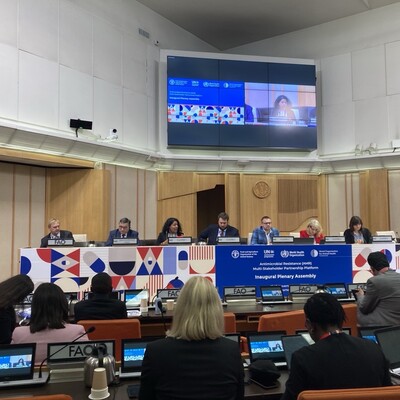
The now-strengthened national antimicrobial resistance surveillance program underpins Kenya’s continued submission of high-quality data into international databases that guide internationally coordinated responses—namely WHO’s Global Antimicrobial Resistance and Use Surveillance System, the FAO’s inFARM, and the World Organization for Animal Health (WOAH)’s Animal Antimicrobial Use database.
“Kenya has collected and reported national data into WHO, FAO, and WOAH systems, so whereas years ago there would be an empty line on the spreadsheet for Kenya, there are now data deposited by Kenya on the antimicrobial resistance situation in the country,” said Fèvre.
“We share these data as our contribution to the global effort on monitoring anti-microbial resistance,” added Mwanziki.
Today, Kenya has the infrastructure, skills, and knowledge to carefully monitor antimicrobial resistance, safeguarding the health not only of animals, but of humans and the environment too. The next challenge is to secure the public support, political commitment, and funding to maintain such robust and systematic surveillance in the future.
“The chain that will tackle antimicrobial resistance is only as strong as its weakest link,” Mwanziki ended. “Our work will not bear fruit if we neglect areas like Kenya, where there is a real potential for accelerated emergence and spread.”