From analysis to action: livestock research helps Madagascar transform its livestock sector
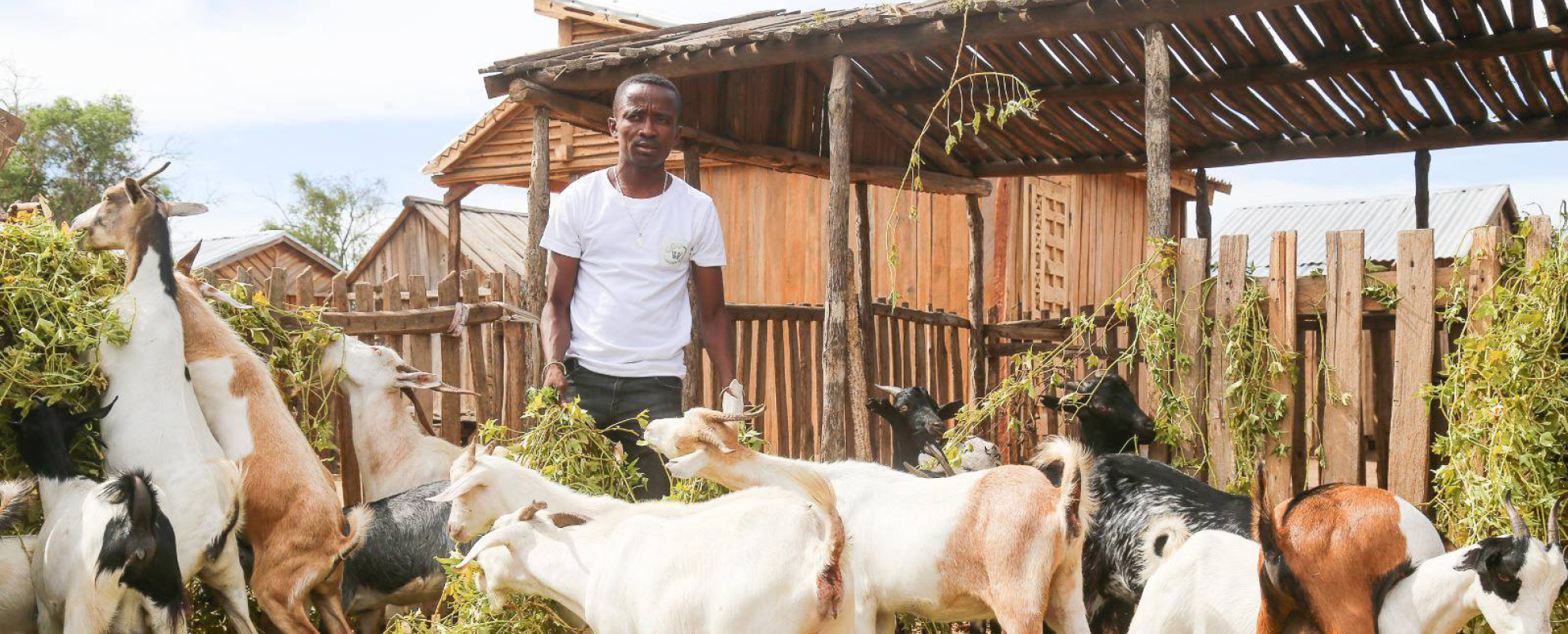
In Madagascar, though livestock farming provides a livelihood for millions of people, it receives minimal public investment. To better align this mismatch, the International Livestock Research Institute (ILRI) and its partners have worked with the Malagasy government to develop the missing tools: rigorous analysis, costed roadmaps, and an investment plan worth nearly USD 400 million to bring about sustainable transformation in five priority sectors.
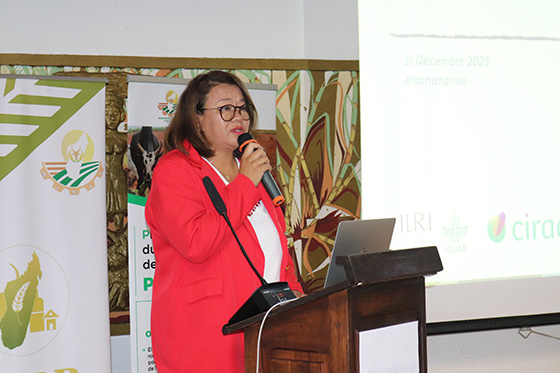
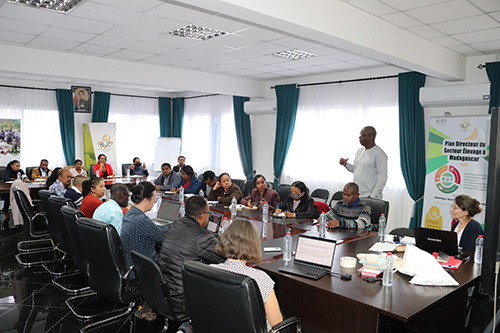
In December 2025, Madagascar's Ministry of Agriculture and Livestock gathered stakeholders from across the country to officially launch the Madagascar Livestock Master Plan. The moment marked the culmination of nearly two years of intensive research, field surveys, modelling, and national consultation. But for those who had worked on it, the launch was less an ending than a beginning.
"We are today committing to the modernization of a sector with enormous economic potential," said then-Minister of Agriculture and Livestock José Nirina Rasatarimanana at the presentation workshop. "Madagascar will not sustainably transform its agriculture without profoundly transforming its livestock sector."
That transformation has long been overdue.
A sector carrying enormous weight and carrying it alone
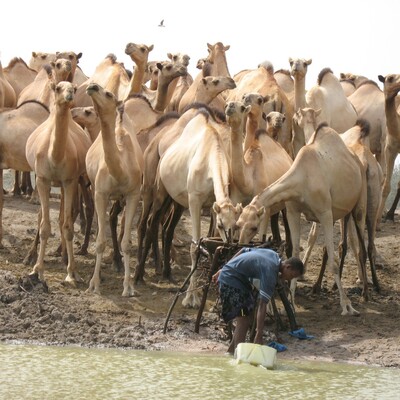
Livestock underpins the livelihoods of more than 70% of rural households in Madagascar. Yet for the decade between 2013 and 2022, the sector received less than 1% of public agricultural spending. And even that limited funding was often not fully spent.
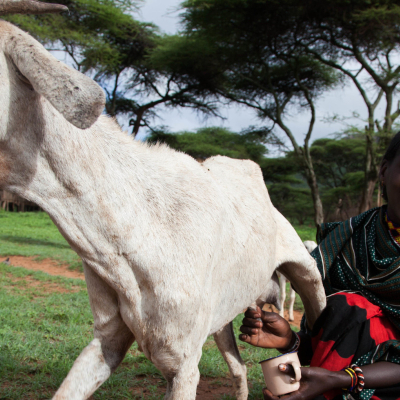
Behind each of these numbers is a story of missed potential. A dairy cow in a traditional system in Madagascar produces, on average, just one to two liters of milk per day, a fraction of what improved breeds under better management could yield, leaving both farmers and consumers underserved.
Of Madagascar's 38 million chickens, nearly three-quarters are raised in traditional systems with almost no veterinary support: the result is that one in five birds die before reaching market, representing a significant and largely avoidable loss of income for rural households.
The national cattle herd of around nine million animals is growing at less than 1% per year, far below the 2.8% annual growth of the human population. The gap is widening: more people, but not proportionally more animals, means less meat and milk per person over time, with direct consequences for nutrition, household income, and food security for millions of rural families.
These are not simply technical problems, said ILRI livestock economist Isabelle Baltenweck, one of the architects of the plan. They are the result of decades of underinvestment in a sector that rural communities have been carrying largely on their own.
“It’s past time we did something about that,” she said.
What ILRI brought to the table
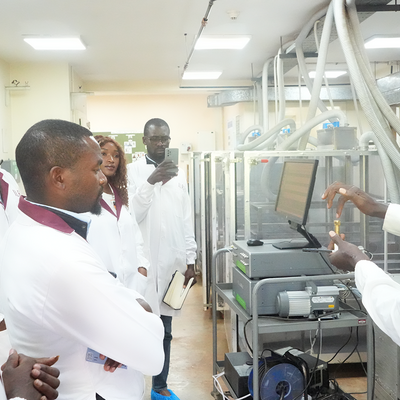
Between 2023 and 2025, ILRI scientists worked alongside Malagasy government officials, national research institutes, and international partners—including Centre de Coopération Internationale en Recherche Agronomique pour le Développement (CIRAD)—to co-create a livestock master plan. The work was supported by the World Bank’s Food Systems Resilience Program.
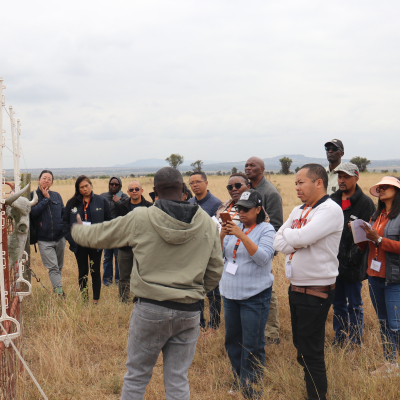
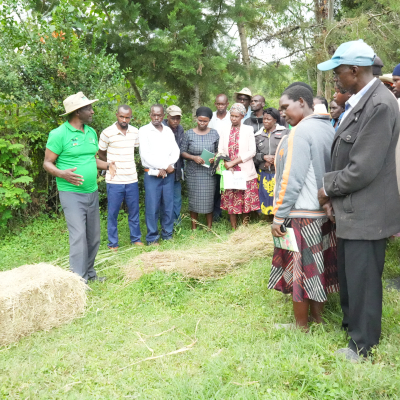
The team analyzed existing data and carried out field surveys across the country, from the humid highlands of Vakinankaratra to the arid southern regions, to build up a detailed picture of how livestock systems work: zone by zone, household by household. Combining those field surveys with economic modeling enabled the researchers to simulate the impact of different investment choices across five priority value chains over the next 15 years.
Strengthening the capacity of Malagasy officials and research teams was at the heart of the process, said Abdrahmane Wane, ILRI’s regional director for West and Central Africa, at the plan’s official launch in December 2025.
“These priority value chains can become genuine drivers of growth, provided they receive targeted and coherent interventions,” he said.
Rather than delivering external recommendations, the ILRI team co-created plans and priorities with a national technical committee comprising central and regional ministry directorates, research institutions, and field-level practitioners. The resulting roadmaps were tested through stakeholder workshops and validated by the very people responsible for implementing them, a deliberate choice to ensure ownership from the start.
For Narindra Rakotoarijaona, Madagascar’s director general of agriculture and livestock, the plan fills a gap that has long held the sector back.
“It enables us to determine the direction the livestock sector will take over the next 15 years, and the results expected over that period,” he said.
What the evidence shows is possible
One of the plan's key messages is to improve productivity per animal, rather than simply growing herd sizes. The five-year investment roadmaps, covering cattle, dairy, small ruminants, poultry, and pigs, represent a total investment of approximately USD 400 million, a mix of 72% public, 28% private finance.
In the poultry sector, researchers estimate that coordinated interventions in vaccination, biosecurity, feed systems, and genetic improvement could cut mortality by nearly half, from 20% to around 10%, while nearly doubling national production.
For pigs, improved health management and feeding could reduce mortality by half and cut time-to-market by a quarter while almost doubling production. Improving dairy systems, meanwhile, should boost productivity per cow by 35%, with national milk production projected to rise from 347 to 474 million liters. And for small ruminants like goats, the safety net of Madagascar's most vulnerable households, it is predicted the inventions could double revenues.
ILRI Director General Appollinaire Djikeng welcomed the way Malagasy stakeholders and public authorities had taken ownership of the plan, calling it “a strategic and cross-cutting lever” for the country’s agricultural transformation.
The work that comes next
“A master plan is only as valuable as its implementation. And that is where the attention of all partners now needs to focus,” said Wane when the plan was launched late last year.
For government and development partners, the priority is translating commitments into budget lines, and budget lines into results that reach farmers, veterinary agents, and rural communities.
The same rigor that shaped the plan is needed to monitor its rollout, adapt interventions as evidence accumulates, and continue strengthening the national institutions that will be responsible for implementation for the next 15 years, he added.
And for ILRI, the analytical role does not end with the launch. “It’s a long game, but we’re committed to staying with this, not just through the analysis, but for the follow-through.”