Making One Health practical: ILRI’s field-based model expands in Laos
Making One Health Practical: ILRI’s Field-Based Model Expands in Laos
Transboundary pests and diseases do not respect borders. Across Southeast Asia, outbreaks affecting crops, livestock and people continue to threaten food security, rural livelihoods and public health. The same applies for other emerging health treats such as food safety and antimicrobial resistance. Under the ASEAN-CGIAR Innovate for Food and Nutrition Security Regional Program and the CGIAR Science Program on Sustainable Animal and Aquatic Foods (SAAF), the International Livestock Research Institute (ILRI) has been working with national and regional partners to turn the One Health concept into practical action on the ground in Lao PDR.
From concept to capacity: One Health training in Vientiane
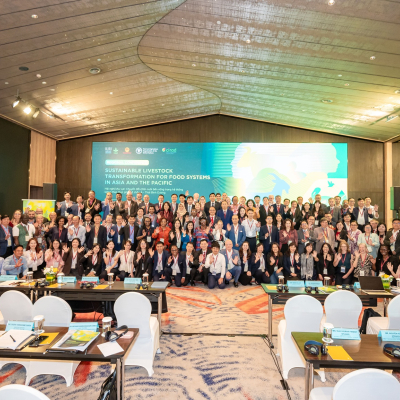
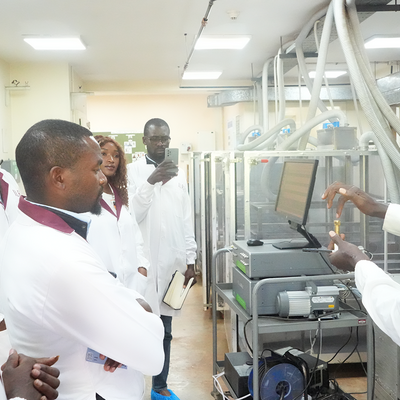
In late 2024, the National University of Laos (NUOL), in collaboration with ILRI, convened a two-day One Health training workshop in Vientiane Capital. The event brought together 42 participants from Laos, Thailand, Cambodia and Vietnam, representing academia, government agencies, regional One Health networks, CGIAR centers and the private sector.
The objectives were clear: deepen understanding of the One Health approach, strengthen collaboration between human, animal, plant and environmental sectors, and provide hands-on learning through exposure to a functioning field site.
A “Learning by Doing” Hub: Establishing the One Health Field Site
The highlight of the workshop was a field visit to Hatviengkham village in Xaythany district, Vientiane Capital—home to Laos’ first operational One Health field site.
Established on 30 October 2024 under NUOL’s leadership, with technical support from ILRI, the site was designed as a “learning by doing” platform. Rather than presenting One Health as a policy framework alone, the field site embeds the approach directly into community life.

Inauguration activities began months earlier, including understanding community issues, a village-wide cleaning campaign organized jointly by students, villagers and local authorities. Students from human health, veterinary and environmental disciplines piloted practical initiatives focused on animal health services, sanitation improvement and environmental conservation.
During the October visit, trainees engaged in open discussions with the village chief and community members about livestock production, environmental challenges and public health concerns. A walking tour allowed participants to interview households directly, bridging the gap between academic learning and lived rural realities.
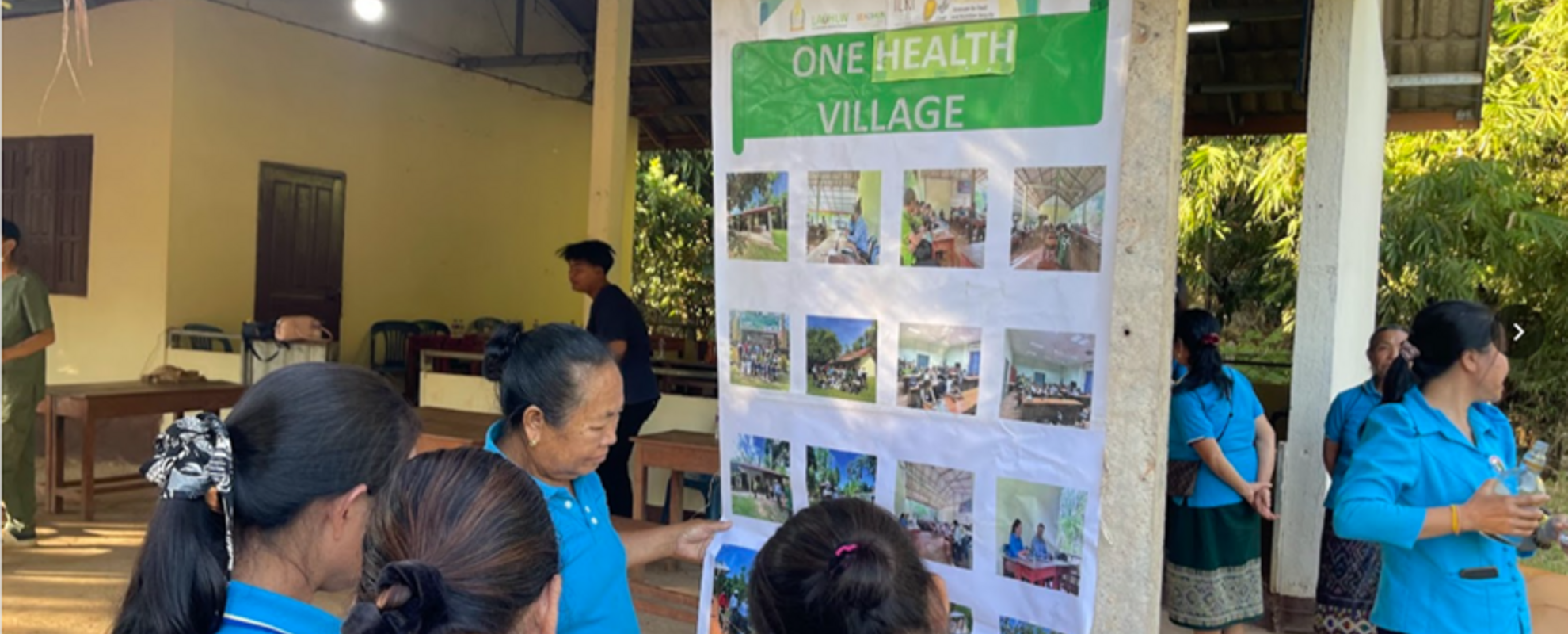
With support from villagers, NUOL established a small on-site training room equipped with essential furniture and a large-screen television to facilitate ongoing consultations and community learning. The long-term vision is to transform Hatviengkham into a model “One Health Village” that can host visitors and inspire replication elsewhere in the country.
Strengthening One Health at community level
By late 2025, the collaboration had evolved further. NUOL’s Faculty of Agriculture, working alongside ILRI and sectoral partners, conducted additional field visits and organized animal health promotion activities in Hat Viengkham Village. These efforts reinforced the village’s transition toward a fully integrated One Health model—linking safer livestock practices, improved sanitation, prevention of zoonoses (e.g. Rabies) and environmental stewardship.
In early 2026, the research team expanded its partnership to include the Souphanouvong University (SU), Luang Prabang and member of LAOHUN. Together, ILRI, NUOL and SU began extending the One Health field site model to Har Khor Village in Luang Prabang Province. This expansion marks an important step in institutionalizing the model beyond Vientiane Capital—strengthening provincial academic engagement and embedding One Health practice in new communities.

For Vannaphone Phuthana, Dean of the Faculty of Agriculture at NUOL, the shift from theory to practice is the most significant achievement of the collaboration.
“For many years, we discussed One Health in research projects, conferences and workshops. But how to transfer the concept into real practice at village level—that is the most important question. Learning by doing is essential. With ILRI’s support, we are working directly with local people to see how they understand One Health and how they apply it in their daily lives.
Researchers may understand the theory clearly, but the real actors are the villagers. If they understand and adopt the approach, then we can say our work is successful. We are now involving a new generation of graduates, expanding our network, and working closely not only in Vientiane Capital but also in Luang Prabang. By collaborating with Souphanouvong University and establishing a field site in Har Khor Village, we are making One Health concrete and expanding it to new areas.”
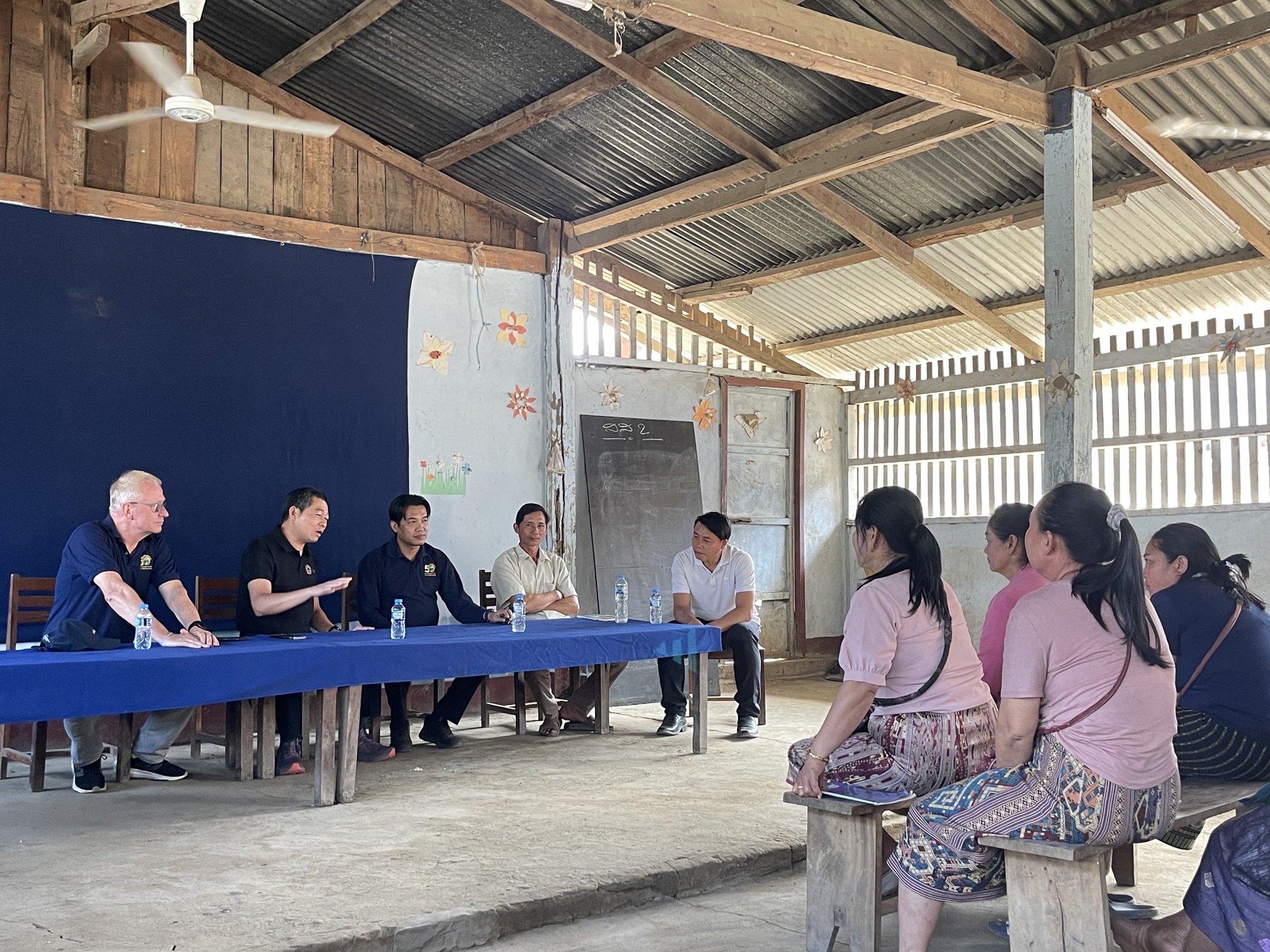
His reflection underscores a central lesson of the initiative: success is measured not only by workshops held or policies drafted, but by whether communities absorb and sustain the practices introduced.
Tackling antimicrobial resistance through the One Health Village model
Building on earlier successes, the One Health Village model is now being scaled out to address one of the region’s most pressing threats—antimicrobial resistance (AMR).
Field research on antimicrobial use in poultry farming is underway in Har Vieng Kham Village (Vientiane Capital) and Har Khor Village in Luang Prabang Province. By promoting responsible farming practices, strengthening systematic poultry production and improving animal health management including biosecurity, the initiative directly contributes to reducing unnecessary antibiotic use and on a wider arena to regenerative AG systems.
By embedding responsible livestock management within an integrated human–animal–environment framework, the expanding network of One Health field sites in Lao PDR demonstrates how regional collaboration—supported by the ASEAN-CGIAR Innovate for Food Regional Program and SAAF—can translate science into sustainable, community-level impact.

Read more about the One Health Field Site in Vietnam:
Vietnam One Health research partnership opens fourth provincial field site
A decade of academic and research partnership advances One Health in Vietnam