

Positive deviance: Why the answer is already in the community—Prof. Arvind Singhal
Abstract
In this interview, Professor Arvind Singhal, a leading scholar on positive deviance and social change, explains why this approach offers such a powerful alternative to traditional, expert-led development models.
Rather than starting with an outside solution, positive deviance begins with a question: within a community facing the same challenges and constraints as everyone else, is there someone who has already found a way to achieve better outcomes? By identifying these uncommon practices and solutions already existing within the community, researchers and practitioners can amplify what works rather than impose what they assume should work.
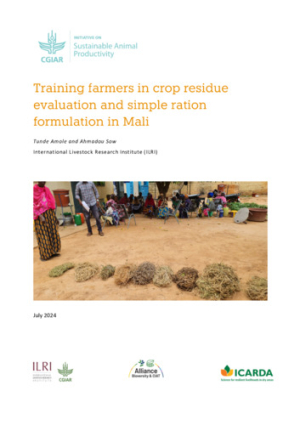
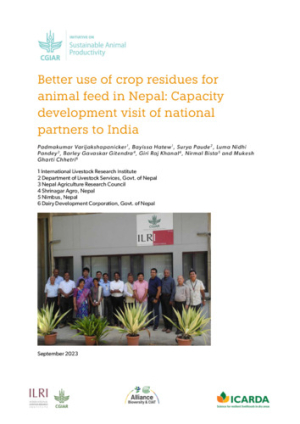
Professor Singhal reflects on how this mindset shift, from evidence-based practice to practice-based evidence, is reshaping how ILRI and its partners approach research for development. He highlights ongoing work on livestock feed and fodder innovations, including the use of crop residues, mechanical thrashers, and locally adapted feed mixes, as an example of combining scientific expertise with the wisdom and lived experience of farming communities.
At its core, Professor Singhal argues, positive deviance requires humility: recognizing that communities often hold the answers to their own challenges, and that co-designed solutions carry more legitimacy, ownership, and sustainability than externally imposed ones.
Citation
Singhal, A. 2026. Positive deviance: Why the answer is already in the community—Prof. Arvind Singhal. Video. Nairobi, Kenya: ILRI.