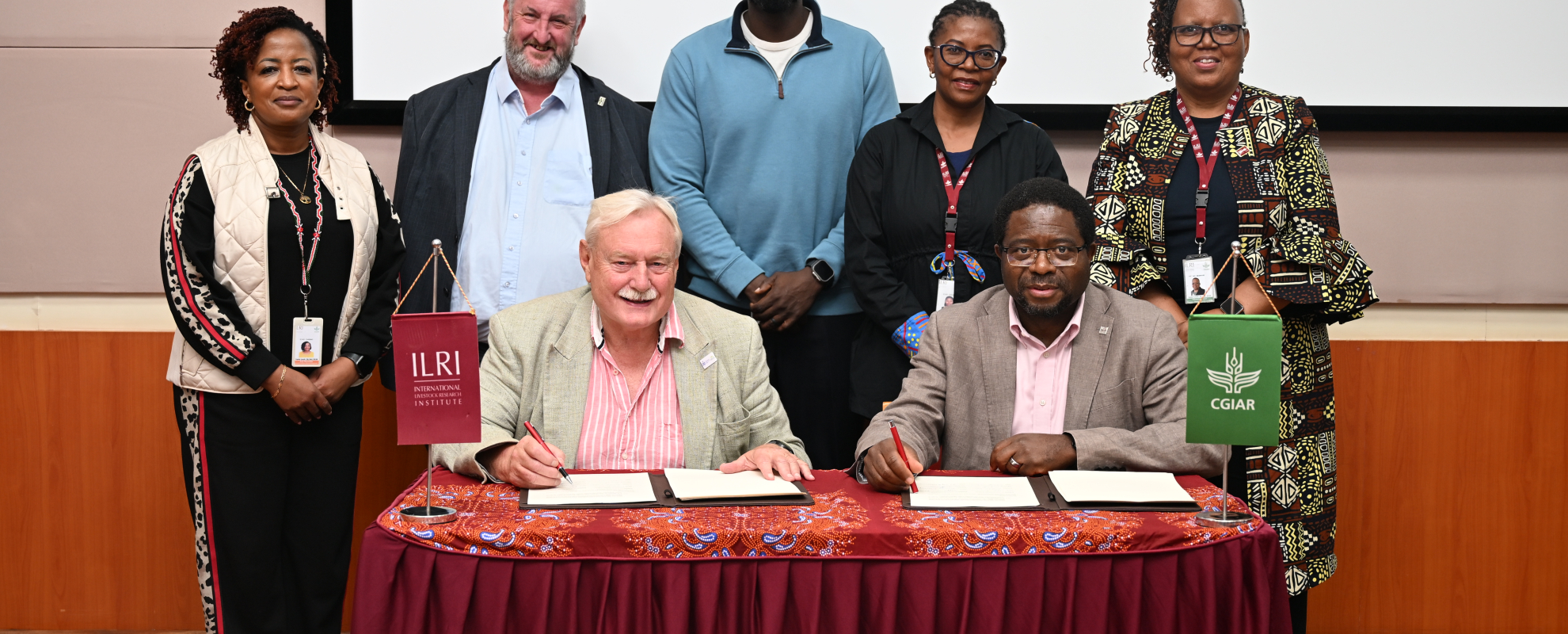
ILRI and Scotland’s Rural College expand partnership for climate-resilient systems
As livestock systems face growing pressures from climate change, food insecurity, and as the need for rural economic opportunities continues to grow, the International Livestock Research Institute (ILRI) and Scotland’s Rural College (SRUC) are expanding their partnership to translate research into practical field solutions.
On 11 September 2026, the two institutions signed a memorandum of understanding (MoU) at ILRI’s Nairobi campus. The agreement establishes a strategic framework for joint research, shared funding pursuits, knowledge exchange, education, training, and researcher mobility.
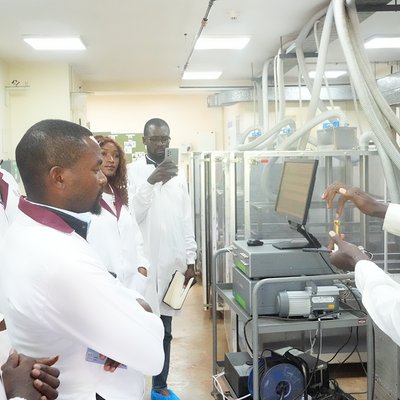
The MoU was signed following a week-long series of technical exchanges focusing on climate-resilient livestock systems, forage and feed, genetics, animal health, dairy, beef, small ruminant production, innovation, scaling, and resource mobilization.
Expanding on an established partnership
The partnership combines complementary strengths: SRUC integrates research, education, farmer engagement, and commercial activity, while ILRI contributes expertise in livestock science across Africa and developing regions.
A prime example of ongoing cooperation is a livestock productivity, animal health, nutrition and welfare project commissioned by the UK-CGIAR Center.
Working alongside the Ethiopian Institute of Agricultural Research, scientists from both organizations are evaluating forage varieties and crop residues that increase livestock yields while lowering greenhouse gas emissions from ruminants.
The work forms part of wider UK-supported agricultural research through the UK-CGIAR Centre, which connects UK scientific expertise with CGIAR and national research capabilities to address challenges facing agriculture and livestock systems.
The MoU expands this foundation, enabling the institutions to co-develop research initiatives, secure external funding, host joint workshops and conferences, and co-publish findings. It also facilitates resource sharing, staff and student visits, internships, fellowships, and secondments.\
This focus on applied research extends to economic impact: both institutions see innovation as a pathway to wider economic and social benefits. Wayne Powell, SRUC’s principal and chief executive, highlighted the importance of translating research into commercial opportunities that support entrepreneurship, job creation, and agribusiness growth.
“Beyond understanding the science, we must identify the commercial and entrepreneurial opportunities that drive job creation and launch new enterprises,” Powell said.
From research to innovation and impact
In addition to reviewing existing projects, leaders focused on accelerating market and community impact. Siboniso Moyo, ILRI deputy director of policy, partnerships, and impact, highlighted the momentum behind the agreement: “We are coming together to build on our ongoing work, define the next phase of our partnership, and scale up our joint initiatives.”
Participants explored how combined institutional expertise can bridge science and practice through enterprise development, farmer outreach, and commercial partnerships. Reflecting on the week’s outcomes, ILRI director general Appolinaire Djikeng, noted that the relationship has evolved beyond standalone research trials.
“We began the week intending to sign an MoU, but our progress has taken us far beyond that—this is now a strategic alliance,” he said.
And SRUC provost and deputy principal Jamie Newbold noted that, despite geographical differences across Scotland, Kenya, and Ethiopia, many agricultural challenges are shared, creating valuable opportunities for collaboration. He emphasized that innovation must translate into tangible benefits for farmers and communities, and that the strategic alliance provides a strong platform for both institutions to deliver meaningful impact.
“Climate change and food security present urgent, real-world challenges. Our responsibility is to deliver practical solutions and opportunities that enable small-holder farmers to tackle these issues and thrive,” Newbold said, stressing the shared ambition to translate innovation into lasting change.
Looking ahead
Initial priorities include reinforcing the innovation ecosystem around livestock genetics, such as establishing an entrepreneur-in-residence model to nurture emerging start-ups. The agreement will also explore joint academic appointments and visiting fellowships to deepen institutional ties.
With the framework now in place, ILRI and SRUC are focused on translating their shared ambitions into tangible outcomes, combining innovation and enterprise to support more productive, resilient, and sustainable livestock systems for farmers and communities worldwide.
Further reading: Livestock improvement, animal health, nutrition and welfare.
*The project is funded by UK International Development from the UK government