Measure it, finance it, share it: what Nigeria's livestock climate plan offers other countries
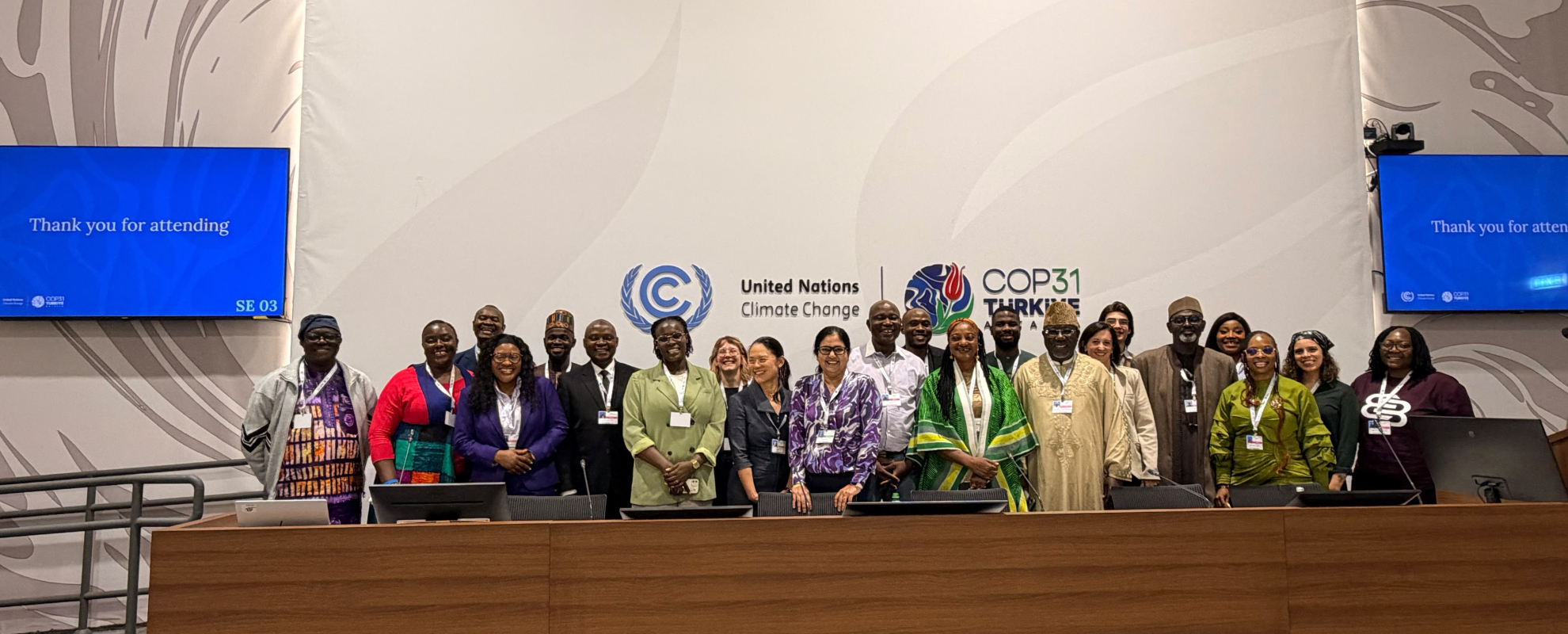
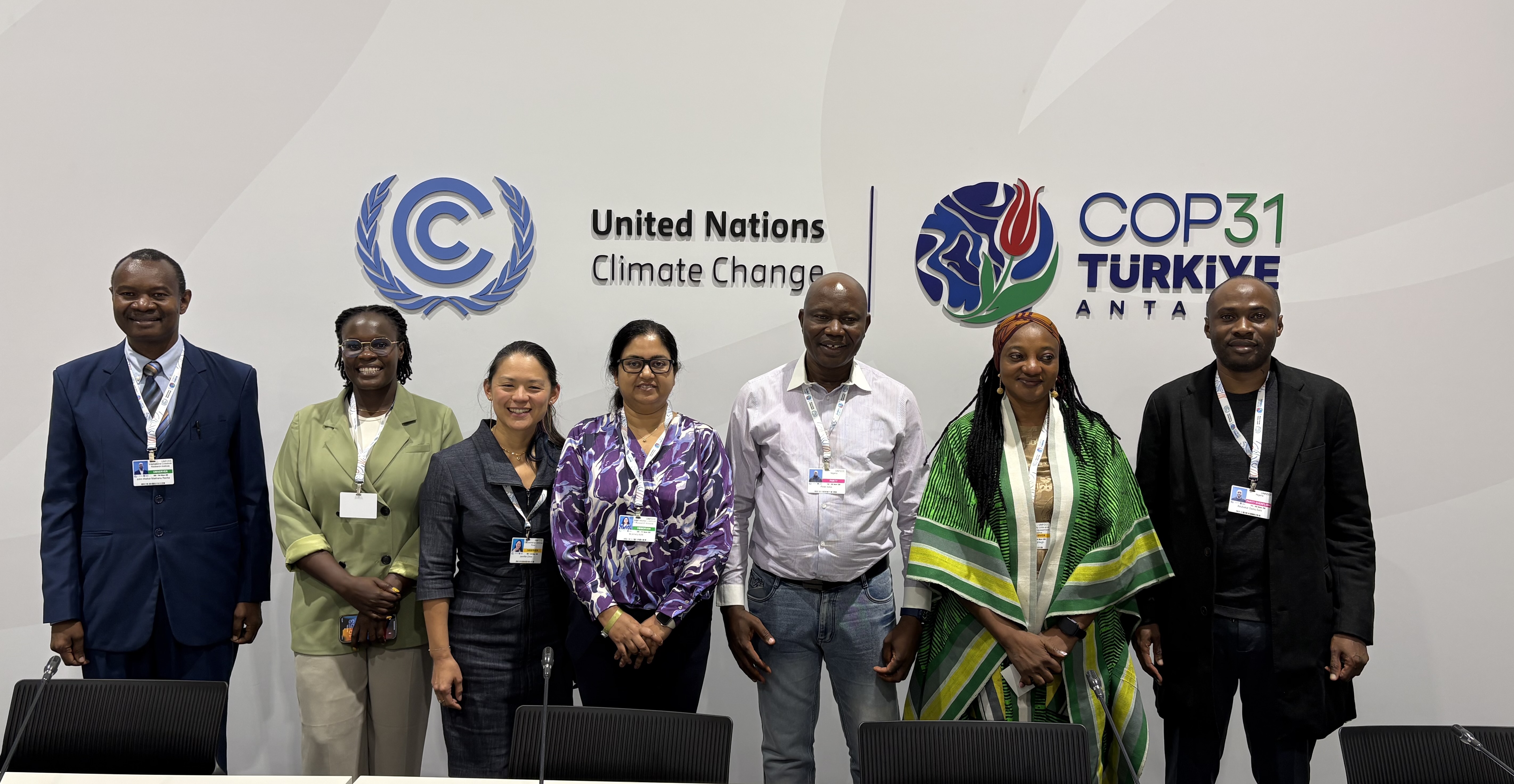
At a COP31 official side event in Antalya, Nigeria laid out one of the most ambitious livestock growth plans in Africa and was candid about the climate questions it raises. The lessons reach well beyond Nigeria.
Many people are quick to point out the greenhouse gas emissions from livestock. But as Alike Peter, Director (Technical) at Nigeria’s Federal Ministry of Livestock Development, told the COP31 audience, the
That gap between assumption and evidence ran through the whole session, which ILRI co-hosted with the African Center for Technology Studies (ACTS), Angel Support Foundation, and Nigeria’s Federal Ministry of Livestock Development. It is also the gap many low- and middle-income countries face as they try to grow their livestock sectors in the face of increasing demand for meat and milk while also meeting climate commitments.
A plan with numbers attached
Nigeria is not hedging its ambitions. Its National Livestock Growth Acceleration Strategy, a 10-year plan, aims to raise the sector's contribution to the economy from about USD 32 billion to USD 72 billion. The Federal Ministry of Livestock Development is barely two years old, yet 22 states have already set up their own livestock ministries. Nigeria has written livestock into its third nationally determined contribution (NDC) and, with the World Bank, has developed a national framework for measurement, reporting, and verification (MRV).
The ministry was open about the tension between growing the sector to meet national food security needs and keeping its emissions in check. More animals and more output can mean more greenhouse gas emissions, especially methane. When someone in the audience asked how that squares with climate goals, the answer was efficiency: better feed, health, and genetics, so each animal produces more milk or meat with less waste. Jennifer Chow, Senior Director, Agriculture, Water, Food at the Environmental Defense Fund, pushed further. Lower emissions per liter of milk are not the same as lower total emissions, she said, and the sector must be ready to show both. That honesty made the conversation worth having.
Lesson 1: Measure your own herds, not someone else's
Many low-income countries report livestock emissions using global default values, which were built largely on data from intensive systems in high-income countries. Nigeria is replacing those default values with locally calculated and more accurate ones. Netzence Sustainability Limited and the ministry presented findings from Nigeria's livestock methane baseline study at COP31, along with new climate monitoring devices. Their early data suggest some Nigerian systems emit more methane than the defaults assume.
ILRI's own work points the other way on a different gas. Measurements from ILRI's Mazingira Centre found that cattle manure in Kenyan grazing systems emitted around 10 times less nitrous oxide than the defaults suggest, and those data fed into the 2019 IPCC guidelines. Taken together, the lesson is simple: the defaults can be wrong in either direction. Country-specific evidence is what makes a climate claim credible, and what unlocks results-based finance.
Lesson 2: Start with productivity
Farmers are unlikely to change practices just to cut emissions . They need clear benefits for adopting new practices, including greater income. The good news is that the two can go together. Better feed, health, and genetics can cut emissions intensity by up to 30 percent while raising output.
Animal health is the clearest case. Animals that die young, fall sick, or fail to reproduce still emit methane while producing little or no food for human consumption. Livestock disease wipes out more than 20 percent of global animal production every year, according to the World Organisation for Animal Health. Tools such as a thermotolerant vaccine against peste des petits ruminants (PPR) developed by ILRI with Hester Biosciences and Mali's Central Veterinary Laboratory, which stays stable for up to nine days, reach herds where cold chains don't. In Nigeria itself, ILRI and partners developed a way to turn cassava peels, a polluting waste, into a high-quality feed ingredient within hours, cutting the amount of costly maize in animal feed and creating new processing businesses that employ many women.
Lesson 3: Give livestock an institutional home to support sector investment
Nigeria's dedicated ministry and its place in the NDC give investors a national structure they recognize, as Ivano Assenza from the Office of Climate Change, Biodiversity and Environment at FAO noted. Other countries can get there through different routes. Livestock master plans, developed with ILRI support in more than 13 countries including Nigeria, have helped governments turn sector ambitions into costed investment cases. In Tanzania, the plan helped secure USD 624 million in proposed investment.
Lesson 4: Design finance to fit the borrower
Livestock receives just a fraction of climate development finance—a World Bank estimate puts that figure at 0.1%. Panelists agreed no single instrument will close that gap. Grants and readiness support can take early risk, concessional loans can build infrastructure, and results-based payments, including carbon markets under Article 6 of the Paris Agreement, can reward verified cuts. But a pastoralist buying feed or vaccines needs a very small loan, and a cold-chain operator needs a large one. For rural women without land or collateral, Helen Teghtegh from Community Empowerment Links & Human Initiative, Nigeria, explained that grants and strong village savings and loan associations are a better starting point than credit.
Lesson 5: Co-create, in the local language
"Participation" is often used to mean inviting people to comment on a finished plan. Panelists called for a shift from consultation to co-creation, working through cooperatives and savings groups that already exist. Digital advisory tools only help if people can use them: one example from Kenya delivers climate information by WhatsApp and SMS in local languages. Maureen Kabasa of the African Centre for Technology Studies described a chatbot, designed and led by young women, that answers farmers' climate questions in Swahili and a local language. She also pointed to Kenya's iCow platform, which gives farmers breeding and feeding tips, a directory of vets, and a way to keep production records. When advice arrives in a language people understand, she argued, they act on it sooner, and their own observations can help county officials make better decisions.
Why this is a justice question
The average Nigerian has access to about 7 kg of meat a year; the average American has access to about 120 kg. Many low- and middle-income countries face a double bind of too little consumption for good nutrition and too much emission per unit produced. Aditi Mukherji, principal scientist at ILRI, explained how closing both gaps at once is the climate justice case for investing in livestock in the Global South, with mitigation as a co-benefit of adaptation, not a reason to hold growth back.
What this means for COP31
COP31 is a decision point for agriculture in the climate talks. The Sharm el-Sheikh joint work on agriculture and food security, the UNFCCC's four-year process on climate action in farming and food, is scheduled to conclude here. Talks on it stalled at COP30, leaving the key decisions to this meeting. Negotiators now have to decide whether agriculture keeps a dedicated home in the climate process, and what that home should do.
By the end of the conference, we hope to see three things. First, a clear future for agriculture and food security under the UNFCCC, one that treats improving sustainable livestock systems as part of climate action and puts adaptation and food security first, with lower emissions as a co-benefit. Second, finance that matches the opportunity: climate finance that reaches producers, and support for the national MRV systems that let countries like Nigeria prove results and attract investment. Third, recognition that a just transition for livestock has to be co-designed with the farmers, pastoralists, women, and young people who depend on it.