Turning cassava waste into opportunity: Scaling high quality cassava peels for people, profit and the planet
In Nigeria’s bustling cassava-processing hubs, mountains of cassava peels pile up behind processing sheds or are left to rot, polluting waterways and releasing greenhouse gases. Yet those same peels are now at the center of a transformation in Nigeria’s livestock feed system—lowering feed costs, creating jobs for women and youth, and offering a locally-grown answer to one of agriculture’s most stubborn problems: expensive animal feed.
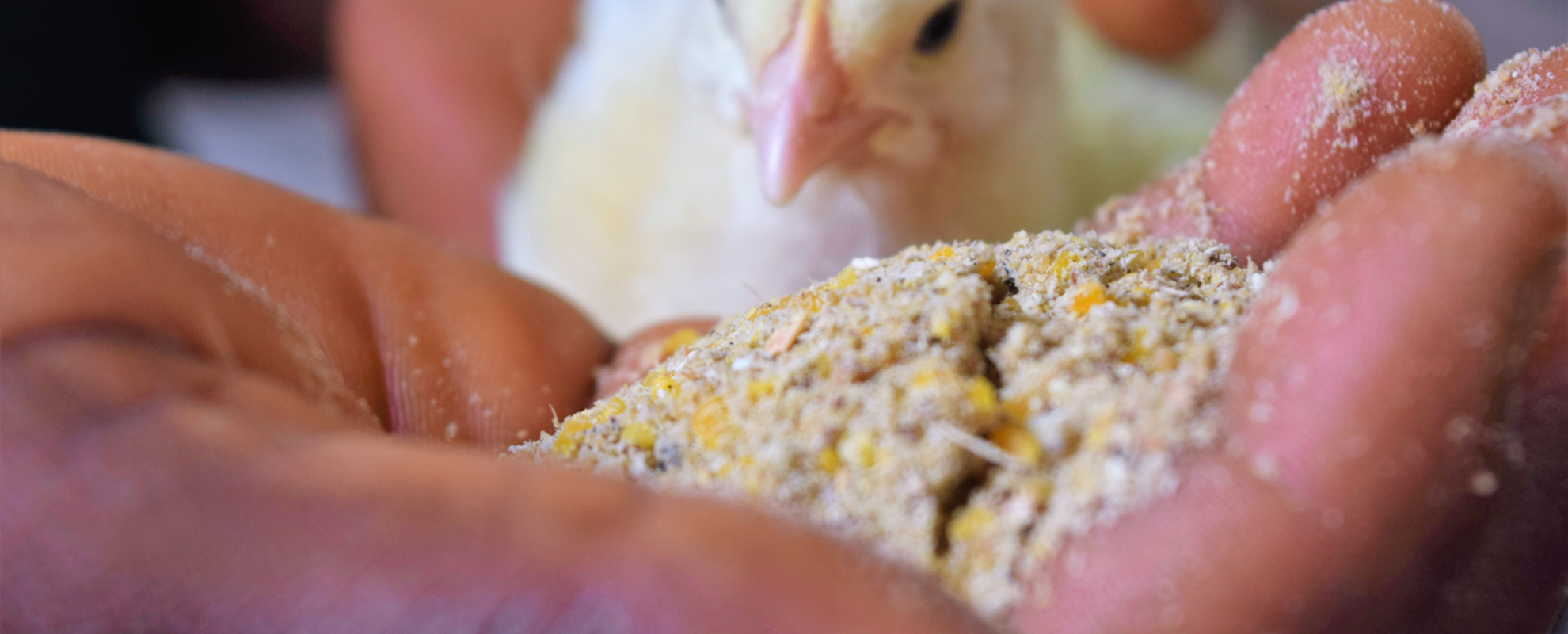
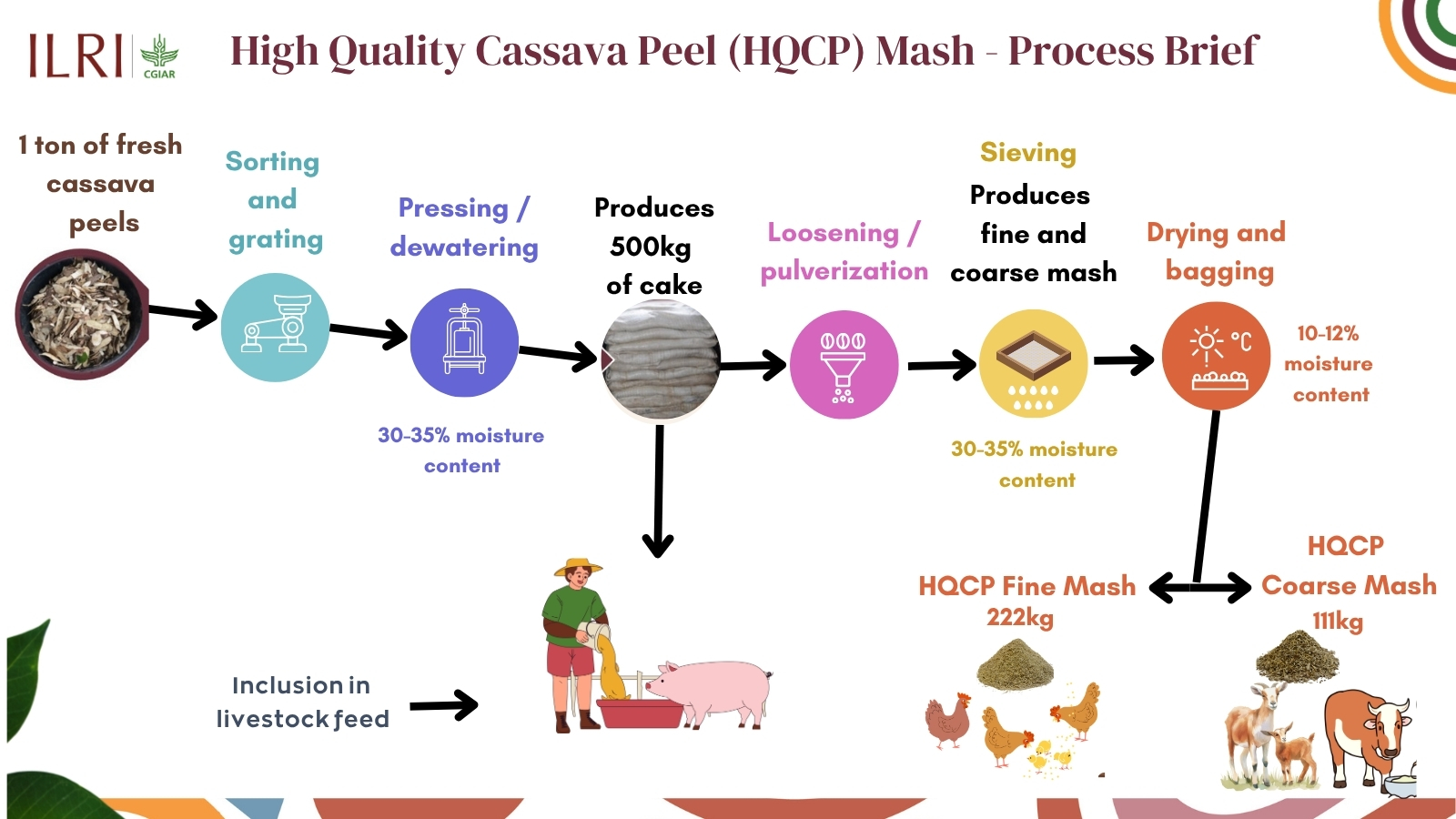
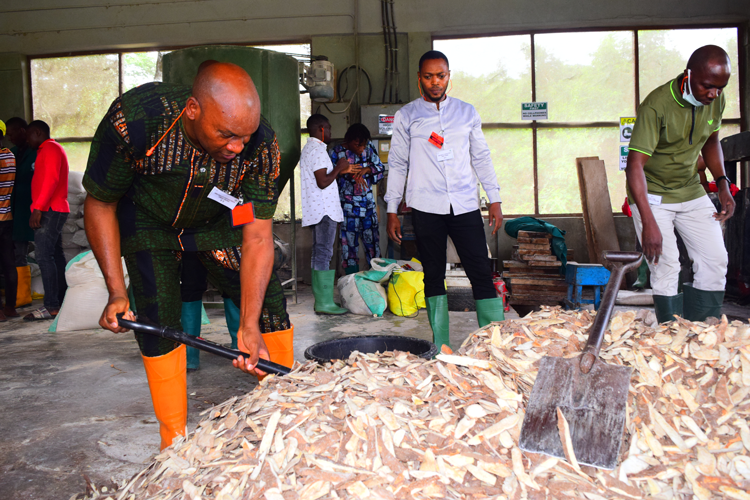
This transformation is driven by an innovation developed and championed by the International Livestock Research Institute (ILRI), dubbed High‑Quality Cassava Peels (HQCP). This production process converts fresh cassava peels into safe, energy‑rich animal feed ingredients that can partially replace maize, a staple, widely-used ingredient in livestock feed recently plagued by price volatility and short supply.
“Nigeria produces more than 60 million tonnes of cassava each year. About a quarter of that becomes waste,” explained ILRI scientist, Tunde Amole. “HQCP allows us to turn what was previously an environmental problem into a high‑value feed ingredient that directly benefits farmers.”
From research breakthrough to real‑world relevance
ILRI’s work on cassava peels began in the late 2000s. A breakthrough came in 2015, when researchers refined a rapid processing method that safely reduced cyanide levels while improving storability and feed quality.
By 2016, HQCP products were formally trademarked. Feeding trials showed that following this process produces a safe and nutritious feed ingredient for poultry, pigs, fish, goats, sheep, and cattle, and supports good animal performance in terms of growth, feed efficiency, and feed conversion—often at significantly lower cost than traditional feed ingredients.
Critically, ILRI established a non‑negotiable quality principle: HQCP must be produced from fresh cassava peels processed within 24 hours of peeling.
“Freshness is not optional,” emphasized ILRI Technology Transfer Officer Adebola Adebayo. “The safety and nutritional value of HQCP mash depend strongly on processing the peels within 24 hours. Beyond this window, the quality and trust are compromised due to the deterioration that kicks in once the cassava peel is removed.”
The feed crisis and a local solution
Nigeria’s demand for animal sourced foods is rising rapidly, driven by population growth, urbanization, and changing diets. Yet feed costs, driven largely by the soaring price of maize, remain the biggest constraint facing poultry, pig, and fish farmers.
Maize now accounts for up to 65% of poultry feed formulations, and prices reached historic highs in 2024. As margins shrank, farmers and feed millers began searching urgently for alternatives.
That search led many to HQCP.
ILRI’s research showed that properly processed cassava peels can safely replace up to 15% of the maize in animal feeds, without compromising quality and performance.
“The rising cost of maize and soybean has fundamentally changed how the industry looks at alternatives like HQCP,” said Aderonke Titoneye, executive public relations officer of the Feed Industry Practitioners Association of Nigeria (FIPAN). “For many feed millers, it’s no longer a question of if to use HQCP, but how to integrate it effectively, because it has become a necessary tool for managing costs and sustaining production.”
“At inclusion levels of 15% to 20%, feed millers are seeing measurable cost savings while maintaining acceptable performance, making HQCP a practical option in commercial feed formulation,” Titoneye said.
However, FIPAN notes that its inclusion on feed labels depends on reliable year‑round availability, as processors must ensure accuracy between declared and actual ingredients.
Depending on scale, HQCP enterprises can generate returns on investment ranging from 15% to more than 40%, while creating jobs along the value chain from peelers and transporters to processors and fabricators.
Finally, HQCP addresses a major environmental waste challenge. Diverting cassava peels from open dumping reduces methane emissions and improves sanitation in rural communities.
Scaling for impact
ILRI recognized early that technology alone would not deliver impact at scale and has convened multiple multi‑stakeholder meetings and scaling workshops, bringing together feed millers, processors, farmer associations, regulators, financial institutions, fabricators, NGOs, and development partners.
These forums created space to jointly diagnose bottlenecks such as finance, drying technology, energy access, and quality standards—and to co‑design practical scaling pathways.
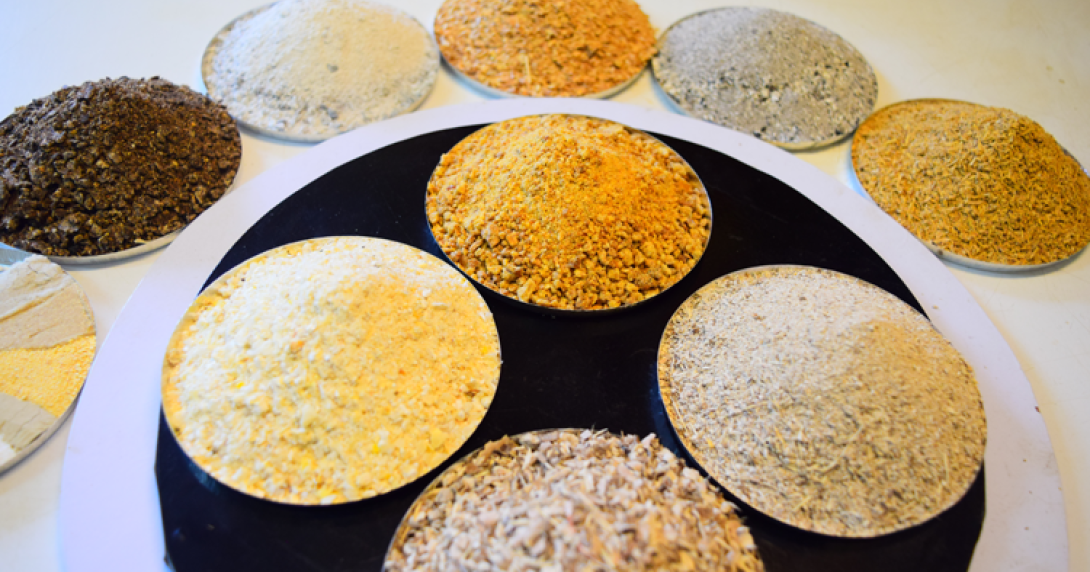
ILRI
HQCP mash and other Feed Compounding Ingredients
“HQCP showed us that scaling only works when you take a systems approach, " said ILRI scaling expert Ijudai Jasada. “It’s about removing barriers for use by farmers, enabling women and youth to produce HQCP, and ensuring finance and affordable machines are in place. When the whole ecosystem moves together, the innovation can scale.”
HQCP scaling deliberately integrates gender and youth inclusion. Through this participatory process, stakeholders co‑developed multiple business models, including lower‑capital options that open doors for women and youth—for instance, by enabling women who are already dominant in cassava and garri processing to earn income by producing cassava-peel cake close to processing sites, reducing transport burdens and entry barriers.
Training as the backbone of adoption
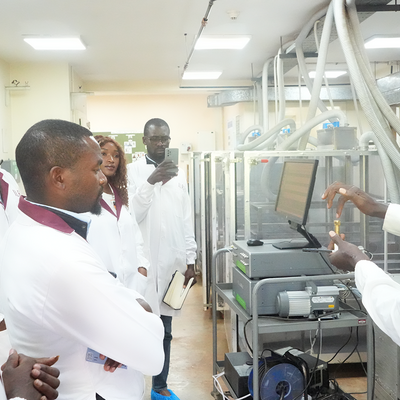
A defining feature of HQCP’s journey has been sustained capacity building. Since 2015, ILRI and its partners have directly trained key stakeholders, while extending their reach to a broader network of more than 5,000 people.
Many of today’s HQCP processors and users first encountered the innovation through ILRI‑led or partner‑supported training programs that combined technical skills with business development and environmental safeguards.
“The HQCP training by ILRI gave me insight into the possibilities of sustainable agribusiness, where raw materials we once considered waste can actually help us generate wealth,” said Damilare Lasisi, who was trained in 2022. He now runs his own HQCP processing factory, supplying feed for his own farm while selling the excess to other farmers.
The cassava-peel innovation is now part of broader donor‑funded development programs, including the Sustainable Entrepreneurship-led Poultry Transformation Program, and is being promoted through workshops led by ILRI and partner organizations across Nigeria.
The aim is that by 2040, the country will produce at least 500,000 tonnes of HQCP each year, replacing nearly a third of the maize used in livestock feed, while generating thousands of jobs across 18 states.
Beyond Nigeria: a traveling solution
What makes HQCP particularly powerful is its transferability. The innovation has already moved beyond Nigeria, with adoption and training activities reported in Sierra Leone, Liberia, DR Congo, Namibia, and Costa Rica, and growing interest from other countries.
“Wherever cassava is produced, the question of what to do with the peels comes up,” said Tunde Amole. “HQCP is gaining traction because it provides a proven, environmentally friendly solution. Both the science and the economics make it adaptable across different countries.”
“What we are seeing with HQCP is just the beginning. When you understand the scale of cassava waste and match it with the right knowledge, partnerships, and investment, the opportunities become enormous. With more awareness, training and policy support, this innovation can transform how we think about waste—not just in Nigeria, but wherever cassava is grown.”


Related Publications
Reducing and Redistributing Women’s Unpaid Care Work in Livestock Systems of Rural Kenya and Ethiopia: Evidence from Quantitative Baseline Analysis