When the data moves beyond counting cases
As countries strengthen surveillance for dengue and chikungunya, a workshop in Nairobi challenged public health professionals to move beyond reporting outbreaks and start predicting them. For decades, disease surveillance has largely answered one question: What happened? Today’s public health challenges increasingly demand another: What is likely to happen next?
That question brought epidemiologists, disease modelers and public health officers from across Kenya to a meeting room in Nairobi's Westlands area in March 2026. During the intensive training, participants drawn from the Kenya Medical Research Institute (KEMRI), Kenya National Public Health Institute (KNPHI), and International Livestock Research Institute (ILRI) explored not only how to build statistical models, but how to question them, interpret them, and use them to support decisions before outbreaks gain momentum.
The statistical modelling for epidemiological research training workshop was the first major capacity-building activity under ARBO-WATCH, a three-year initiative funded by Wellcome Trust and led by a nine-institution consortium including ILRI, Jomo Kenyatta University of Agriculture and Technology (JKUAT), KEMRI, KNPHI and Ethiopian Public Health Institute. The project is building decision-support tools for dengue and chikungunya surveillance across Kenya, Somalia, and Ethiopia.
Learning to see patterns differently
Before the workshop, most participants were doing what health professionals are trained to do: summarizing data, describing trends, and reporting numbers up a chain of command. What many had less opportunity to do was interrogate the models behind those numbers.
Henry Kissinger, a research biostatistician at JKUAT who helped design and deliver the workshop, watched that change unfold over four days: “By the end of the training, participants were no longer just reading data outputs passively. They were questioning assumptions, identifying potential confounders, and thinking critically about how model results should inform public health decisions rather than simply accepting them at face value.”
Using R, an open-source programming language widely used for statistical analysis, participants progressed from hypothesis testing and regression analysis to time-series modelling through a combination of lectures and practical sessions. The emphasis was less on theory and more on how statistical techniques can support outbreak preparedness, with hands-on exercises using real surveillance datasets running each afternoon.
For Hellen Akengo, a research associate at ILRI, the biggest shift occurred during the time series sessions. Participants learned how to separate disease case numbers into their component patterns, identifying seasonal peaks, longer-term shifts, and background noise, and then using those patterns to forecast future transmission.
“These approaches are directly applicable to tracking and predicting trends in dengue and chikungunya transmission,” Akengo said. “The emphasis on data visualization changed how I think about communicating findings to colleagues who do not work inside statistical models.”
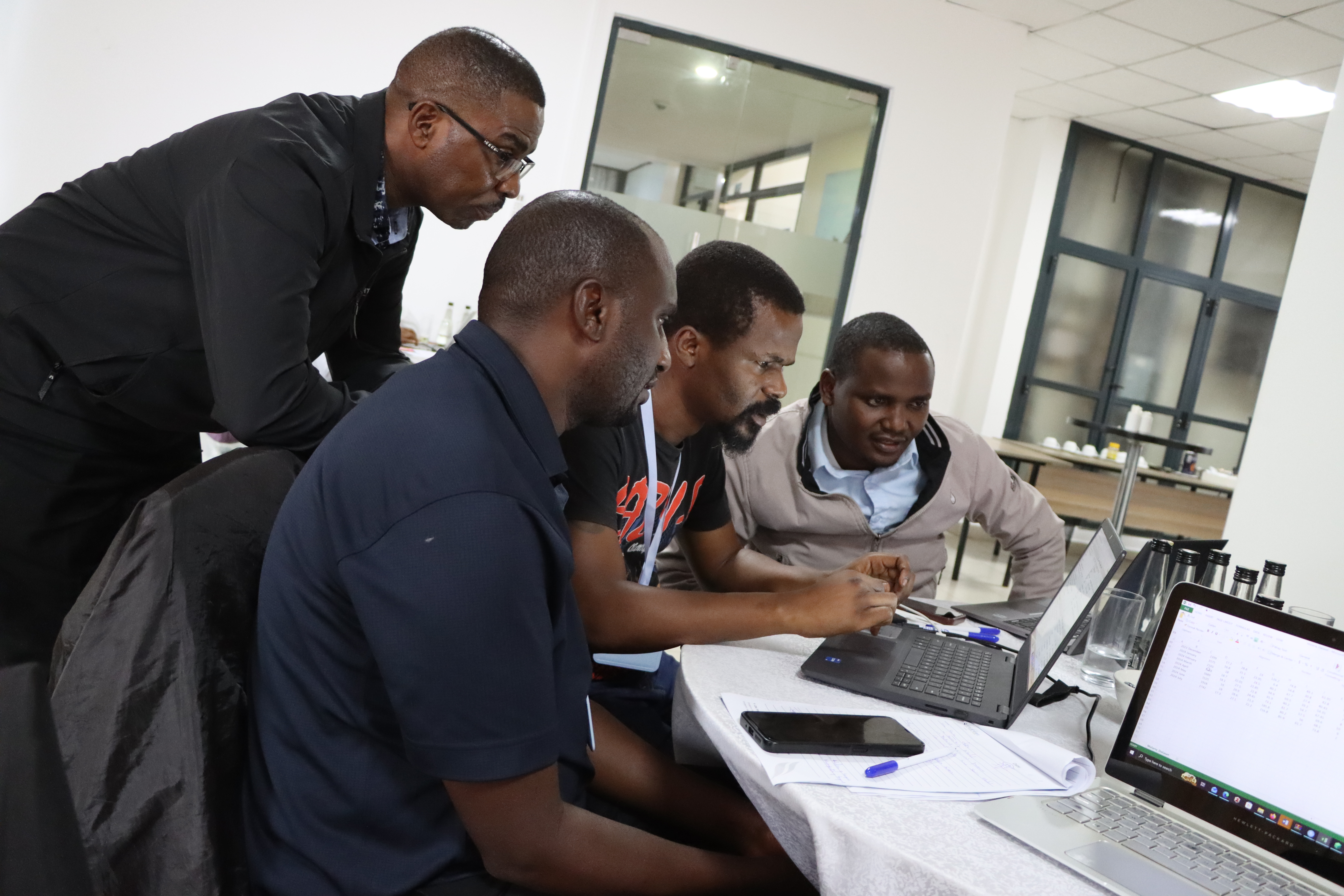
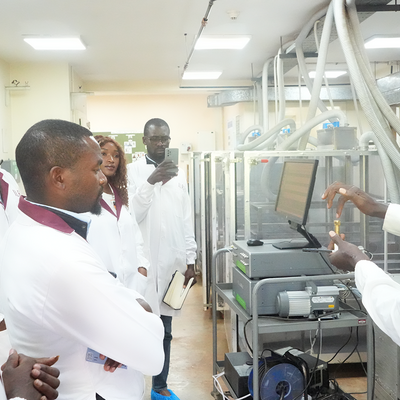
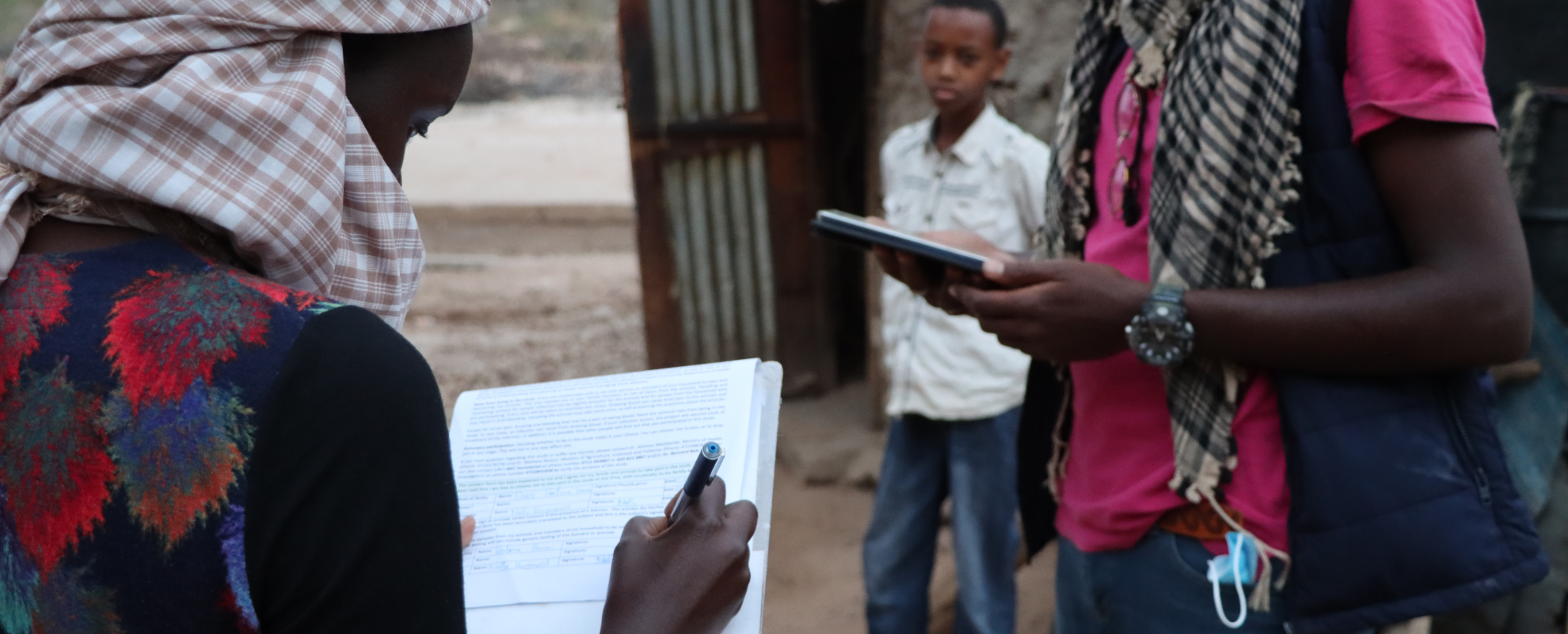
Participants at the statistical modelling for epidemiological research training workshop (photo credit:ILRI/Geoffrey Njenga).
Fostering collaboration across institutions
The workshop was also designed to break down institutional silos. Co-facilitator Caroline Mugo, a biostatistics lecturer at JKUAT, deliberately mixed researchers, epidemiologists, and public health officers across tables.
“This encouraged interaction and mixing among participants from different backgrounds. Participants were encouraged to ask questions relevant to their specific data and work contexts, making the sessions more inclusive and practical,” Mugo said.
Some participants went further, bringing their own datasets to the hands-on sessions for group analysis. Human disease data sat alongside mosquito surveillance records from real surveillance systems, not textbook examples. By the final day, mixed teams were presenting analyses together, often approaching the same dataset from different professional perspectives.
“This group work was particularly valuable, as it fostered peer learning, collaboration, and the exchange of diverse perspectives,” said Mugo.
For a project whose success depends on linking research with routine public health practice, those conversations may prove as important as the technical skills themselves. To ensure lasting impact, each institution nominated a champion to share the skills and knowledge with colleagues after the workshop.
Why modelling matters
The workshop also addressed challenges beyond statistical training. As Francis Ng’ang’a, from NPHI pointed out, Kenya already has a structured surveillance platform under the Integrated Disease Surveillance and Response strategy. However, it is “often more reactive than predictive”.
“Data timeliness, quality and completeness remain major challenges, especially at subnational levels where reporting emanates,” he said.
Another obstacle is that human clinical data, animal health information, mosquito surveillance, and environmental datasets are often collected through separate systems that do not easily communicate with one another. Without integrating these datasets, predictive models cannot provide the comprehensive picture that decision-makers need. Even when models generate useful insights, Ng'ang'a said they only have value if they can be translated into clear, actionable evidence that informs policy and outbreak response.
He plans to apply the methods within routine surveillance work while helping colleagues adopt similar approaches: “I hope to contribute to a growing community of practice by sharing knowledge, mentoring peers, and supporting the institutionalization of modeling approaches within public health systems.”
Building the people behind the models
ARBO-WATCH runs until January 2028. In year two, the consortium will run longitudinal cohort studies to validate the predictive models. Year three will translate those models into decision-support tools that frontline health systems can use if a dengue or chikungunya signal emerges.
What this training produced is the human infrastructure those tools will need to produce results: people inside Kenya’s public health institutions who understand what the models are doing and can explain it to the decision-makers.
The question the workshop set out to answer was practical. Can a mixed group of Kenyan health professionals, given four days and the right curriculum, move from describing disease data to modeling it? The answer, based on what happened in Nairobi in March, is yes. What happens next depends on whether their institutions give them the room to use what they learned.


Related Publications
Restricted insecticide application: a last mile control option for elimination of acute sleeping sickness and progressive control of African animal trypanosomiasis in South-Eastern Uganda