mature
Restoring land and producing livestock feed help farmers cope with climate change
Integrated crop–livestock restoration practices improve resilience, repair degraded landscapes, and strengthen livestock productivity in climate-vulnerable farming systems in Ethiopia.
Useful for
- Development programs and NGOs
- Extension services
- Farmers and livestock keepers
- Funders and investors
- Governments
- Private sector
- Researchers
What’s the challenge?
Many families in Ethiopia grow crops and raise livestock. Land degradation, water shortages, and changing rainfall make it harder to produce food and feed. When animals cannot get enough nutritious feed, they produce less milk and meat, reducing families’ food supplies and income.
Restoring damaged land takes time, and uncontrolled grazing is a major obstacle. Farmers still need to feed their animals while grasses and trees regrow, but animals can eat or trample new plants and damage recovering soil if allowed to graze freely. Feed production, grazing management, and land restoration therefore need to be addressed together.
What’s the solution?
Combining climate-smart farming and land restoration helps farmers grow grasses and other plants for animal feed. This approach gives livestock more to eat and reduces pressure on shared grazing land
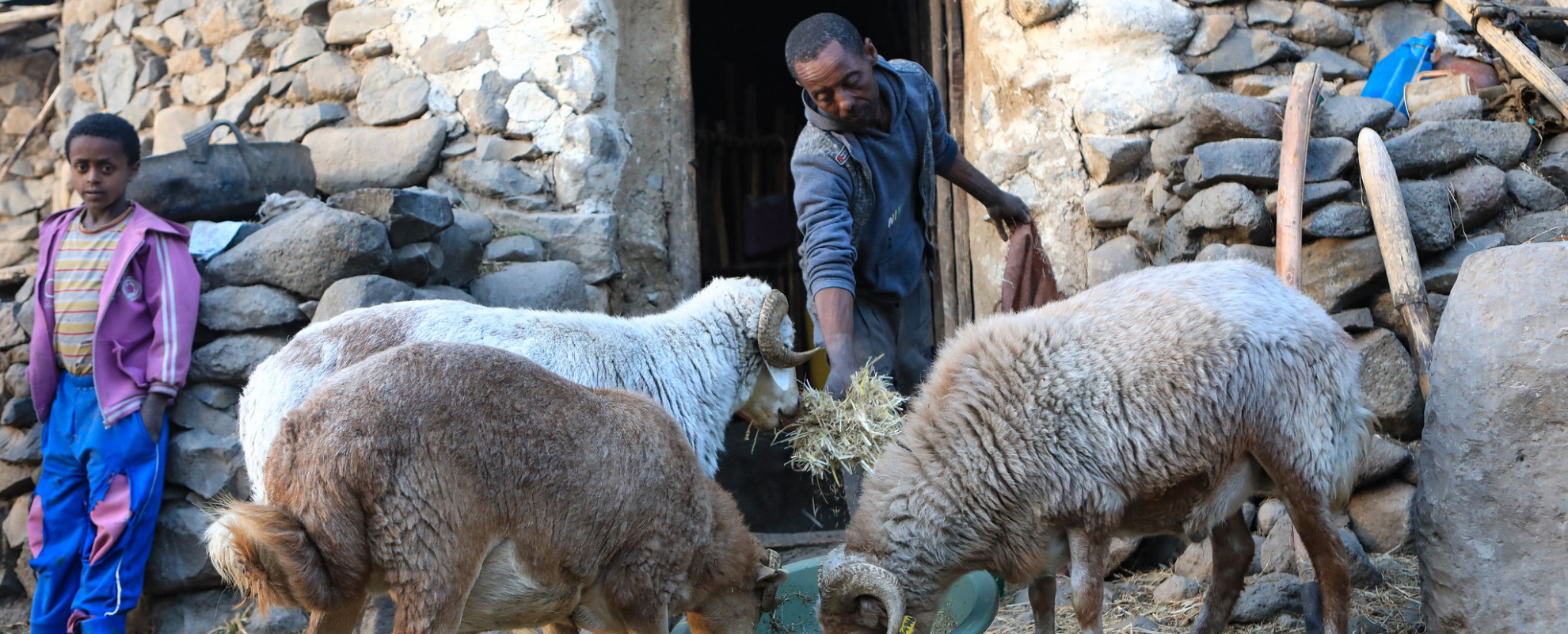
When communities agree on where and when animals can graze, damaged land has time to recover. Terraces, small dams, and other measures help keep soil and rainwater on the land, while trees and grasses protect the soil from erosion.
Farmers can also grow a wider mix of crops and develop other sources of income, such as beekeeping or poultry production, so they have more options when rainfall is poor. Local groups help manage shared grazing land and maintain restoration work. Together, these practices aim to improve feed supplies, protect farmland, and help families cope with drought and changing rainfall.
Want to use this in your work?
Contact our experts

Kindu Mekonnen
Senior Scientist, Crop-Livestock Systsems

Degefie Tibebe
Spatial analyst (Alliance Biodiversity and CIAT )
Contributors
- Accelerating Impacts of CGIAR Climate Research for Africa (AICCRA)
- Alliance of Bioversity International and CIAT
- CGIAR Trust Fund (CGIAR)
- International Livestock Research Institute (ILRI)
- Inter Aide
- Regional agricultural institutions in Ethiopia
- Rural Community-Based Development Initiative Association (RCBDIA)
What impact has been achieved so far?
A 2025 activity report recorded that the Accelerating Impacts of CGIAR Climate Research for Africa program and its partners reached more than 90,000 households through combined farming and land restoration activities in Ethiopia’s Hadiya, Kembata, and Wolaita zones. About 35 percent of these households are headed by women.
The work covered 293 kebeles, or local administrative areas. Partners outlined plans to expand to 583 kebeles and reach another 100,000 households over five years.
Related feed and forage work led by the International Livestock Research Institute has reached about 50,000 farmers across Ethiopia since 2023 through improved feed crops, training, and better ways to prepare and use feed.
More than
90,000 households
reached through combined
farming and land restoration activities
in Ethiopia
Who can use, support, and scale this solution?
Farmers and livestock keepers can grow feed, protect soil and water, and agree on grazing practices with neighbors, helping them feed their animals while damaged land recovers.

Governments, agricultural advisory services, and development organizations can bring these practices into local farming and restoration programs, providing training, planting materials, and support for communities to manage shared land.

Nongovernmental organizations, landscape restoration initiatives, and funders can support farmer training, local grass multiplication sites, and community grazing agreements, while assessing how this approach benefits feed supplies, land recovery, and household incomes.