In Ethiopia, bundled forage innovations are closing the livestock feed gap
Since 2023, ILRI’s bundled forage interventions have benefited 50,000 farmers, advancing livestock productivity and building climate resilience across five regions in Ethiopia.
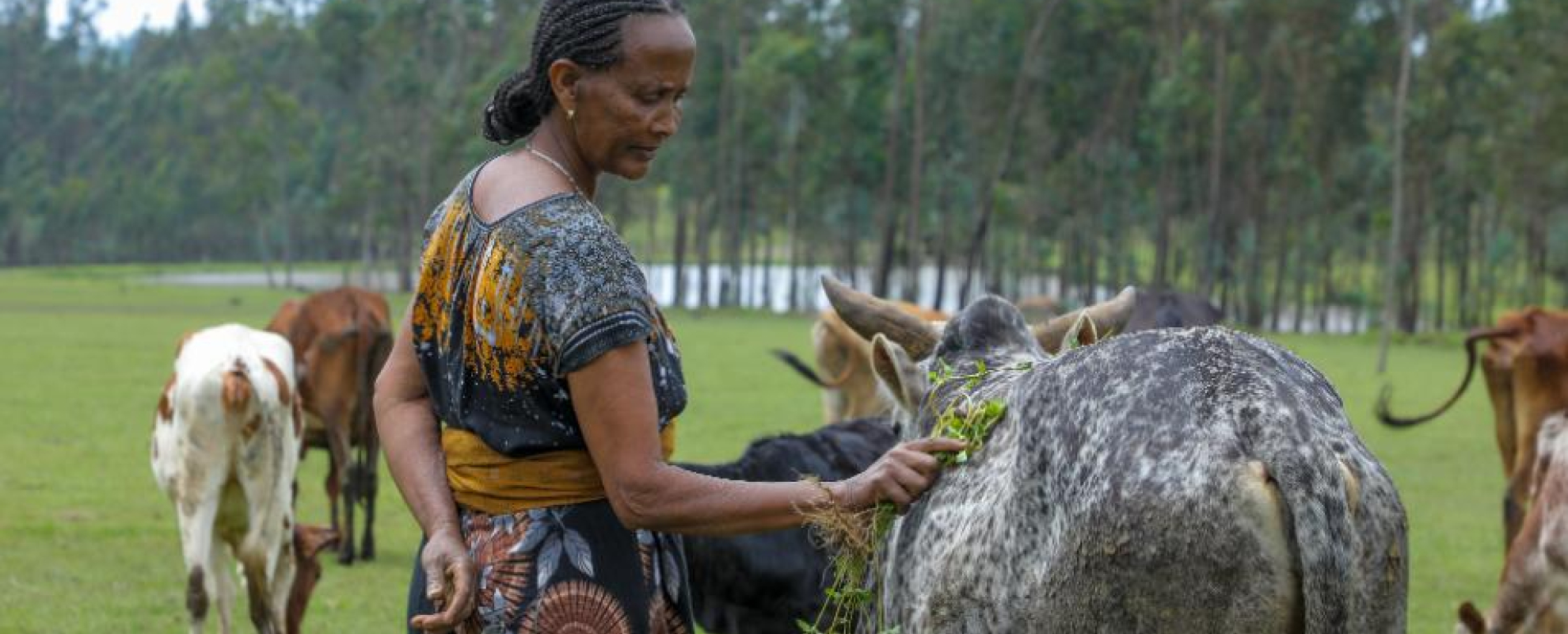
For many years, Kebebush Admasu’s day began with the same anxious question: would she find enough to feed her dairy cow? The mother and farmer in the Hadiya Zone of Ethiopia's highlands knew that her family's well-being was tied to the well-being of the animal. But like millions of other smallholders in the country, she faced a relentless challenge – the scarcity of quality livestock feed. During the dry season, the search for fodder would consume hours of her day, her cow would grow weak, its milk production would drop and with it a source of nutrition for her children, and source of income.
Smallholder mixed crop-livestock farms are central to the livelihoods of millions in Ethiopia. They offer powerful economic links between the land, animals, and the people who tend them; providing a buffer against climate shocks and income from sale of animal products. But lack of adequate and high-quality feed for animals reduces livestock productivity, limits the supply of milk and meat for a growing population, and traps families in a cycle of subsistence.
The International Livestock Research Institute (ILRI), through Livestock Climate and Environment (LCE) program and bilateral projects, is tackling this problem by introducing improved forages whose cultivation can be scaled easily. The aim is to increase feed access and build lasting resilience for farming communities like Kebebush’s.
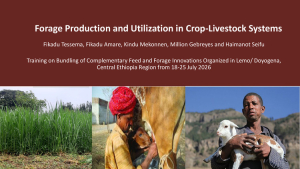
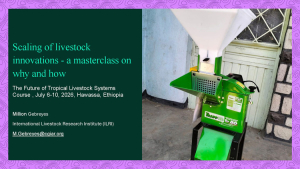
For example, in 2025, across the Amhara, Oromia, Sidama, and Central Ethiopia regions, ILRI piloted a bundled innovation approach that involves developing and scaling climate-smart forage options such as high-yielding desho grass, oat-vetch mixture, elephant grass, tree lucerne, dual-purpose maize and improved legumes like alfalfa. At the same time practical feed utilization methods including feed troughs, choppers and silage makers are introduced to reduce waste.
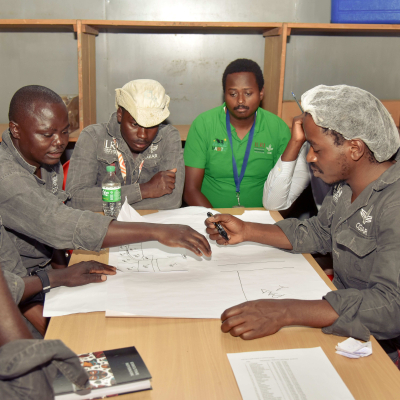
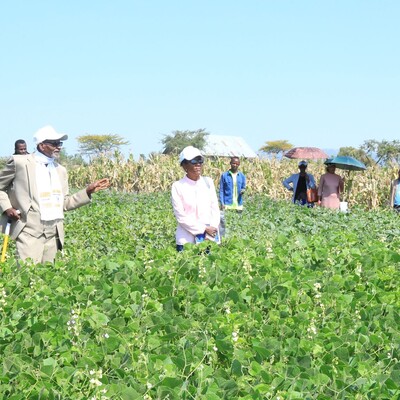
To ensure adoption, these efforts were complemented by capacity sharing using a revolving forage seed supply arrangement, training, media engagement (radio and mobile messages) and on-farm demonstrations. Capacity sharing was integrated in the roll-out of the bundled innovations. Farmers like Kebebush received the bundled innovations, along with on-farm demonstrations. This allowed them to see the benefits of using improved forages to increase milk production, reduce feed wastage through better feed utilization, and improve animal health with nutrition.
Forage seed commercialization systems were developed to improve market access and sustainability. Led by LCE bilateral projects such as AICCRA, TAAT II and CGIAR Sustainable Farming and Scaling for Impact programs, the project piloted local forage seed multiplication systems in 98 hectares of dedicated land in 2024 and 2025. These activities are centered in the North Shewa Zone of Amhara, and Hadiya and Kembata zones of Central Ethiopia. These systems created a local supply chain and engaged private sector actors such as the Eden Field seed company.
By integrating technical solutions with institutional and communication support, ILRI’s innovation has optimized resource use, mitigated adoption risks and addressed farmers' complex food and feed needs from multiple angles. This approach has enhanced adoption rates and community resilience, making a real difference in the lives of smallholder livestock keepers.
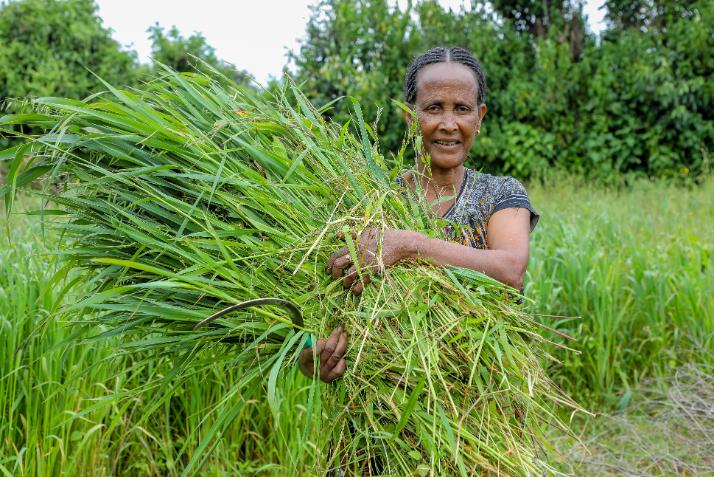
As highlighted in the Bundling of feed and forage innovations for adoption and impact video, Kebebush now harvests nutritious feed from the oat-vetch, tree lucerne, and desho grass, providing her cow with a consistent, high-quality diet. "I now have a consistent milk supply," she shares proudly. Her children can drink milk regularly and she has surplus to sell at the local market, boosting her household income and food security.
She is one of over 31,900 smallholder livestock keepers who have been directly reached by the initiative across Ethiopia in 2025. Critically, the project has ensured that 23–25% of the direct beneficiaries are women, recognizing their central role in livestock management and household nutrition. Women, who often bear the burden of feed collection, are now experiencing the labor-saving and income-generating benefits of access to improved fodder.
A robust network of partnerships and a deliberate dissemination strategy has paved the pathway from innovation to widespread impact. Key partners in this work include Werabe and Debre Berhan agricultural research centers, Jimma and Wachemo universities, development organizations like SNV, and government bureaus of agriculture at regional and zonal levels. Local extension workers, development agents, and farmer cooperatives are a crucial link, translating research into practice on the ground. To scale the impact, a major multi-channel campaign using community radio, mobile messaging, and digital advisory tools has extended the reach of the project messages to over 283,000 additional beneficiaries, spreading best practices on forage management and utilization far and wide. This mass communication campaign has been complemented by intensive in-person capacity-building for over 6,000 farmers, extension agents, and technical experts, who continue to support their communities.
Kindu Mekonnen, senior scientist at ILRI, who has led the mixed farming system development efforts for over a decade, reflected on the outcomes, emphasizing the scientific basis for the approach. "Our research over many years has consistently shown that technology alone does not guarantee adoption," he explains. "The feed gap in Ethiopia is not merely a seed deficit problem; it requires an integrated effort to solve. By bundling improved forages with capacity building and digital advisory tools, we are addressing the multifaceted constraints farmers face, from lack of knowledge to poor access to quality feed and forage utilization technologies."
Today, the result is a strengthened and more resilient farming system in Ethiopia. By closing the feed gap for tens of thousands of households, this bundled approach is nourishing families, empowering women, and building a more productive and climate-resilient future for Ethiopia's smallholders.
Call to action
By aligning resources and planning jointly, development partners, the private sector, and local decision-makers can build on these successes to widely scale validated feed and forage innovations. Setting clear and shared targets will drive the joint scaling effort that delivers tangible productivity gains and strengthens the resilience of livestock farmers across Ethiopia for 2026 and beyond.
Learn more about the LCE program: https://www.ilri.org/research/themes/livestock-climate-and-environment