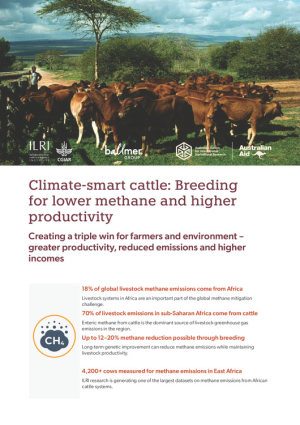
Goats with aprons? A traditional anti-mating innovation used by Maasai communities in Tanzania
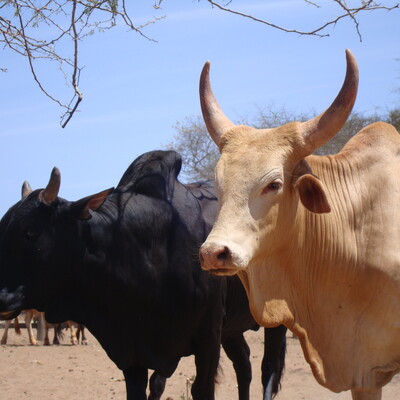
Rangeland management is essential for the sustainability of pastoralism, and the CGIAR Initiative on Livestock and Climate is advancing innovations to improve management practices. Effective management extends beyond soil and plant health to also include livestock breeding practices. Pastoralists have developed different ways to ensure that livestock are born in sustainable numbers and at the most favorable times for their survival. While some practices, like using colored markers to track sire-female pairings for lineage improvement are relatively new, others such as anti-mating aprons and herding male and female animals separately, have been used for millennia.
For Oldeede Papayai, a 53-year-old Maasai pastoralist from Partimbo village in Kiteto district, Tanzania, the use of anti-mating aprons is a simple yet effective tool that supports both livestock management and cultural traditions. After inheriting 50 cattle and 100 sheep and goats from his late father, Papayai now oversees a thriving herd of 300 cattle and 270 sheep and goats. Before retiring from warriorhood, he served as a traditional leader (alaigwanani) for his age set, which enriched his deep knowledge of Maasai culture and traditions.
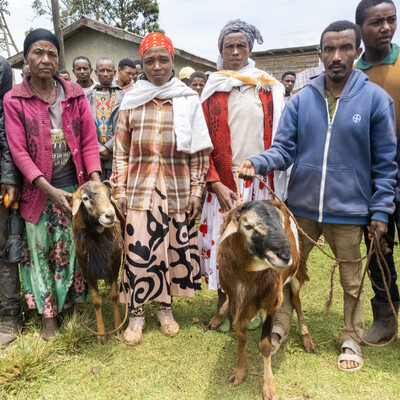
Among the practices that Papayai continues to uphold is the use of anti-mating aprons for sheep and goats. This traditional tool helps prevent unplanned breeding, contributing to overall sustainability of his livestock management practices.
Read the full story at cgiar.org.
You may also like

ILRI News
International Livestock Research Institute joins USD 27.4M global initiative to cut methane from livestock

ILRI News
Collaborative learning empowers dairy farmers to improve herd health and welfare management in Ada'a District, Ethiopia
Related Publications

Systematic review on the impacts of community-based sheep breeding programs on animal productivity, food security, women’s empowerment, and identification of interventions for climate-smart systems under the extensive production system in Ethiopia
- Tesfa, Assemu
- Taye, Mengistie
- Haile, Aynalem
- Nigussie, Zerihun
- Najjar, Dina
- Mekuriaw, Shigdaf
- Dijk, Suzanne V
- Wassie, Shimels E
- Wilkes, Andreas
- Solomon, Dawit

Global Methane Genetics Initiative: Accelerating reduced emissions in indigenous breeds in Africa
- Mrode, Raphael A.

Genetic and economic efficiencies of alternative breeding schemes for improvement of local breeds in low-input production systems: The case of the Farta sheep in Northwest Ethiopia
- Abebe, A.S.
- Alemayehu, K.
- Gizaw, Solomon

Estimation of individual crossbreeding effects and growth curve analysis for growth traits of Dorper x Local crossbred sheep in Ethiopia
- Besufkad, S.
- Abebe, A.
- Tesema, Z.
- Bisrat, A.
- Goshme, S.
- Zewdie, T.
- Yitagesu, E.
- Aydefruhm, D.
- Ayele, F.
- Demis, C.
- Alimenew, E.
- Asfaw, T.
- Wondiyfraw, Y.
- Eshete, M.
- Getachew, T.
- Alemayehu, L.
- Gizaw, Solomon
- Getachew, Tesfaye
- Belay, Berhanu
- Rekik, Mourad
- Haile, Aynalem
Related Projects