Six years of One Health action in Africa: evaluating outcomes, mechanisms, and lessons from OHRECA (2020–2025)
Abstract
Background
There is growing momentum towards using One Health approaches to address health threats emerging when human activities come in close contact with animals and shared environments. In Africa, where the burden of such threats is disproportionately high, strengthening One Health capacity is important for improving health system preparedness. Although substantial investments have been made in One Health capacity building across low- and middle-income countries, there remains limited evidence on how such initiatives achieve sustainable outcomes and the conditions that enable their success.
Case description
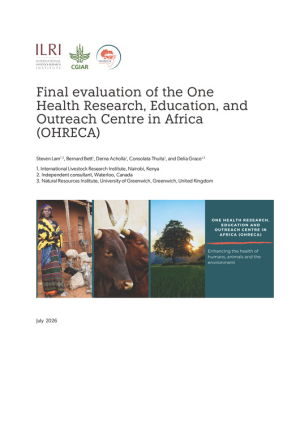
The One Health Research, Education, and Outreach Centre in Africa (OHRECA), a six-year research-for-development initiative (2020–2025) implemented across multiple African countries, was evaluated. Using a realist-informed mixed-methods evaluation, this study explores how and why OHRECA achieved its outcomes.
Key outcomes
Findings suggest that OHRECA contributed to scientific productivity, workforce development, and more in the target countries. Learning-by-doing and partnerships emerged as key mechanisms while long time-investments and institutional continuity were important contextual conditions supporting these outcomes.
Conclusions
Given the absence of baseline and comparator data for many outcomes, the findings should be interpreted as explanatory case study evidence rather than as a causal effectiveness assessment. Nevertheless, they offer transferable lessons for designing One Health capacity building efforts in African research systems and other low- and middle-income settings.
Citation
Lâm, S., Bett, B., Moodley, A., Mutua, F., Thomas, L. and Grace, D. 2026. Six years of One Health action in Africa: evaluating outcomes, mechanisms, and lessons from OHRECA (2020-2025). Science in One Health 100166.