Maximizing the value of manure: How local data can help African smallholder farmers recycle nutrients and reduce emissions
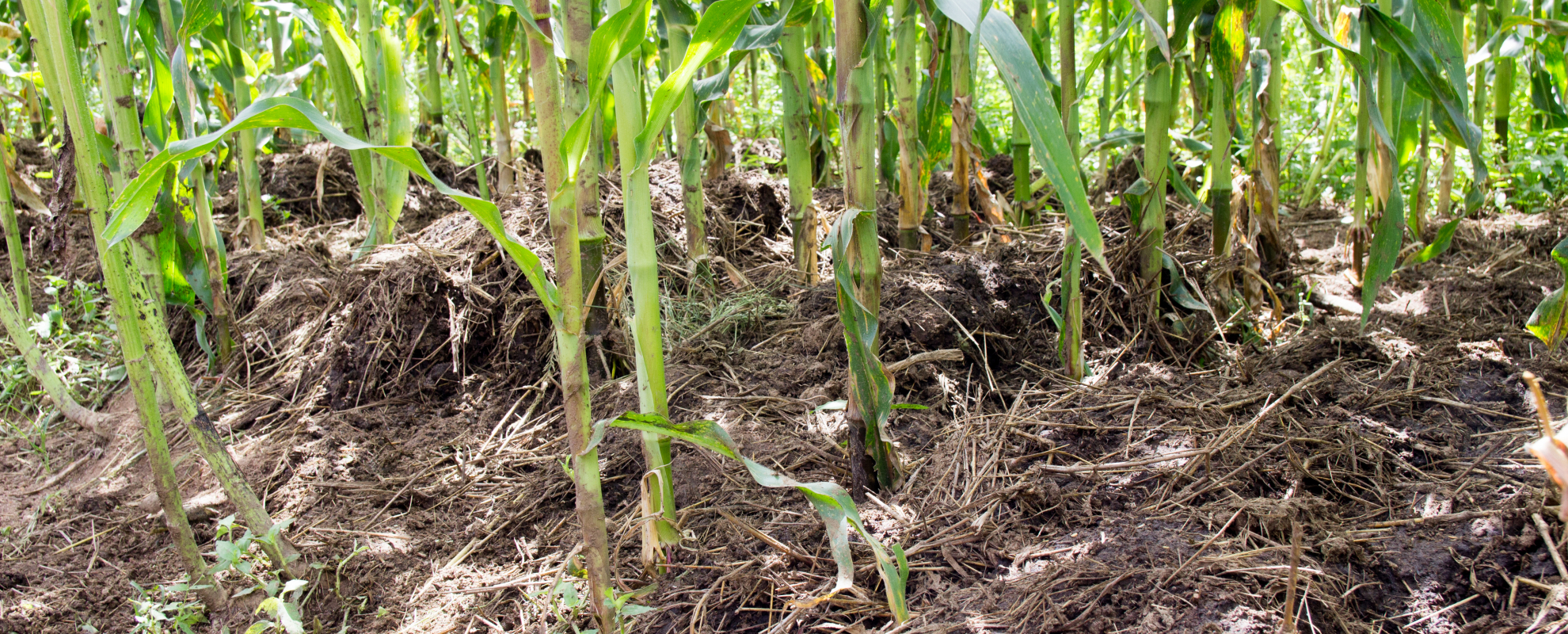
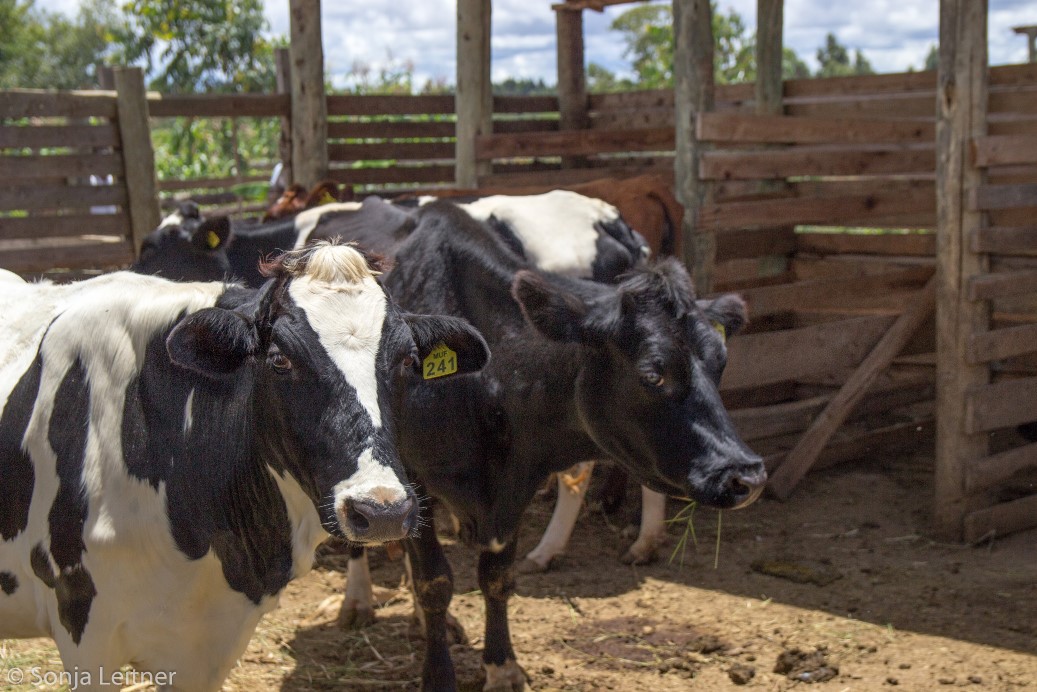
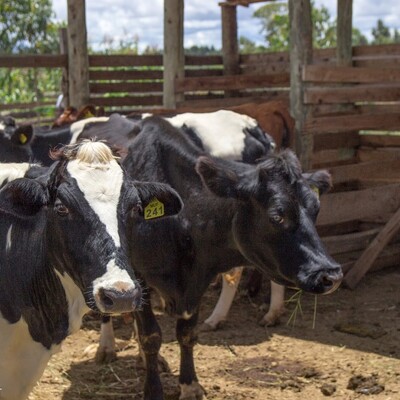
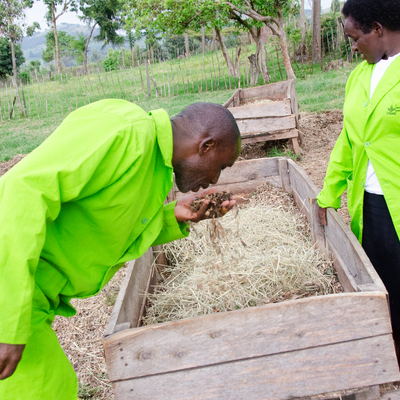
In sub-Saharan Africa, livestock are the backbone of smallholder farming. Far from just being a source of food, cattle are central to sustainable crop-livestock integration by providing essential plant nutrients through their manure. For millions of farmers, cattle manure is an invaluable bioresource: a natural fertilizer essential for boosting crop yields, protecting soil health, and securing local food systems.
However, because most historical agricultural frameworks were developed for temperate climates, there is a severe shortage of localized data on how tropical environments affect manure during storage under local practices. When manure is stored in traditional uncovered heaps, plant nutrients like nitrogen can easily get lost to the atmosphere via gaseous emissions or wash away with heavy rains before reaching the crop fields. Some of the lost gases are potent greenhouse gases (GHGs) such as methane and nitrous oxide (N2O), which cause global warming.
To address this, the research team led by the International Livestock Research Institute (ILRI) set out to better protect the vital nutrients from being lost via leaching or emissions and, at the same time, aimed to develop regional baselines ´and practical interventions for climate change mitigation. It is important to note that studying these emissions is not about placing blame on smallholder farmers for practicing essential, life-sustaining agriculture; it is about developing strategies which co-benefit farmers through nutrient preservation and the climate through accurate, regional GHG assessments.
Our latest study, published in “Resources, Environment and Sustainability”, aimed to contribute to that. By gathering real-world, region-specific data, we investigated how different storage practices affect manure quality, nutrient leaching losses, and GHG emissions, demonstrating how farmers can better safeguard this vital nutrient resource in a sustainable, climate-friendly way.
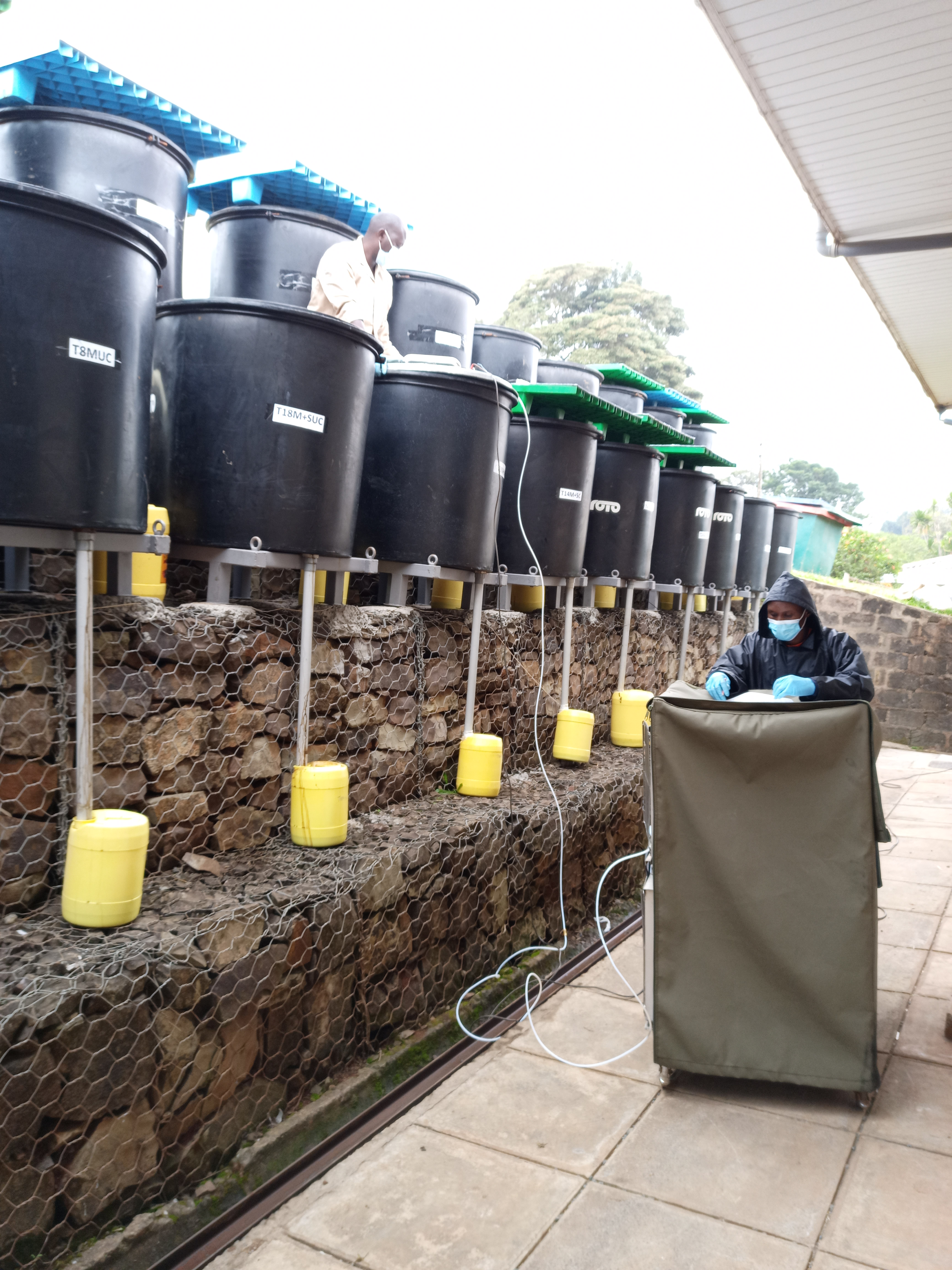
We can only optimize and protect what we accurately measure. To create a reliable baseline of manure nutrient composition and losses for African smallholder systems, our team set up a 145-day outdoor storage experiment at ILRI’s Mazingira Centre in Nairobi, Kenya.
Measuring what’s there and what’s lost
We monitored 30 cattle manure heaps (each weighing 200 kg), testing how different amendment and storage setups affect manure nutrient turnover, leaching losses, and nitrous oxide and methane emissions:
- manure only (uncovered vs. covered)
- manure + straw bedding (uncovered vs. covered)
- manure + charcoal amendment (uncovered vs. covered)
Key insights for climate-friendly farming
Our findings offer a clear picture of how carbon and nitrogen move through these storage systems, highlighting where nutrients are being lost, how emissions behave, and how this changes manure fertilizer quality.
1. Managing the straw trade-off
Many farmers use crop residues, such as straw, as bedding for their animals. These residues mix with manure and are then collected into manure heaps. While this is excellent for adding organic bulk and helps to recover nitrogen in animal housing by soaking up urine, our data revealed a major trade-off: straw-amended treatments lost more nitrogen. In fact, they experienced three times more nitrogen leaching and emitted twice as much N2O than manure stored on its own.
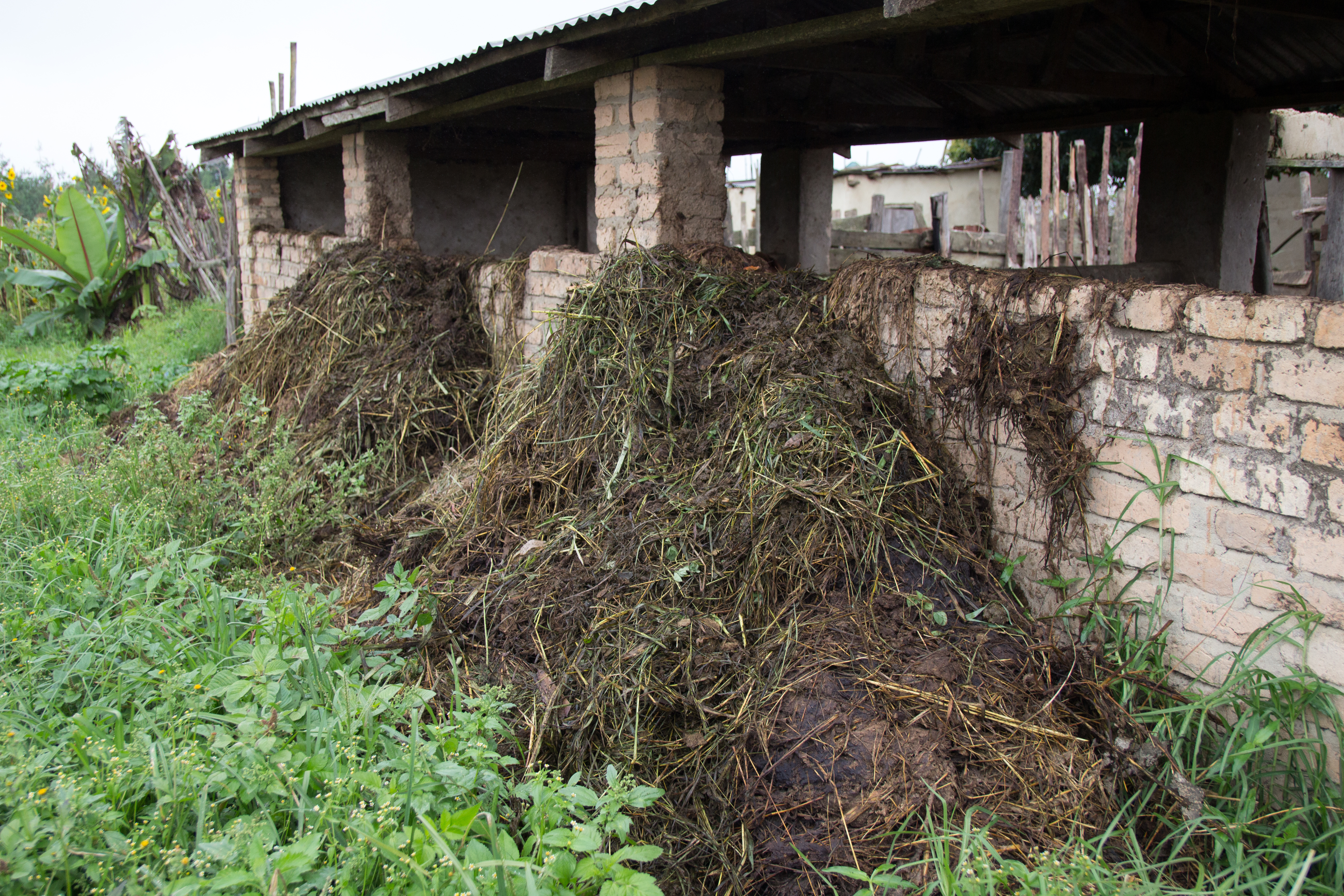
While adding bedding to animal housing is good practice for several reasons, ranging from animal welfare to nutrient recovery, the takeaway from our study is that manure heaps should be stored on water-proof flooring to protect water bodies from contamination. And our results on covering were inconclusive due to the type of cover that we built (small roofs 10 cm above the manure heaps rather than directly on top of the heaps), others have shown that covering manure heaps with locally-available plant materials (such as hay or banana leaves) reduces leaching and GHG emissions. Therefore, we also recommend this strategy.
2. "Charging" charcoal with nutrients
We also found that adding locally-produced charcoal to the manure helped to suppress methane emissions. Methane is a potent but short-lived GHG, and recent efforts have targeted methane reduction as a way to buy more time in the fight against climate change. Adding carbonized materials (charcoal or engineered biochar) also helps to boost soil health and water-holding capacity, particularly in tropical soils. Therefore, charcoal addition can be a promising strategy for farmers who want to enhance the fertility and stability of their cropland soils.
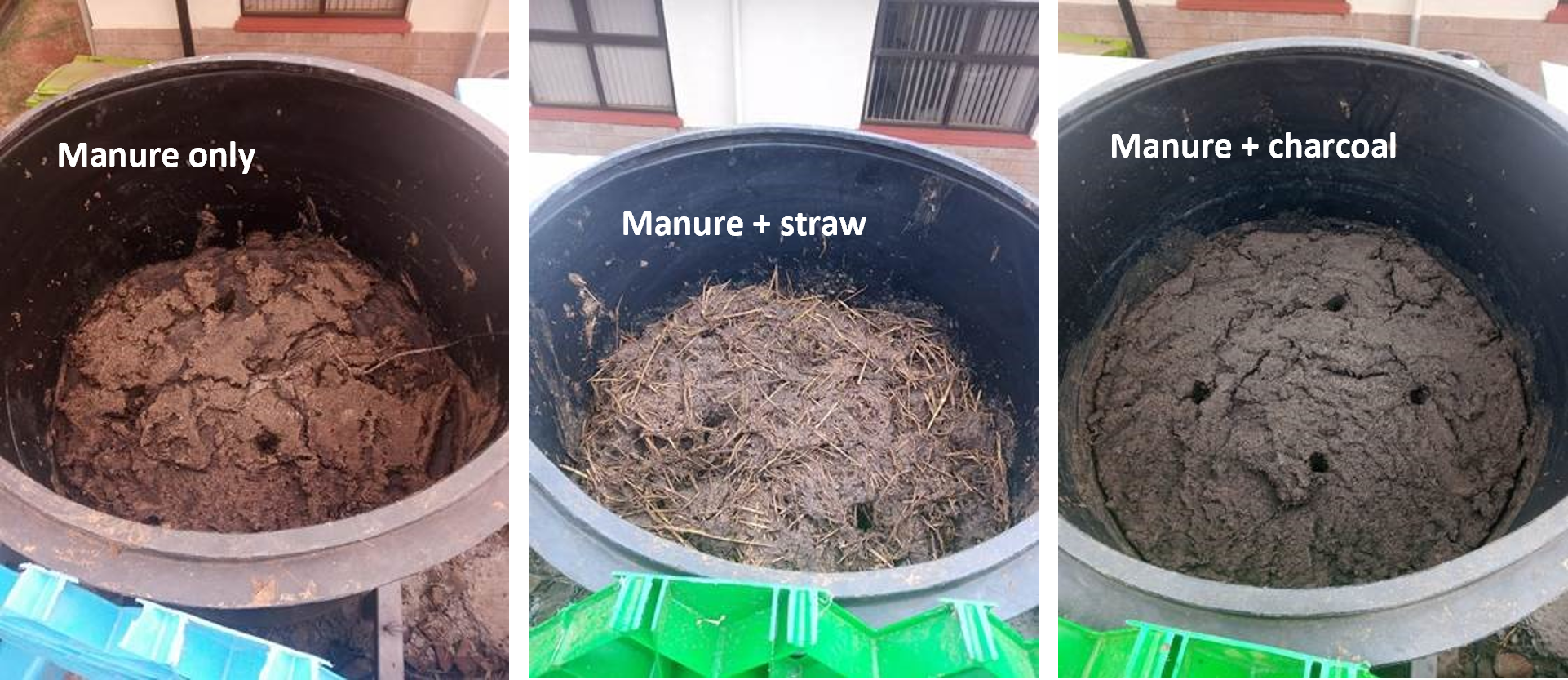
Adding charcoal to manure presents a good opportunity for a dual-benefit intervention: using the manure storage phase to "charge" the charcoal with plant-available nutrients before it is applied to fields, with the co-benefit of reducing manure methane emissions that are harmful to the climate. When charcoal is added to manure, it is especially important to also cover the heap during storage to prevent nutrients that are bound to the surface of the charcoal from being washed away or converted into N2O.
3. Correcting global GHG inventories
Through our GHG measurements, we found that both methane and N2O emissions exceeded standard Intergovernmental Panel on Climate Change (IPCC) default values for solid manure storage in warm climates. This is critical because many African nations use default IPCC factors for their national GHG reporting, as local, context-specific data on manure emissions are often not available.
However, using default values for manure emissions can cause over- or (in our case) underestimation of the actual GHG emissions from smallholder manure management. Finding these high GHG emissions in our experiment was somewhat surprising, because during previous studies, we often found that actual emissions were in fact lower than IPCC default factors.
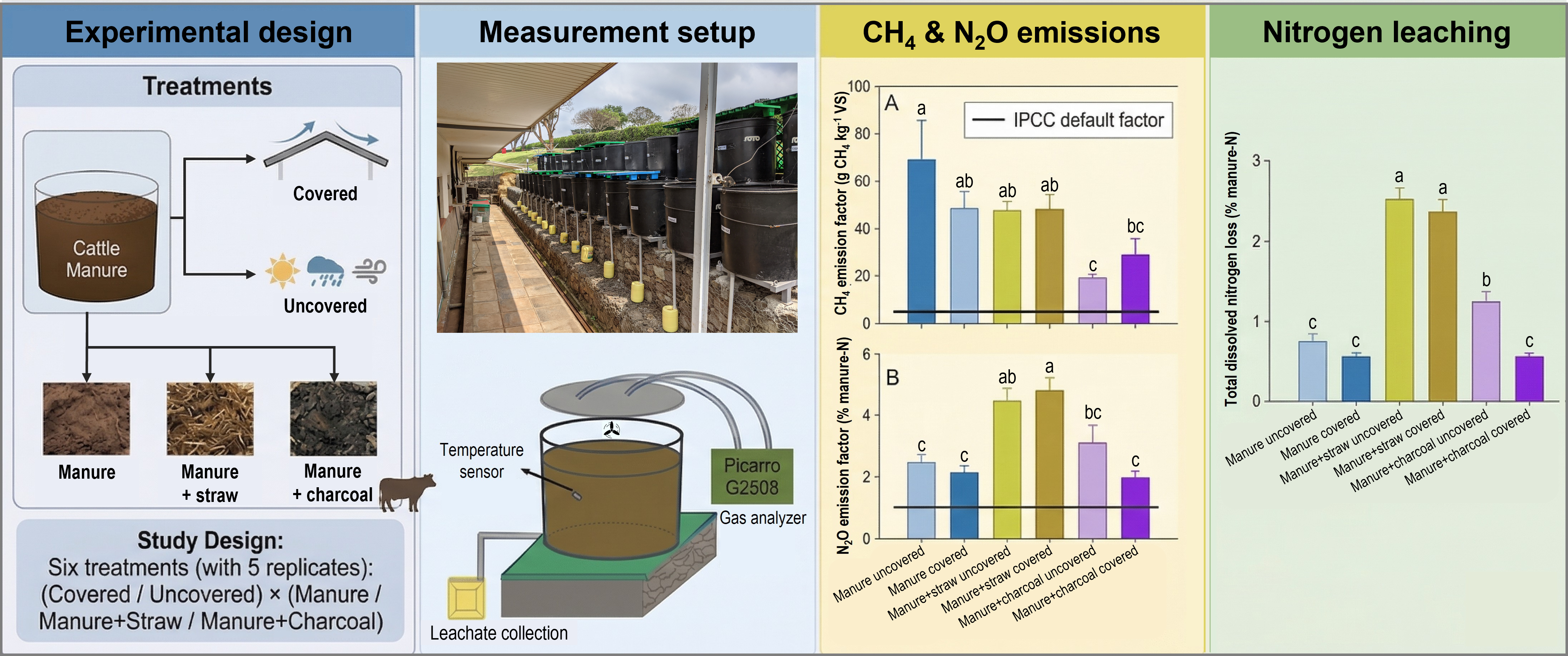
The reason for this discrepancy is that GHG emissions depend on a multitude of factors and are highly dynamic. Our recent findings show that it’s not enough to measure emissions only once in a single case study, but that multiple studies covering different management scenarios are needed to build robust datasets that accurately represent what is actually going on. Building these robust, local monitoring inventories is step number one to unlocking international climate support and developing reliable real-world mitigation options.
4. Recognizing denitrification as a critical nitrogen loss pathway
While the N2O emissions that we measured only removed around 1–2 % of the nitrogen in the manure, stable isotope measurements revealed that most of the N2O produced in the manure was further converted to dinitrogen gas (N2), which was invisible to our detector. This happened through the pathway of microbial denitrification.
While N2 is environmentally benign (most of the air around us consists of N2 and is completely harmless), denitrification represents a major pathway for nitrogen loss from manure. Future studies should therefore pay very close attention to how manure interventions affect denitrification and how this process can be modulated to increase nutrient circularity in crop-livestock integration.
Empowering farmers with localized science
Ultimately, this research isn't about pointing fingers at livestock systems; it is about providing local evidence to strengthen them. Management interventions from other global regions might not be realistically achievable for smallholder farmers who need simple, cheap options that provide co-benefits for their farming operations. Relying on global default data (like generic IPCC values) fails to capture the nuances of African agriculture, often underestimating the baseline dynamics of these systems.
By establishing precise, regional data, we can design smarter, low-cost interventions. Helping smallholders shield their manure heaps from rain or strategically integrate local amendments like charcoal means more nitrogen stays right where it belongs: feeding the soil and growing the crops that sustain communities.
 Join the discussion
Are you working on nutrient circularity, soil science, or sustainable crop-livestock integration? We'd love to hear how you manage resource preservation in your region.
- Link to the study: Read our complete methodology and findings here: Manure management in African smallholder farms affects greenhouse gas emissions and leachate losses
- Connect with us: Join our LinkedIn group to collaborate on circular agricultural solutions!
Funding acknowledgement
This st udy was supported by the Solution-oriented Research for Development (SOR4D) program, a joint initiative of the Swiss Agency for Development and Cooperation (SDC) and the Swiss National Science Foundation (SNSF), through the CIRNA project (CIRcularity of Nutrients in Agroecosystems and co-benefits for animal and human health). Further support was received from the CGIAR Trust Fund and the Ballmer Group.


Related Publications

Crop-livestock mixed systems: Interactions, circularity, and challenges across system levels and specialization degrees