Livestock feed database puts local growing conditions into the picture
Two bundles of grass may look similar, but their nutritional value can differ depending on when and where they were grown, harvested, and managed. For livestock farmers and advisers, those differences matter when choosing feeds that support animal productivity.
Feed composition databases provide valuable information, but nutrient values can vary considerably between samples of the same feed. Without information about the conditions in which a sample was produced and analyzed, it can be difficult to judge how relevant a published value is to a particular farming system.
The International Livestock Research Institute (ILRI) and the Alliance of Bioversity International and CIAT have developed the free Livestock Feed Quality Database to make feed measurements easier to find and interpret in context. Alongside nutrient composition, the portal brings together available information on sample origin, growing conditions, season, and processing.
The resource is designed for researchers, extension advisers, feed specialists, and others working to improve livestock feeding. It can support better-informed feed assessments but does not replace feed testing or professional ration formulation.
Why context matters for feed quality
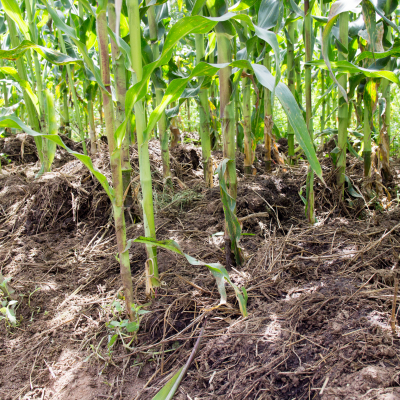
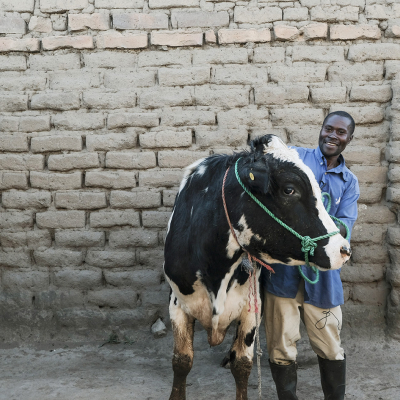
Feed is a major cost in livestock production, and its quality affects animal intake, growth, and milk production. Yet the nutrient composition of grasses, crop residues, and cultivated forages changes with maturity, rainfall, soils, management, and processing.
An average value for a feed can be useful but may not describe the feed available on a particular farm. Data linked to sample conditions help users compare more relevant measurements and recognize variability rather than treating all samples of a feed as identical.
Feed quality can also influence greenhouse gas emissions per unit of milk or meat. However, the database itself does not demonstrate methane reductions; it provides information that can support research and better feeding decisions.
What the database offers
Users can explore feed samples from tropical livestock systems, including grasses, forage legumes, crop residues, and other feed resources. Depending on the sample, records contain up to 17 feed-quality measurements, such as protein, fiber, digestibility, and other nutritional properties.
The main feature is the accompanying metadata: information on where samples originated and, where available, the season, production, and processing conditions. This helps users interpret measured feed composition in its local context.
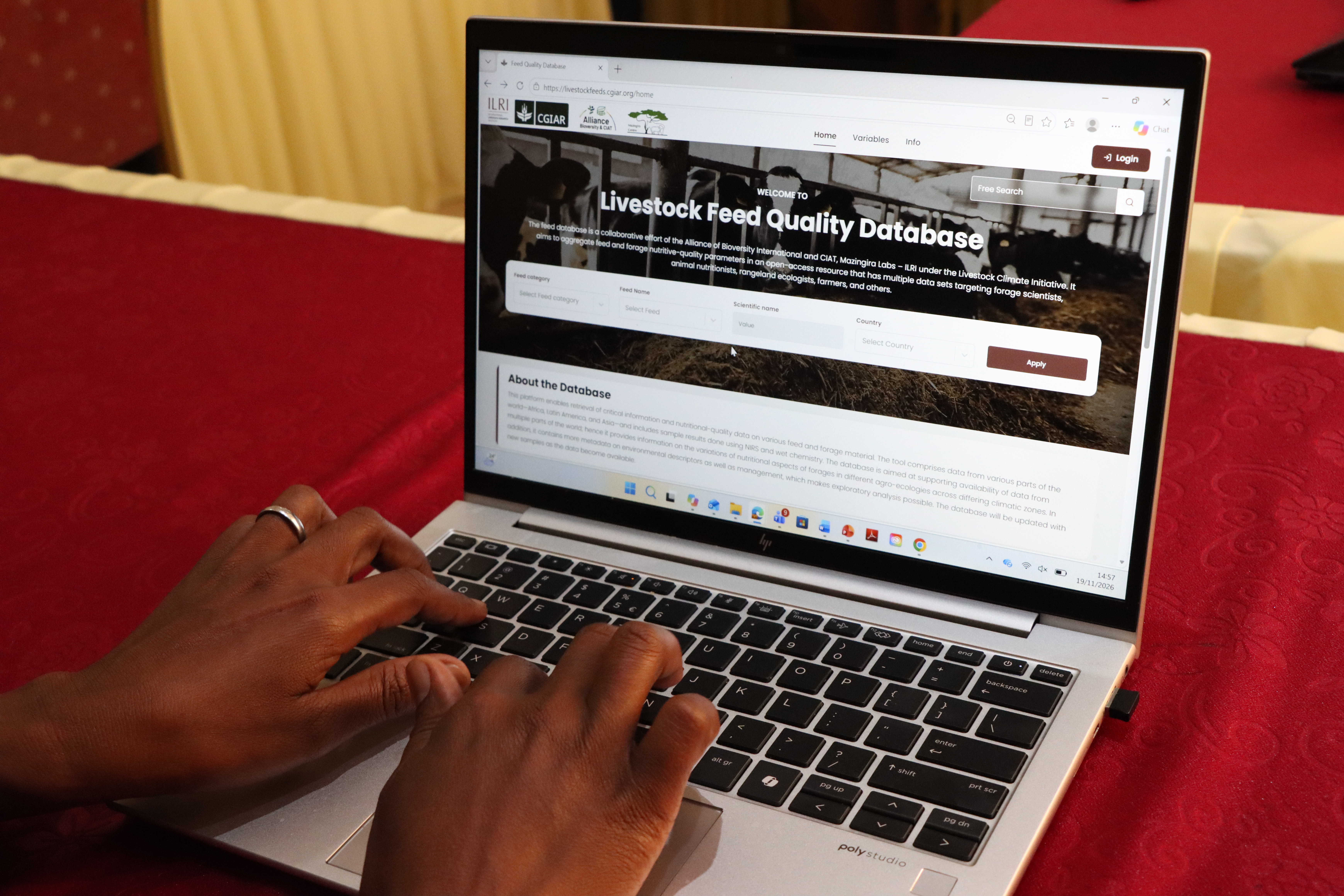
Free to search; reviewed contributions
The database is freely accessible at https://livestockfeeds.cgiar.org/. Visitors can search and filter records without an account. Researchers and laboratories wishing to contribute data must request access, enter sample information, and submit a standard spreadsheet for administrator review before publication.
“We wanted to give farmers and advisers information that reflects the conditions they actually work in, and to make it free and easy to find,” said James Hawkins, a postdoctoral fellow in systems modeling and data automation at ILRI.
From measurements to better decisions
For researchers, the portal makes it easier to compare feed measurements across environments and identify evidence gaps. For extension services and feed specialists, it offers a starting point for discussing locally relevant feed options. Farmers may benefit through advice informed by those data, although individual feeding decisions still depend on available feeds, animal needs, and costs.
As more samples with appropriate documentation are reviewed and added, the database can become more useful for understanding feed-quality variation. New contributions should follow the portal’s submission and quality-review process.
“Knowing what’s in your feed is the first step to feeding animals well,” Hawkins said. “And because the database is updated as new results come in, it will only get more useful.”
Use the database or contribute data
Explore the open records at https://livestockfeeds.cgiar.org/
Researchers and laboratories can consult the accompanying user guide to request upload access and submit data for review. The resource complements, rather than replaces, established feed databases and direct laboratory analysis.
By linking feed composition to the conditions behind each sample, the database helps turn scattered measurements into evidence that can be interpreted and used more confidently.
Acknowledgments
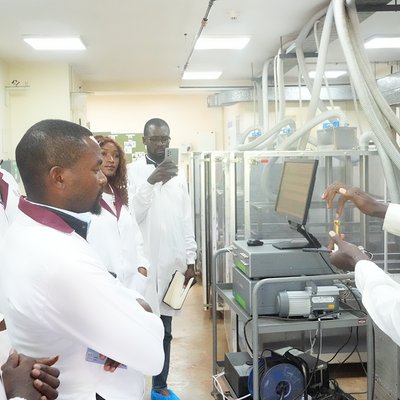
The Livestock Feed Quality Database was developed through collaboration between ILRI’s Mazingira Centre and the Alliance of Bioversity International and CIAT. The team acknowledges the scientists, laboratories, and partners who provided data and expertise.
This work received support from the CGIAR Climate Action Science Program and CGIAR Sustainable Animal and Aquatic Foods (SAAF). The team also thanks contributors to the CGIAR Trust Fund.