A roadmap for scaling improved indigenous chicken breeds across Kenya
The chicken gap
In Kenya today, farmers and county officials wanting to buy one of Kenya's three well-known improved indigenous chicken breeds—KC1, KC2, or KC3—routinely have to wait up to three months. The demand is real, broad, and growing as the country’s counties order the chicks in bulk to support livelihood programs and more and more smallholders invest in locally adapted dual-purpose chicken enterprises, which can grow from a backyard flock of 20 birds to a professional operation of thousands within a few years.
Yet supply of these highly desired breeds persistently falls short. The Kenya Agriculture and Livestock Research Organization (KALRO), which developed and maintains the KC breeds, has been unable to consistently meet the demand for them. The gap is due not to any failure in KALRO’s breeding work but rather to insufficient infrastructure to commercialize the breeds.
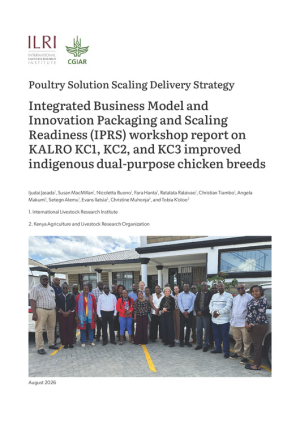
That infrastructure gap was the subject of a 2.5-day workshop held in Naivasha, Kenya, in May 2026. Organized by the International Livestock Research Institute (ILRI) and KALRO and attended by researchers, hatchery operators, county government officials, private-sector poultry actors, development partners, cooperatives, agro-dealers, and NGOs, the workshop set out to convert the KC breeds from promising research products to profitable rural enterprises.
The breeds
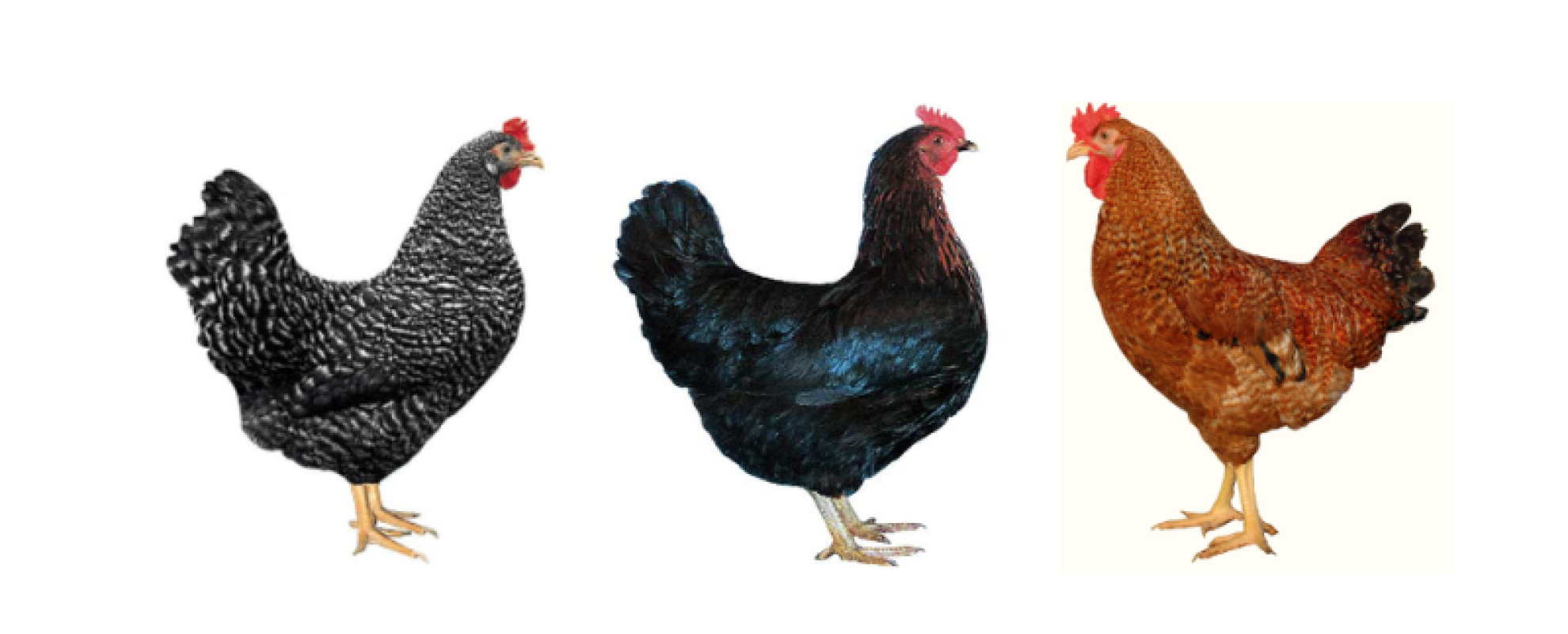
The KC1, KC2, and KC3 breeds were developed by KALRO over many years. They are dual-purpose birds, producing both eggs and meat, and do so while remaining adapted to Kenyan conditions in ways that exotic commercial breeds cannot match.
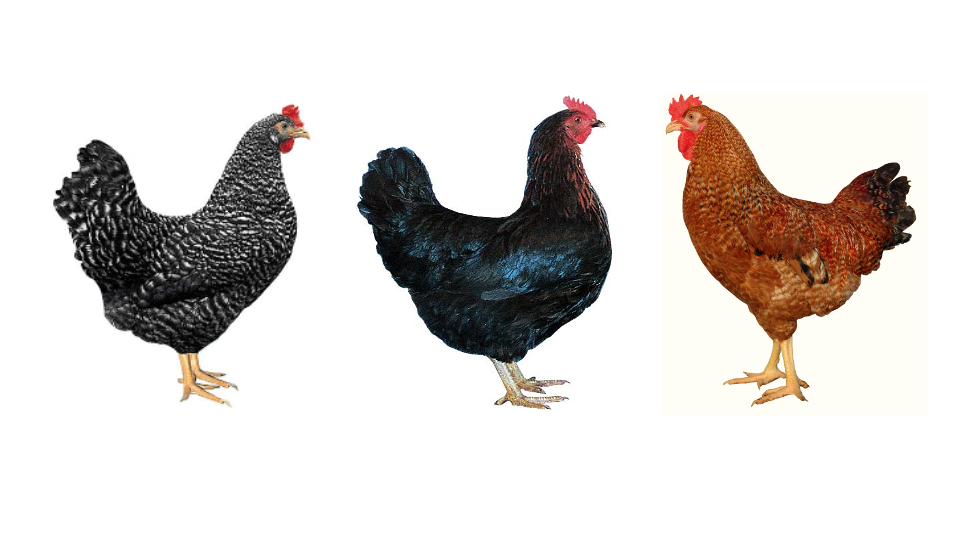
KALRO’s genetically improved dual-purpose chicken breeds (left to right)—KC1 (black-and-white spotted plumage), KC2 (predominantly black), and KC3 (brown)—were developed to deliver high yields of both meat and eggs to Kenya’s millions of smallholder farmers (photo credit: KALRO).
KC1 is valued for its hardiness, early maturity, scavenging ability, and low feed requirements. KC2 is a higher productivity breed, with strong weight gain, high egg numbers and egg weight, and disease tolerance. KC3 is fast-growing and high-laying and has achieved strong market and cultural acceptance, particularly in western Kenya.
What unites the three breeds is the growing demand for them. Christian Tiambo, an animal breeding and genetics scientist at the Centre for Tropical Livestock Genetics and Health (CTLGH) and ILRI’s Livestock Genetics, Nutrition and Feed Resources (LGNFR) program who has worked with KALRO for many years, explains. “The breeds are wanted and outperform many others in the country’s smallholder and low-input systems. And consumers, who find the local birds tastier than exotic commercial lines, are willing to pay twice the normal market price for them.”
A new role for KALRO
Until now, KALRO has functioned both as the developer of the chicken breeds and as their primary distributor, selling the birds directly to farmers and county governments. The Naivasha workshop established a clear alternative. KALRO should no longer operate as a direct-sales chicken producer, the workshop participants agreed. Instead, it should function as the genetic and quality authority at the center of a broad poultry network.
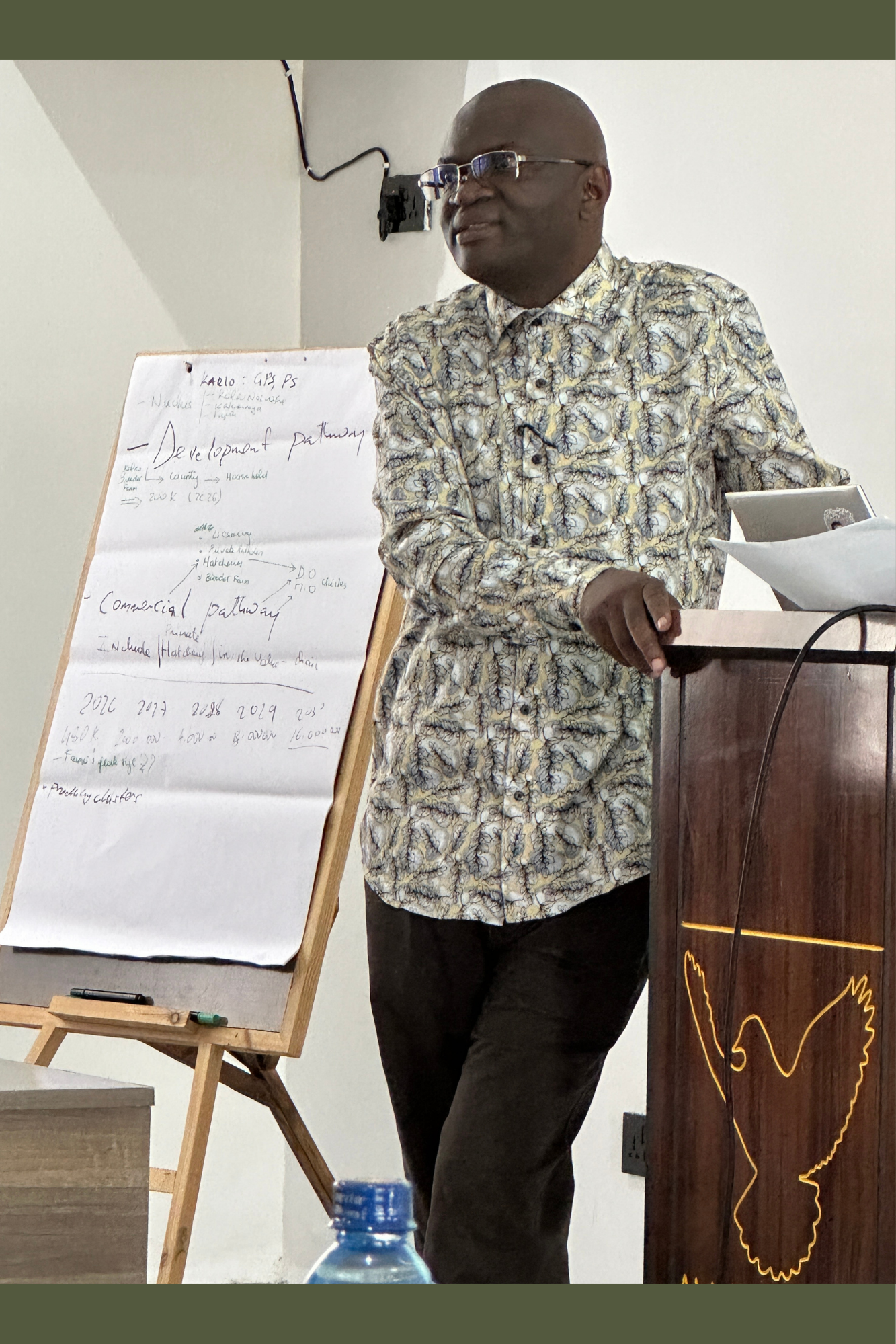
Evans Ilatsia, KALRO’s deputy director for livestock, at the workshop (photo credit: ILRI/Susan MacMillan).
As explained by Evans Ilatsia, KALRO’s deputy director for livestock: “In this ‘controlled hybrid model’, KALRO retains exclusive control over the nucleus flocks, parent stock, breed standards, certification, and the KC breed brand. Licensed private hatcheries, accredited multipliers, county governments, cooperatives, agro-dealers, savings and credit cooperative organizations (SACCOs), and NGOs take on the scaling functions of multiplying and distributing the birds, supporting and supplying chicken farmers with inputs, and linking the farmers to markets.”
In this way, KALRO produces parent stock that flows to licensed hatcheries that produce day-old chicks, which move through brooding and mother units to aggregated distribution channels, and from there to farmers, cooperatives, and ultimately markets. Each link in the chain has a defined owner. KALRO anchors the chain at its genetic source, certifying the quality of what flows from it.
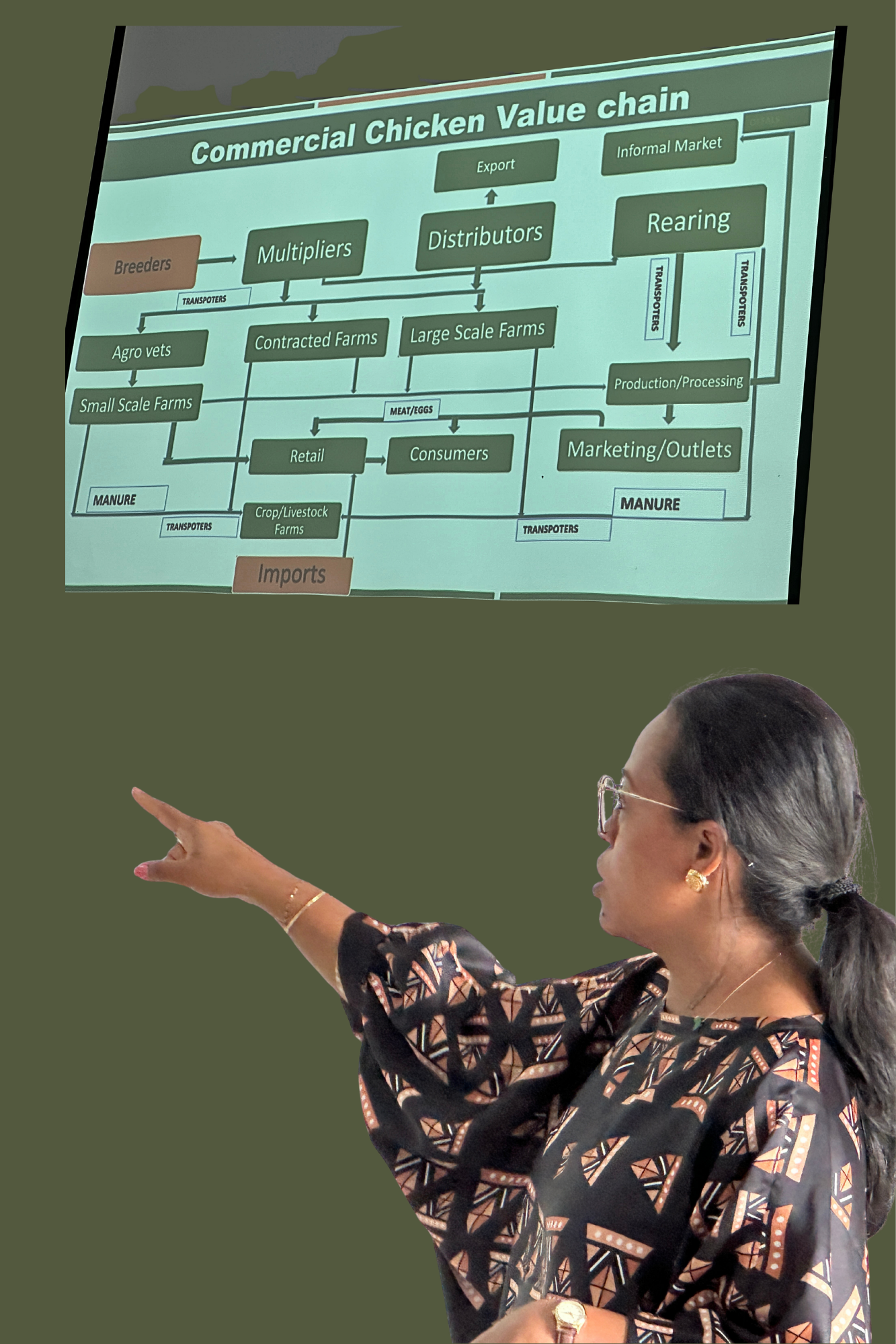
Fara Ratalata, who leads business development and industry engagement at ILRI, and a graphic of Kenya's commercial chicken value chain (photo credit: ILRI/Susan MacMillan).
Finding, and fixing, the bottlenecks in scaling
The second day of the workshop made use of a structured, step-by-step method developed by CGIAR for determining both the readiness of an innovation for going to scale and the surrounding “enabling factors” that must be in place for that scaling to happen. What CGIAR’s Innovation Packaging and Scaling Readiness analysis made clear was that the KC breeds themselves are not what is constraining their wide use. The bottleneck, rather, lies in the “systems”—in the organizational, financial, legal, and informational infrastructure needed for KALRO’s innovation to scale.
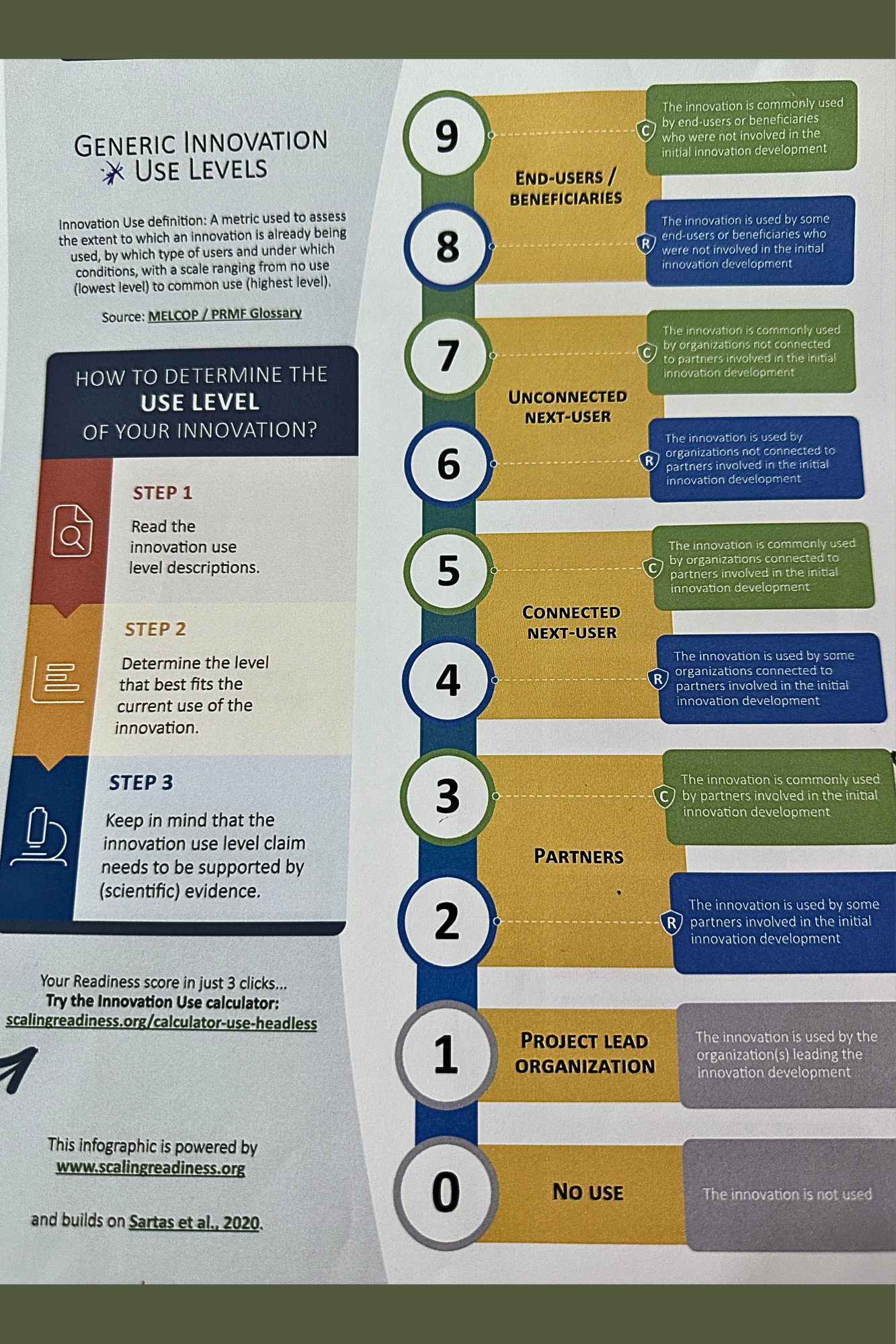
Graphic showing the 10 levels of an innovation's use, a component of CGIAR's IPSR framework (credit: ILRI and CGIAR).
Nucleus flock: The first and most foundational need is to restructure the grandparent breeding program to provide a stable genetic core. ILRI has offered KALRO its support in developing expanded breeder populations, controlled mating protocols, rigorous performance recording, and strong biosecurity on KALRO’s on-station facilities.
Franchise model: A formal franchise and licensing architecture is also needed. A workshop-proposed “KALRO Chicken Franchise Model” would establish who is accredited to multiply and distribute the breeds, under what operational standards, with what reporting obligations, and with what consequences for non-compliance.
Data systems: Data and traceability systems are also needed. The workshop proposed a “Chicken Data Intelligence System” to track birds from nucleus flock to farm, enable performance monitoring, and give franchise operators near-real-time intelligence about supply, quality, and farmer outcomes.
Contracts: Already existing contracts and memoranda of understanding with multipliers, county governments, feed millers, SACCOs, and NGOs need to be fully activated.
Staffing: In partnership with universities and ILRI, KALRO needs to recruit and train more breeders able to run a sustained genetic improvement program.
Financing: Many small-scale farmers are too poor to buy the birds, feed, and infrastructure needed to become commercial operators. The workshop proposed providing financial support through a “Rural Kenya Credit Guarantee Scheme” and other models as well as group purchasing mechanisms through cooperatives and SACCOs.
As Fara Ratalata, who leads business development and industry engagement at ILRI, put it: “A stronger, healthier, and productive KALRO chicken isn’t just a genetics upgrade—it’s real money in real pockets. KALRO and ILRI are scaling more than a chicken breed—we’re scaling farmers’ incomes.”
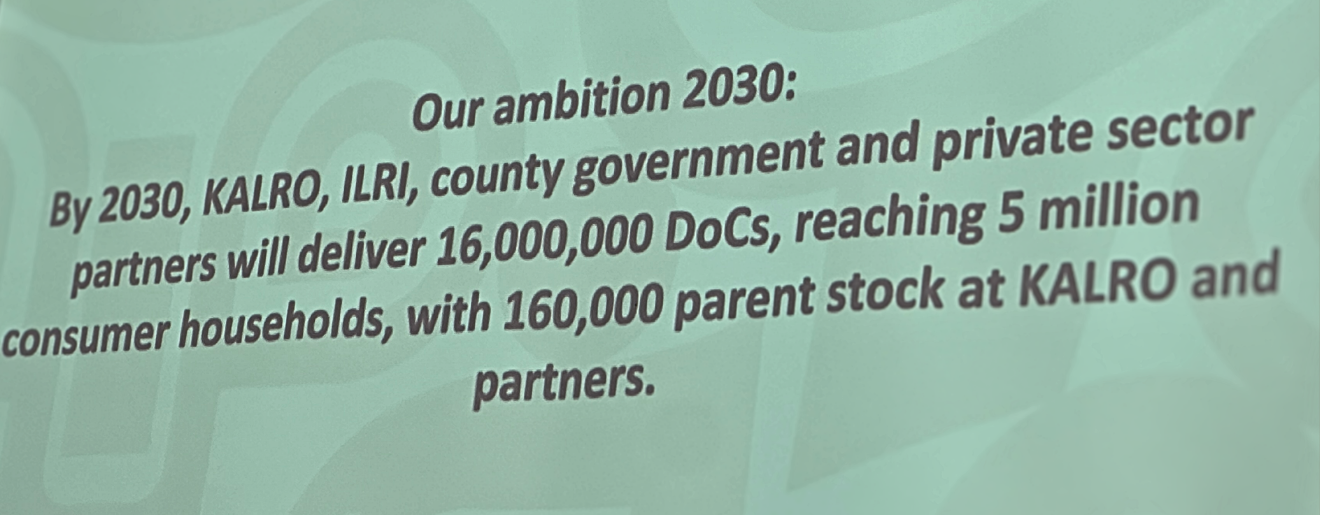
The big ambition declared by the workshop participants..
The tangible opportunity
The growing demand for the KC1, KC2, and KC3 chicken breeds is one of Kenya's most tangible opportunities for simultaneously raising smallholder income, improving household nutrition, and creating jobs, particularly for young people and women. Joining up relevant research expertise, scaling methodology, and commercial logic, the new KC breed portfolio offers a practical structured path to meet that demand.
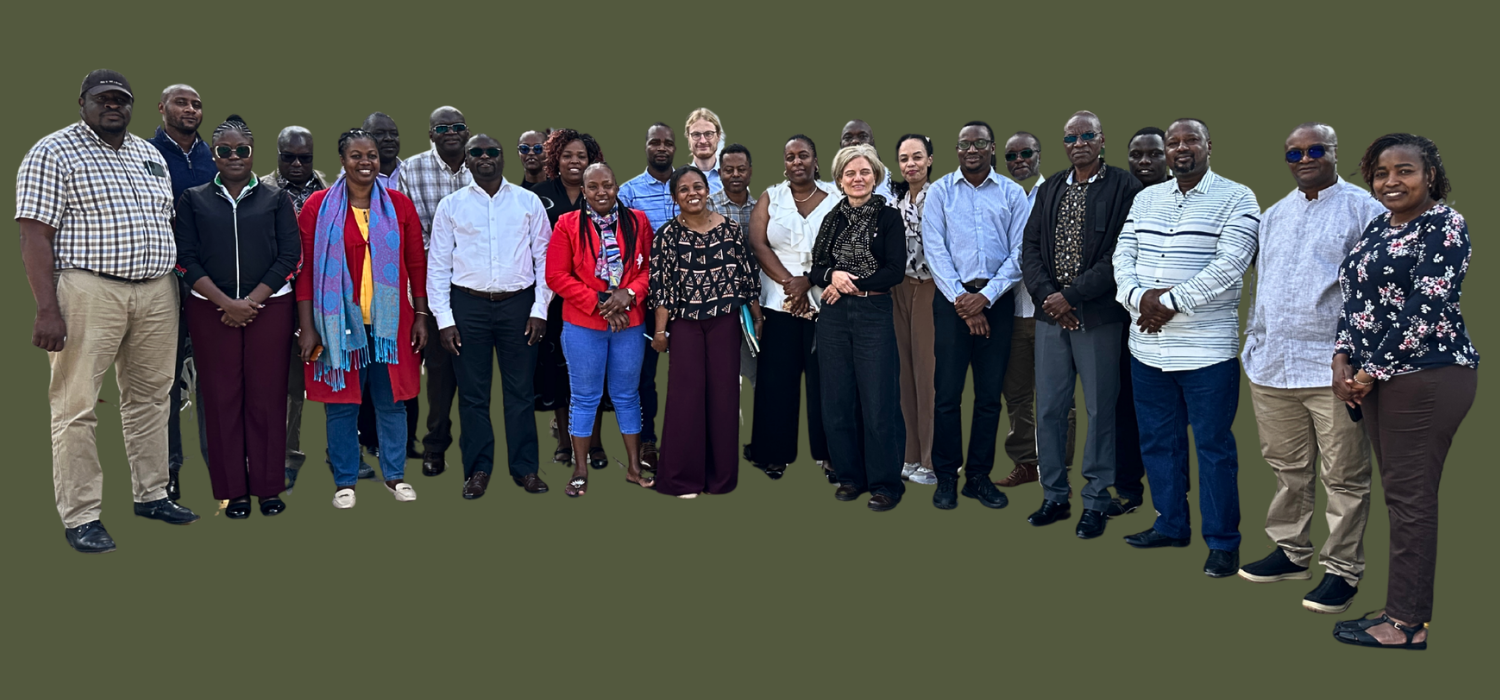
Participants of the workshop (photo credit: ILRI/Susan MacMillan).


Related Publications
Reducing and Redistributing Women’s Unpaid Care Work in Livestock Systems of Rural Kenya and Ethiopia: Evidence from Quantitative Baseline Analysis