Turning backyard chickens into profitable businesses: Poultry operations run by women take off in Tanzania and Kenya
Raising chickens in East Africa is a woman’s business—but rarely, until now, a woman’s opportunity
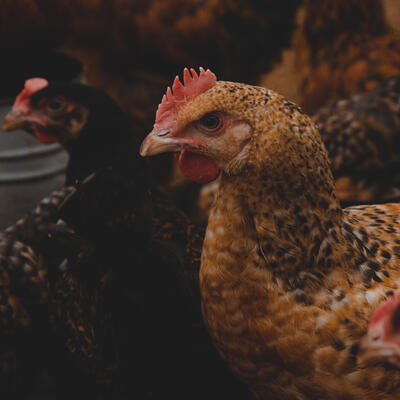
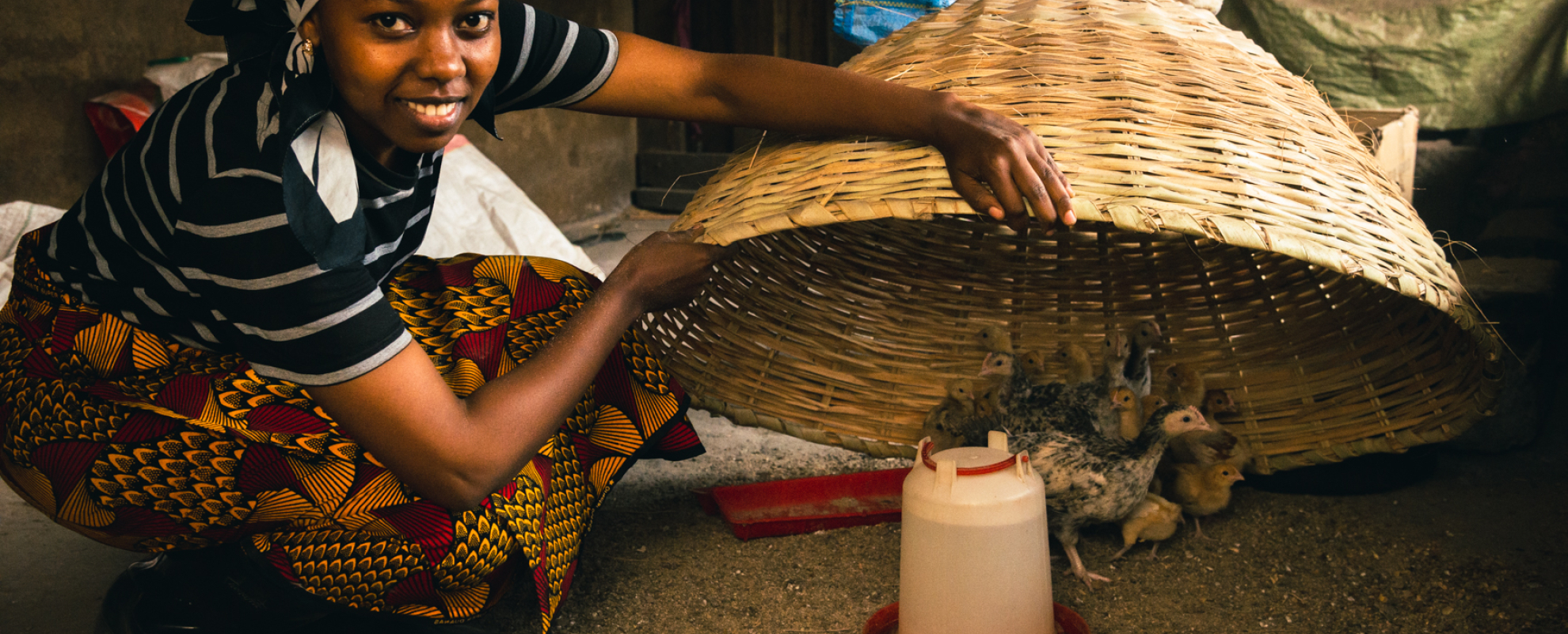
Across East Africa’s rural areas, chickens are ubiquitous. Not the plump, all-white broilers that end up on supermarket shelves, but the lean, long-legged, small-bodied, and multicolored native village birds known locally as “kuku wa kienyeji”. Some are distinguished by (and prized for) naked necks, frizzled feathers, or tuft-like beards under their beaks. In rural areas, they are ubiquitous, scratching for insects and worms, grains and seeds, grasses and kitchen scraps around homesteads and providing eggs and meat for special occasions or small sales at local markets.
Chickens are a woman's business here, one of the few livestock enterprises culturally open to them. Yet turning those small flocks into profitable ventures has long been out of reach for most women. Restrictive gender norms and limited access to healthy chicks––especially of improved breeds––as well as veterinary care, poultry markets, and financing have locked millions of women out of the growing poultry economy.
Meanwhile, demand for chicken eggs and meat is rising fast in this region, alongside human populations, incomes, and urbanization. In millions of urban households, eggs and poultry meat are no longer occasional treats but everyday staples. This creates a paradox, with rural households raising almost all the indigenous chickens and urban households doing most of the chicken eating. And while city markets pay a premium for indigenous chicken meat, prized for its flavor and "natural" reputation, a rural farmer with a small flock has no way of reaching urban customers directly, so her birds fetch only low village prices.
Linking village flocks to urban markets
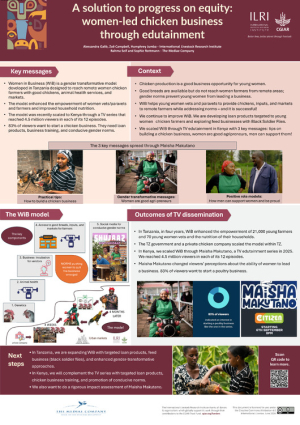
This rural-urban gap is what the Women in Business (WiB) social research innovation set out to close. Piloted in Tanzania and now expanding into Kenya, WiB is shifting how rural families raise, buy, and sell chickens, while challenging restrictive gender norms that keep women out of the livestock business.
Developed by scientists at the International Livestock Research Institute (ILRI), WiB has young women veterinary graduates at its core. They buy day-old chicks of improved native breeds from hatcheries, brood them in controlled environments, and deliver them by motorbike to smallholder farmers. These farmers raise the chicks to maturity and sell them back to the vendors, who connect with urban buyers willing to pay premium prices. The model is simple but transformative: women farmers gain access to quality chicks, reliable animal health care, affordable feed, and profitable markets.
In 2025, WiB was one of five winners of the CGIAR Scaling Fund, an annual competitive grant and technical-support program that helps promising CGIAR innovations move from small pilots to lasting, wide-scale impact. The Scaling Fund is part of CGIAR's Scaling for Impact program and is coordinated by the Impact at Scale program at ILRI.
Dismantling gender barriers
Technical fixes alone weren’t enough. Because the biggest barriers facing women in livestock businesses are often social, ILRI partnered with Shujaaz Inc., a popular private social media company, to launch “Binti Shujaaz” ("heroines" in Swahili). Through radio talk shows and in-person community dialogues, the initiative sparked conversations about why women should be allowed—and encouraged—to run livestock businesses.
The impact was striking. In Tanzania's Kilimanjaro and Lindi regions, young women vets who ventured into "chicken vending" found far more acceptance than they would have a few years earlier. With improved breeds like the dual-purpose Kuroiler, which is faster-growing and more productive than unimproved native birds, they delivered chicks and veterinary advice to rural farmers, returning weeks later to collect mature chickens for urban markets. The result: real income gains and improved household diets, especially through eggs and meat.
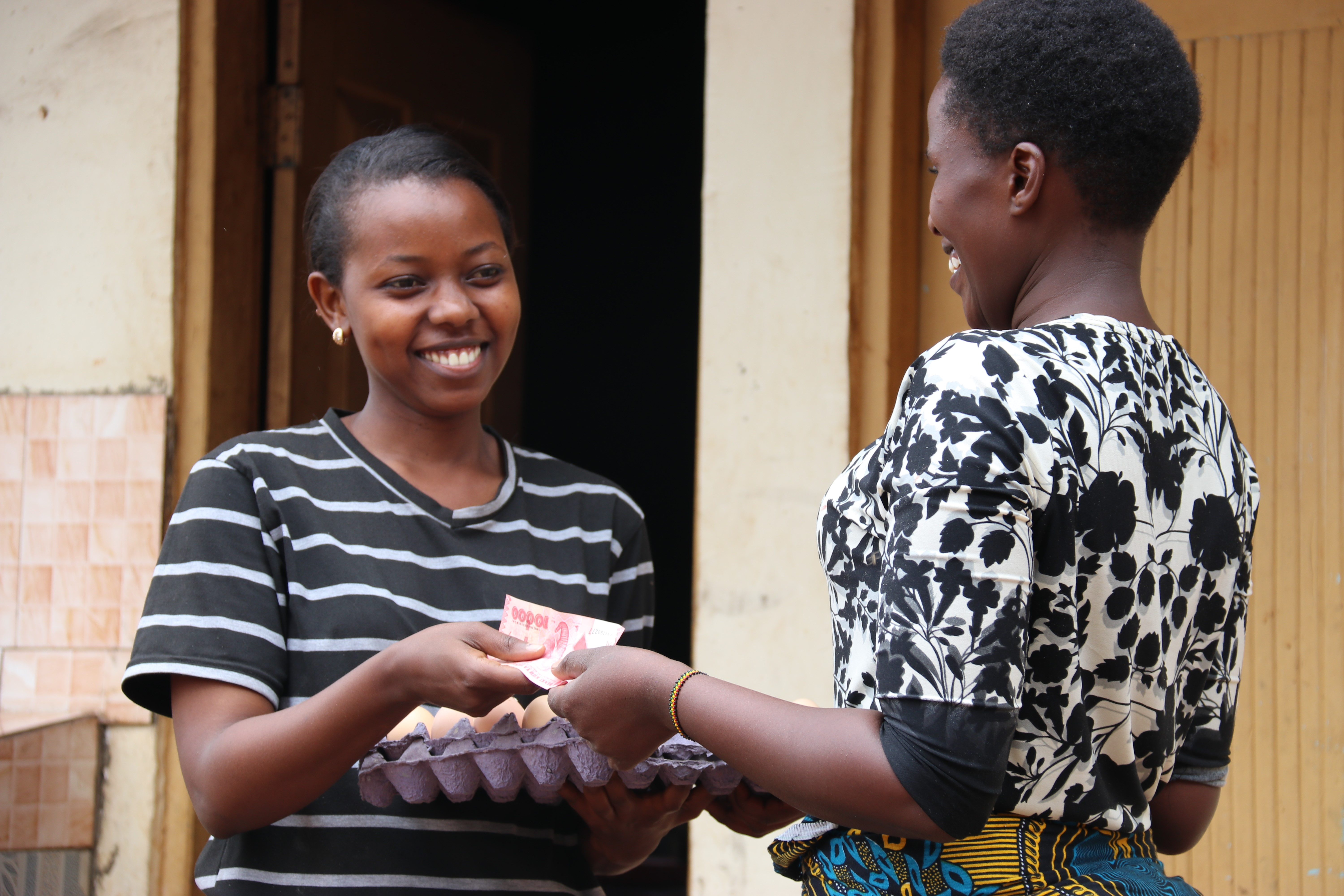
Women participating in profitable chicken business (photo credit: ILRI).
Scaling through different pathways
As WiB has matured, it has evolved differently in each country.
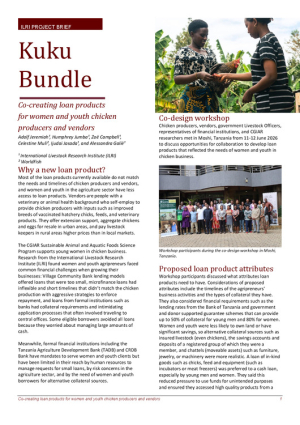
In Tanzania, where the model was first piloted in 2019, the focus shifted to two persistent barriers: lack of finance and unaffordable chicken feed. To tackle the financial hurdle, ILRI and partners co-designed the Kuku Bundle ("kuku" means “chicken” in Swahili), a loan product tailored for women and youth chicken producers and vendors. At the same time, teams explored black soldier fly larvae (BSFL) as a protein-rich, climate-resilient feed option.
In Kenya, ILRI partnered with the non-profit-oriented media production company Mediae to write the WiB model directly into the storylines of its “Maisha Makutano” TV series, a Swahili-language edutainment program that aired weekly on Citizen TV, a Kenyan broadcaster, and on YouTube. Over its 13 episodes, the show followed the fictional agripreneur Mwende Baraka as she built a poultry business, giving millions of viewers practical tips while also modeling husbands and communities that support, rather than resent, a woman's growing income.
A main component of the Scaling Fund support comes through hosting Innovation Packages and Scaling Readiness (IPSR) workshops, where participants design realistic action plans. These expert-guided sessions bring together everyone with a stake in an innovation's success: the researchers who developed it; the farmers, vendors, and business owners expected to use it; the financial institutions and companies that might invest in it; the government officials shaping the operating environment; and civil society and community representatives intimate with local realities.

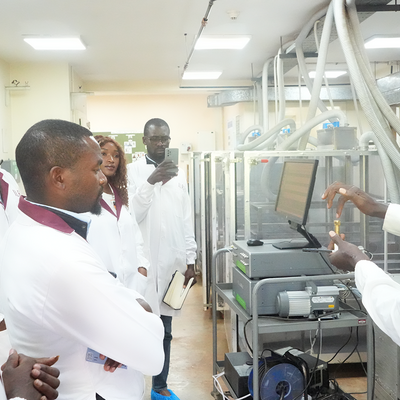
Alessandra Galiè, who leads ILRI's Women in Business project, talks with a participant at the IPSR Women in Business workshop held in late 2025 in Machakos, Kenya (photo credit: ILRI/Susan MacMillan).
The Kenya IPSR workshop: Turning awareness into action
The first Scaling Fund IPSR workshop for WiB was convened in Kenya’s Machakos Town in late 2025. It brought together two dozen farmers from Machakos, Kitui, and Makueni counties, representatives from two commercial banks (Equity and Kenya Commercial Bank), Mediae communication professionals, government officials and livestock officers from all the three counties, and local input service providers. The workshop's objective, in the words of ILRI researcher Humphrey Jumba, was “to convert the enormous public awareness generated by ‘Maisha Makutano’ into real farmer action”.
Participants identified a familiar cluster of barriers: limited access to loans suited to poultry businesses, an unreliable supply of affordable chicken feed, and restrictive gender norms that discouraged women from starting or growing a livestock business, even after watching a television show that said they could. Against those barriers, the group identified “enablers” of this innovation already within reach. These included strategic partnerships with media companies, banks, government agencies, and women's organizations; business incubation support for the young women vets and para-vets acting as vendors; and further gender-transformative programming delivered through both media and in-person workshops.
From here, the workshop participants built a set of concrete "work packages" to carry the innovation forward, including developing loan products tailored specifically to women chicken farmers, strengthening partnerships with banks and government stakeholders, and working with women’s organizations to advocate for gender-equitable policies.
The Tanzania IPSR workshop: Designing a loan product and integrating a new feed technology
The Scaling Fund IPSR workshop held in Moshi, Tanzania, in June 2026 designed a loan product for women and youth in the chicken business. Participants hammered out the borrowing terms, including acceptable interest rates and repayment schedules, and official government-backed guarantee schemes that could cover up to 80% of the required collateral for women borrowers. Those represented included farmer groups, Tanzania's Agriculture Development Bank, CRDB Bank, NMB Bank, and the Financial Sector Development Trust, alongside the Ministry of Livestock and Fisheries, Tanzania Livestock Research Institute, and the University of Dodoma.
A telling insight from the workshop was that many young people preferred to receive loans in the form of goods—chicks, feed, or freezers—rather than money. Thus, the participants developed the "Kuku Bundle" loan product primarily around in-kind goods rather than cash, which lowers the risk to financial institutions.
The Tanzania workshop also explored BSFL feed integration. Three business pathways were mapped:
1. Vendors purchase and retail ready-made BSFL feed supplements or live/dried BSFL from large private companies and sell them to smallholder chicken farmers.
2. Vendors or farmers hatch BSF eggs, rear the larvae using organic waste, then sell live or dried larvae and the frass by-product to chicken farmers.
3. Vendors or chicken farmers undertake the full BSF production cycle, including breeding, egg production, larval rearing, and feed processing, and then sell the larvae, frass, or BSFL-supplemented feeds to chicken farmers.
Participants recommended piloting these pathways to identify the best fit for local capacities and business realities.
Betting on chickens
For women vets delivering chicks and veterinary advice on motorbikes to remote villages, for farmers inspired by watching “Maisha Makutano”, and for bankers now willing to lend against a flock of insured birds, backyard chicken farming has never looked so good. What was once a traditional woman’s business is fast becoming a profitable woman’s business.

Related Publications
Prevalence, quantification, and household-level risk factors associated with Salmonella spp. infection in chickens in Boussouma commune, Burkina Faso