ILRI supports development of Lao National Poultry Strategy 2026–2035
Lao PDR is preparing a 10-year National Poultry Development Strategy (2026–2035) to strengthen one of its most important livestock sectors. Poultry plays an important role in food security and household income across the country. Chicken meat and eggs are the most commonly consumed animal-source foods, with each person consuming about 11.6 kilos a year. For rural families, poultry provides nutrition and is the most reliable source of income.

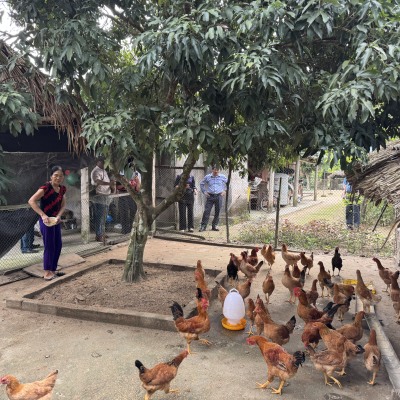
The national flock is estimated at 50.1 million birds, most raised in traditional backyard systems that continue to supply rural markets. Meanwhile, rising urban demand is the key driver for commercial production, attracting domestic and regional investors. This transition highlights the need for a coordinated national strategy to ensure the sector grow sustainably and competitively.
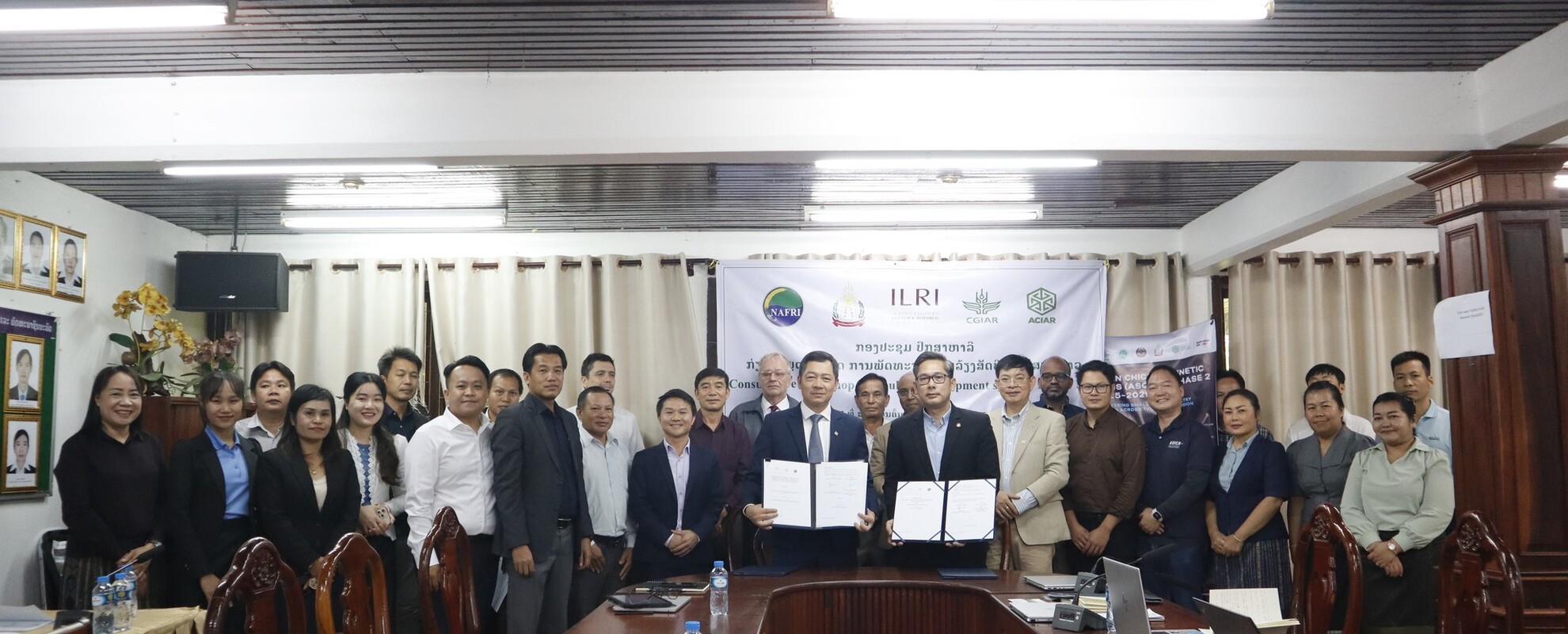
The strategy is led by the Ministry of Agriculture and Environment (MAE) and aims to modernize production, improve livelihoods, and strengthen national food security. To ensure the roadmap reflects sector needs, the National Agriculture and Forestry Research Institute (NAFRI) under MAE organized a national consultation workshop in collaboration with the National University of Laos (NUoL) and the International Livestock Research Institute (ILRI), with funding from the Australian Centre for International Agricultural Research (ACIAR).
The consultation on 30 October 2025 brought together government agencies, academics, private companies and development partners to provide inputs for MAE and NAFRI, who will finalize the strategy.
“In Laos, poultry is not just food; it is a basis for rural livelihoods, particularly for women and young people,” said Siriphonh Phithaksoun, deputy director general of NAFRI. “But smallholder systems still face many challenges such as poor genetics, high mortality, limited veterinary services and rising feed costs. Climate pressures also add further difficulties.”
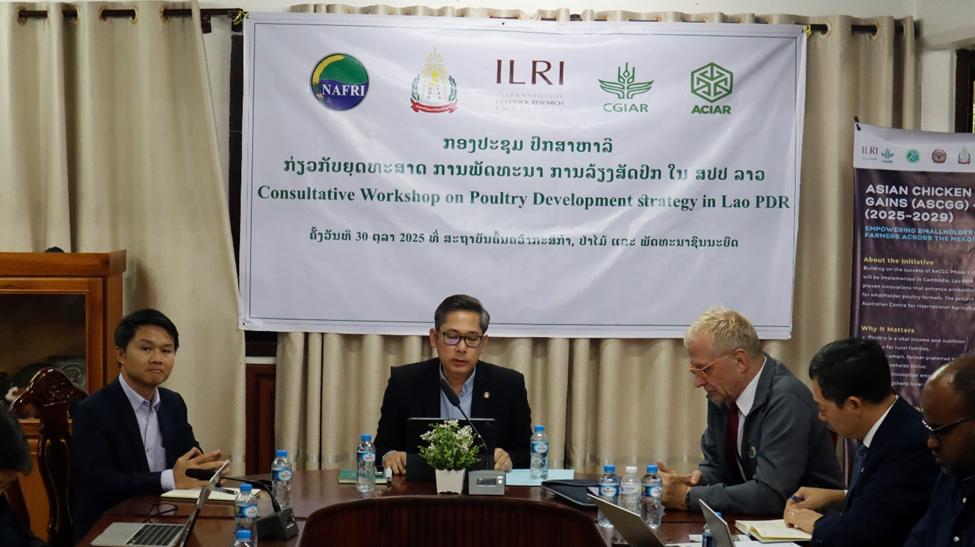
Participants discussed major constraints to sector growth, including economic pressures linked to the depreciating Lao currency, reliance on imported feed, animal diseases such as Highly Pathogenic Avian Influenza (HPAI) and Newcastle disease, low productivity in traditional systems, and limited access to extension services and training.
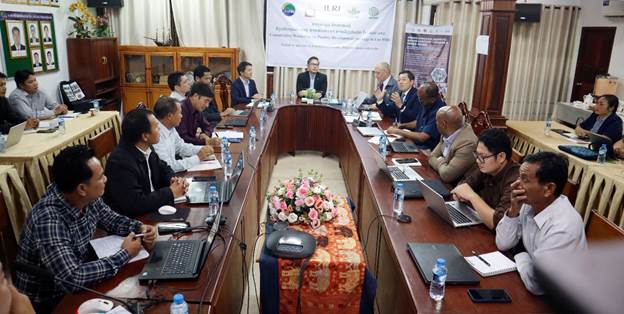
Despite these challenges, there are still many opportunities. Lao consumers prefer local native chickens, which can be sold at higher prices. New transport links, like the China–Laos railway, could help farmers reach export markets if quality and safety standards are improved. There is also opportunity to produce more feed locally, improve breeding programs, and encourage involvement from the private sector across the poultry value chain.
The draft strategy prioritizes six key areas: breeding and genetics; feed and nutrition; animal health and biosecurity; market and value chain development; policy and investment; and capacity building. Cross-cutting themes include gender equity, youth inclusion, nutrition, and the integration of digital tools for monitoring and decision-making.
“Developing a resilient poultry sector requires coordinated efforts among different stakeholders,” said Hung Nguyen, ILRI regional director for Asia. “This strategy gives Laos an opportunity not only to strengthen domestic poultry production but also show how sustainable livestock development can work in the region.”
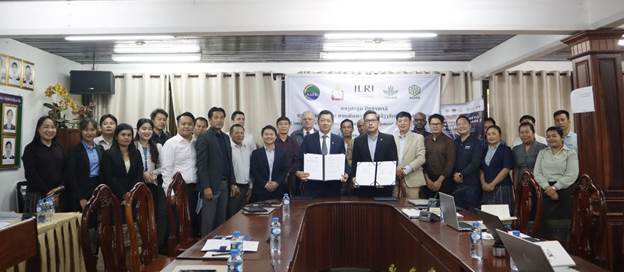
Following the consultation, the Ministry of Agriculture and Forestry (MAE) and the National Agriculture and Forestry Research Institute (NAFRI), with the support of the International Livestock Research Institute (ILRI) and the National University of Laos (NUoL), will work together to create a comprehensive, evidence-based national poultry development strategy. This strategy will identify key interventions aimed at enhancing economic growth through poultry production in Laos.
One the same day, NAFRI and ILRI signed a Memorandum of Understanding (MOU), formalizing collaboration on research, technical assistance, capacity development, and knowledge exchange. As part of this collaboration and building on the success of ILRI-led AsCGG Phase 1 (2022–2025), the new phase will be implemented in Cambodia, Lao PDR, and Vietnam, scaling proven innovations that enhance productivity, income, and resilience for smallholder poultry farmers. The project is funded by ACIAR.
Related Publications
Genome-wide association study of pre-indicative agronomic traits affecting malt quality in Ethiopian barley (Hordeum vulgare L.) germplasm
Genomics-led leapfrogging as a sustainable scaling alternative to sequential conventional livestock breeding models