Impacts of management on soil carbon sequestration and ecosystem resilience in semi-arid Kenya
Abstract
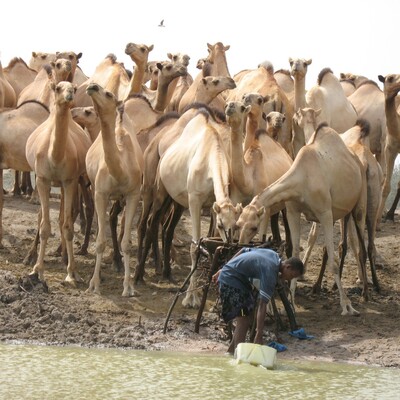
National Park in Meru County to assess the impact of grassland management. Paired grassland sites were selected, inside the protected areas (conservancies and national parks) which served as the baseline and outside protected areas representing degraded communal grazing lands. At each site, soil sampling, greenhouse gas measurement, water infiltration assessments and vegetation characterization were conducted at three distinct locations. We observed higher C stocks inside protected grasslands in Meru, but no significant differences in Laikipia and Kapiti suggesting that reduced grazing pressure can facilities C storage, but local ecological factors plays a key role. The activity of β-glucosidase was higher in conservancy soils compared to adjacent open grazing lands indicates a more active microbial community, likely driven by the higher substrate availability (soil C), which is crucial for nutrient cycling and ecosystem resilience. Our study demonstrates that sites with higher initial C stocks such as Meru are more vulnerable to soil carbon loss when subjected to disturbances such as overgrazing, land-use change and vegetation cover.
Citation
Oduor, C., Kwamboka, A., Nduku, P., Kimutai, J., Diba, R., Ngetich, F., Nyangito, M., Mswafiri, C., Batnyambuu, D., Butterbach-Bhal, K. and Leitner, S.M. 2025. Impacts of management on soil carbon sequestration and ecosystem resilience in semi-arid Kenya. Poster prepared for the 9th International Greenhouse Gas & Animal Agriculture Conference, Nairobi, Kenya, 5-9 October 2025. Nairobi, Kenya: ILRI.
Authors
Related Publications
Impact evaluation of a small ruminant flock health intervention on animal health, welfare, and farmer income in Ethiopia