The 75-kilo sheep that changed a pastoralist’s mind
Tuitoek Chirchir, a pastoralist from Baringo County, had never seen a sheep so big. Standing beside a 75 kg ram at the International Livestock Research Institute (ILRI)'s Kapiti Research Station in Machakos County, he could hardly believe it was an indigenous sheep like those raised in Kenya's drylands.
"There are no sheep of this size back home," he said.
Tuitoek had travelled with fellow livestock keepers from Baringo’s Irong Conservancy on a two-day farmer exchange visit through Kajiado and Machakos counties. Like the rest of the group, he expected to learn about livestock management. Instead, one animal changed how he thought about improving his flock.
At home, he typically sells his goats and sheep for between KES 3,000 and KES 5,000 (approximately USD 23–39). During the visit, Tuitoek met farmers selling much larger animals for several times that amount. The difference, he realized, was not simply better feeding or animal health. It began with breeding matched with good management. The visit was organised by ILRI’s Livestock Genetics, Nutrition and Feed Resources program in collaboration with Resource Conflict Institute (RECONCILE ) through the support of CGIAR Sustainable Animal and Aquatic Foods (SAAF) Program. The aim of the visit was to expose pastoralists to best small ruminant management practices for improved productivity.
The animals at Kapiti and across the Kajiado farms are indigenous sheep, similar to those raised in Baringo, though different breeds. However, they are managed differently: separated by sex and breeding function, vaccinated on schedule, fed from feed banks built before the dry season, and watched closely for inbreeding. Fix one without the other, the farmers would learn, and you get only half the animal.
That gap matters to a lot of people. Irong Conservancy is home to more than 14,500 people who live mainly off their herds. Sheep and goats are particularly important because they are easier to keep than cattle during drought. Yet productivity remains low with sheep and goats lambing/kidding once in two years and birth weights ranging between 1.5 and 2Kgs. This eventually leads to loss in productivity and lower prices of animals during sale. With proper management, sheep and goats should lamb/kid twice in a period of 1.5 years and through proper breeding the birth weight can reach 3Kgs as is the case with the Red Maasai breed being bred at ILRI’s Kapiti Research Station. Animals often breed uncontrolled on communal grazing lands, leading to inbreeding, while degraded rangelands and increasingly unreliable rainfall make it harder for livestock to reach their full potential. The exchange visit was built to show what closing that gap actually looks like.
Ten years of improvement
The group’s first stop was a farm in Isinya, Kajiado County, where Moses Munyangai has raised Red Maasai sheep for about a decade with ILRI’s support. The indigenous breed found in pastoral systems of Kenya and Tanzania is valued for its resilience in arid and semi-arid environments and its natural resistance to internal parasites. Key to the performance of Munyangai’s flock is not just the breed but management.
What the Baringo visitors noticed first was the fencing: males in one paddock, females in another. Separate feeding lots for different stages of growth. A logbook recording every mating and every vaccination. In Irong, as across much of Baringo, animals graze communally on open rangeland and mate at will, resulting in widespread inbreeding, smaller animals, and lower prices at market. The contrast was hard to miss.
In Baringo we did not know how to separate the animals. Females separated from males, you avoid inbreeding. And if you keep records of vaccinations, you can identify which animals are sick and which males have mated with which females.
— Tracy Kimelel, sheep farmer, Irong Conservancy
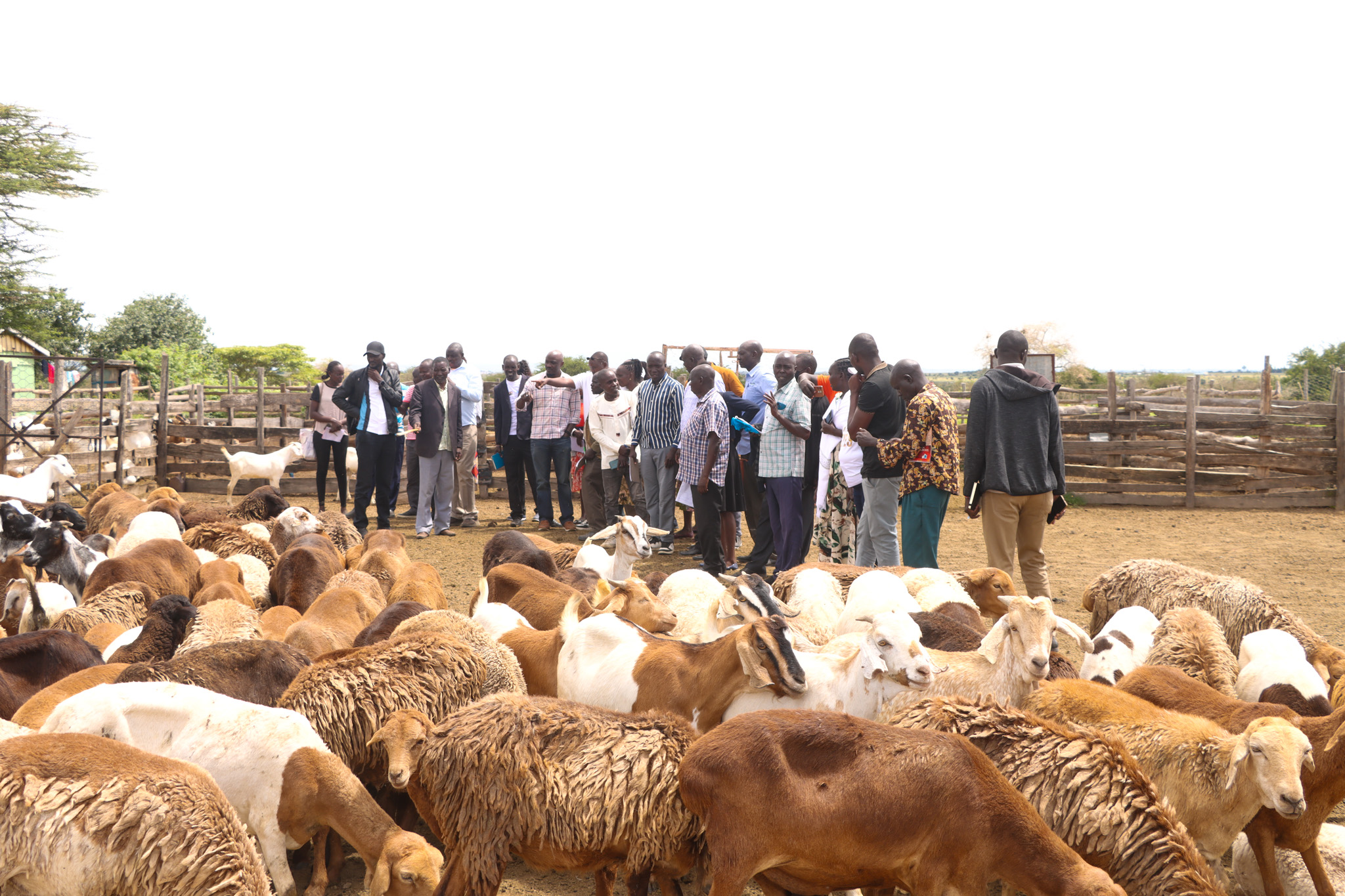
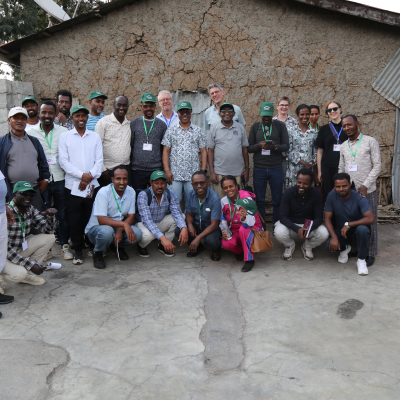
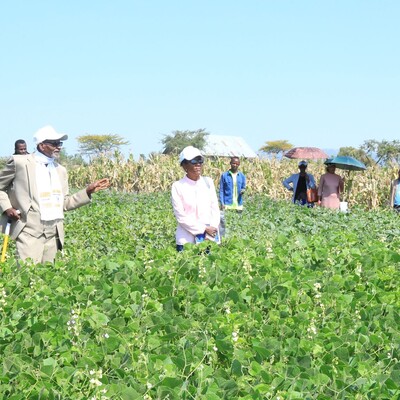
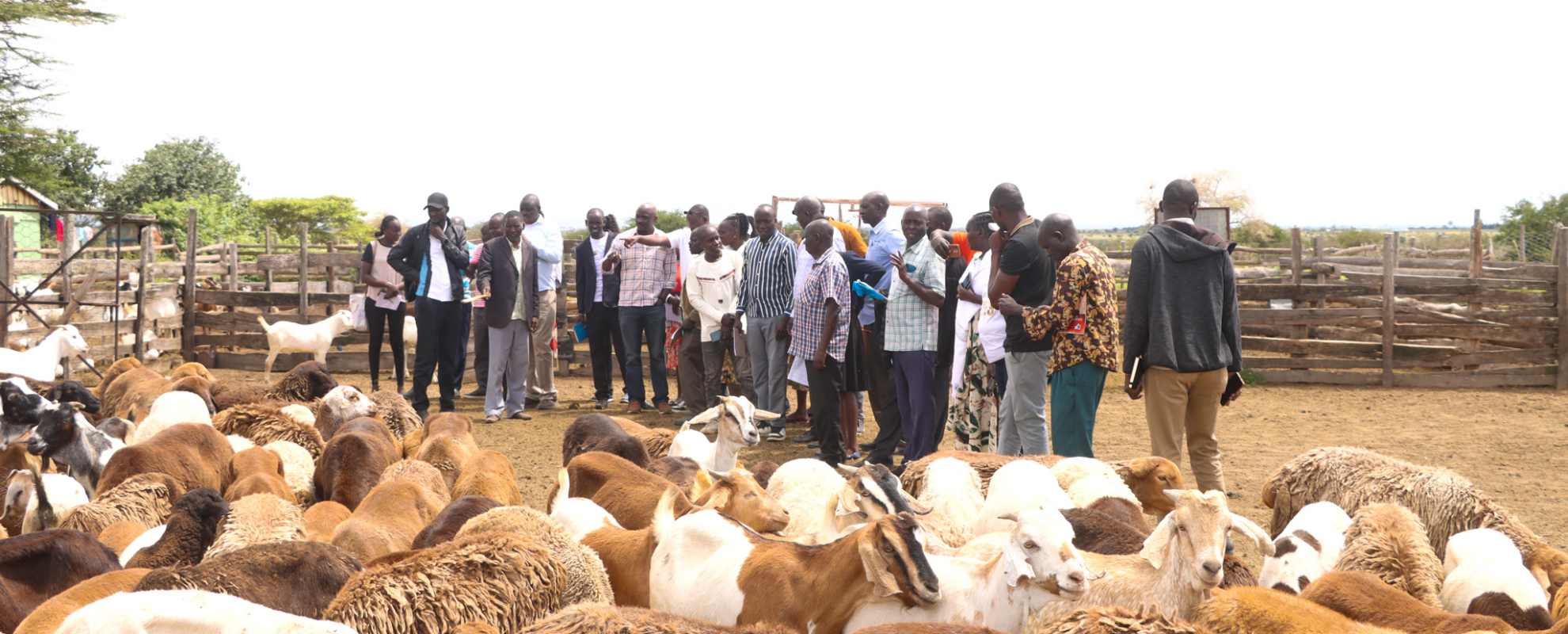
Farmers at Moses Munyangai’s farm in Kajiado County, learning about the Red Maasai sheep (photo credit:ILRI/Geoffrey Njenga).
Six thousand bales
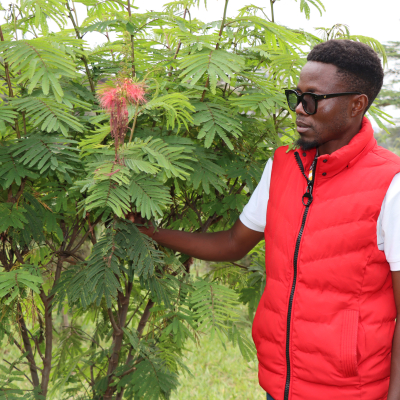
The next lesson focused on drought preparedness. Farmer Harun Suiyan grows Napier, lucerne and Boma Rhodes grass, keeps silage for up to two years, and stores 6,000 bales of hay in his barn.
In Baringo, a dry season usually means animals die or are sold off cheaply in distress, because there is nothing left to feed them. Rather than reacting when drought arrives, Suiyan prepares for it months in advance. During good seasons, he stores surplus feed so that when rains fail, his animals are still well fed and he can sell the surplus.
For Baringo farmers who watch animals die every dry season, Suiyan’s barn offered a concrete model: start small, grow what you can, store before the drought arrives.
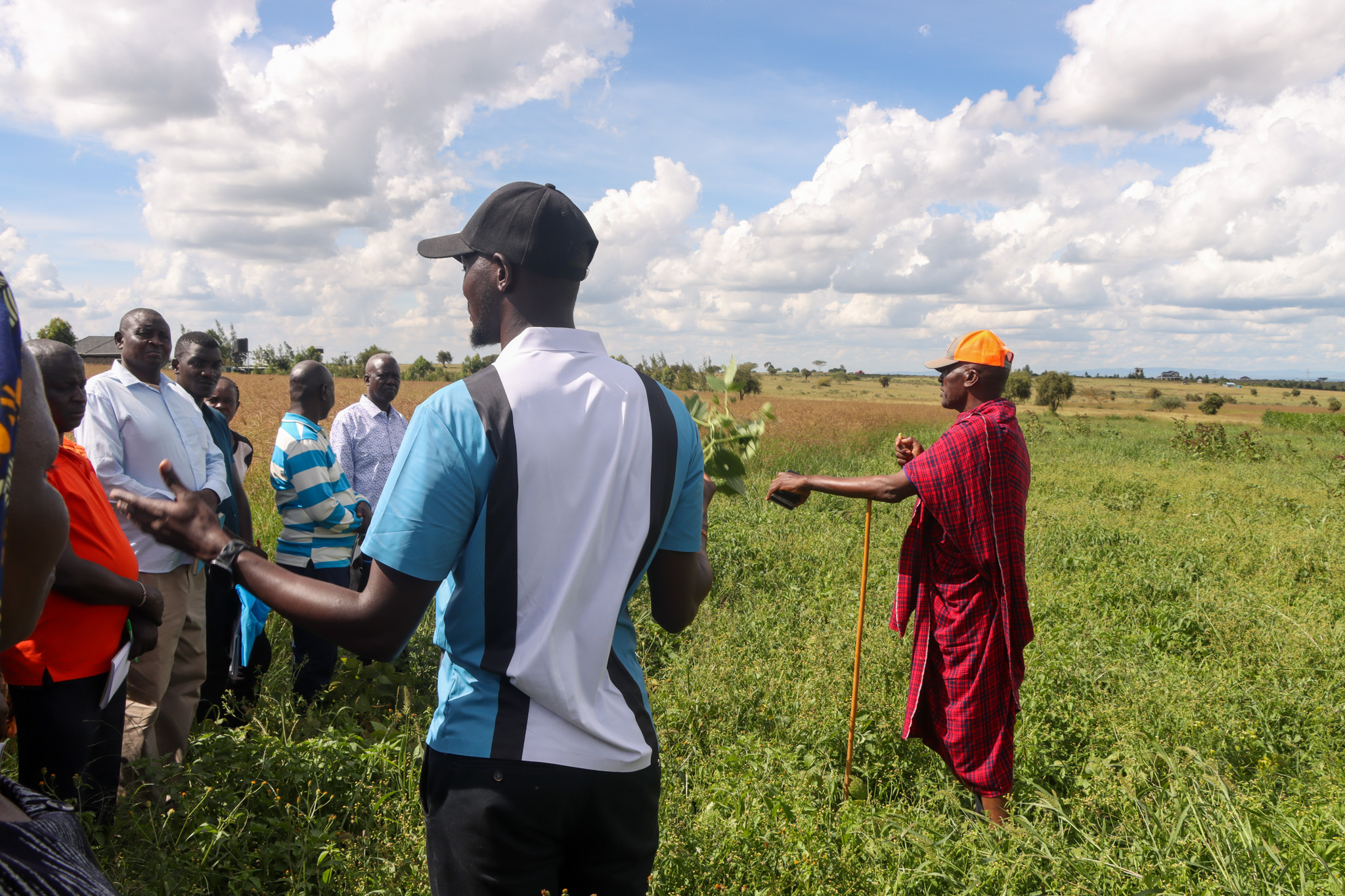
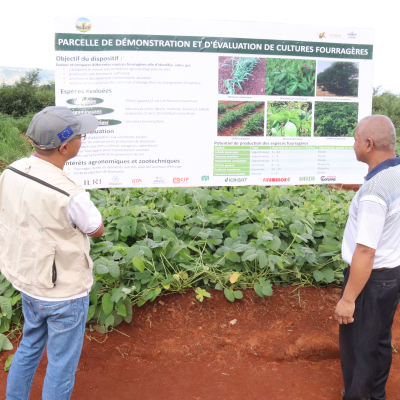
Harun Suiyan explains the different forages he grows in his farm (photo credit: ILRI/Geoffrey Njenga).
Twenty years of breeding
The final stop brought the group's biggest surprise. At Kapiti Ranch, ILRI’s 13,000-hectare research station and wildlife conservancy in Machakos County, a selective sheep breeding program has run since 2003. Researchers cross the hardy, disease-resistant Red Maasai with the faster-growing, heavier Dorper. The 75 kg ram that stopped Tuitoek in his tracks was one outcome of more than two decades of patient breeding, supported by careful nutrition, health management and record keeping.
For the farmers, the lesson became clear. Improving livestock is not simply about buying better animals. Good genetics need good management to realize their potential. Likewise, excellent management cannot fully compensate for poor breeding.
We sell our goats for around KES 3,000 to 5,000 while others are selling theirs at KES. 20,000. We need to really look at improvement of breeding for all livestock. I have not seen small local breeds here; I have only seen improved local breeds.
— Tuitoek Chirchir, livestock farmer, Irong Conservancy
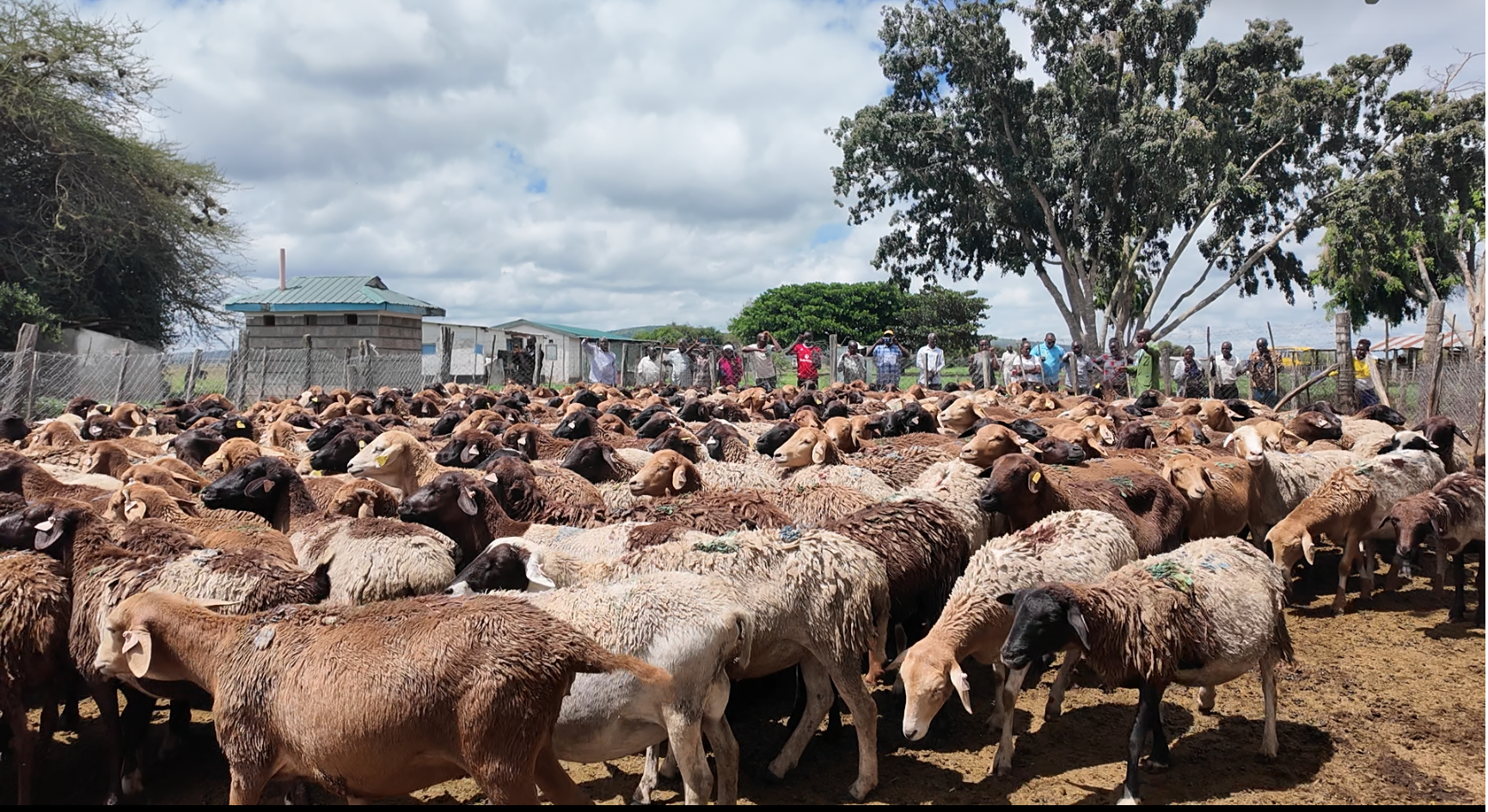
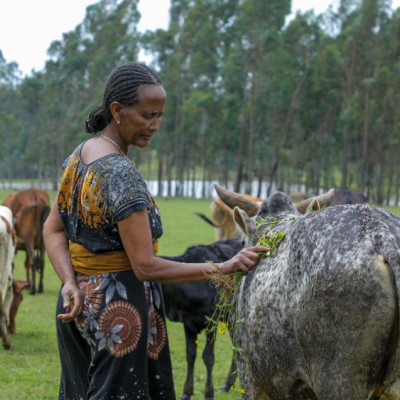
Farmers at the ILRI Kapiti ranch learn about the selective sheep breeding, reproduction, feeding and health (photo credit: ILRI/Geoffrey Njenga).
Taking the lessons home
The exchange visit marks the beginning of a wider program by ILRI and Resource Conflict Institute (RECONCILE) to strengthen livestock production in Baringo County. Livestock breeding joined the agenda after a rapid assessment flagged two weaknesses: widespread inbreeding in community herds and weak organization among livestock producers.
The next phase will focus on practical training in breeding, reproduction, feeding and health. Farmers see the outcome first; the methods come after.
Pastoralists learn better by seeing and doing. We want them to carry a vision of what they can do with their animals. When we go through the trainings, they’ll be able to relate what we’re teaching to what they saw on the farms they visited.
— Edwin Pancras Oyieng’, Animal breeder and geneticist, ILRI
This work is in line with Baringo County’s 2023–2027 integrated development plan and is already showing results. A traders’ group born from the partnership has already saved KES 250,000 (about USD 1,900) and plans to use the money to buy better breeding animals.
That shows the process we have started is creating impact. We are really looking forward to having more of these changes.
— Owino Joshua Okoth, PRM coordinator, RECONCILE
Tuitoek went home with a plan: build feed storage, source better breeds, separate animals by sex and breeding function, vaccinate on schedule, and keep proper records. His fellow farmer, Francis Jerono, has another goal.
When we go back to Baringo, we will train others. We have to lead by example if we want to see change.
— Francis Jerono, Farmer, Irong Conservancy
Participants in their own words
This work was conducted as part of the CGIAR Sustainable Animal and Aquatic Foods (SAAF) Program and multifunctional landscapes program, part of CGIAR’s 2025–2030 Research Portfolio. CGIAR research is supported by contributions to the CGIAR Trust Fund. CGIAR is a global research partnership for a food-secure future, dedicated to transforming food, land and water systems in a climate crisis. We also acknowledge our collaboration with the Senior Expert Program (SEPII) at Wageningen University and Research, The Netherlands.