Bringing livestock services closer to farmers in Nepal
In 2023, when Mithun Chaudhary was selected as a Village Livestock Promoter (VLP), he was working as a junior veterinary technician in Barahathawa, in Nepal’s Sarlahi district. Like many livestock technicians in rural areas, most of his work focused on treating sick animals.
Today, his job is much more than that.
Since completing training provided by the International Livestock Research Institute (ILRI) and partners, Chaudhary now supports around 200 farmers with feeding, breeding, artificial insemination, and animal health management. He also runs an agro-vet shop that supplies feeds, forage seeds, and animal health products to local farmers.
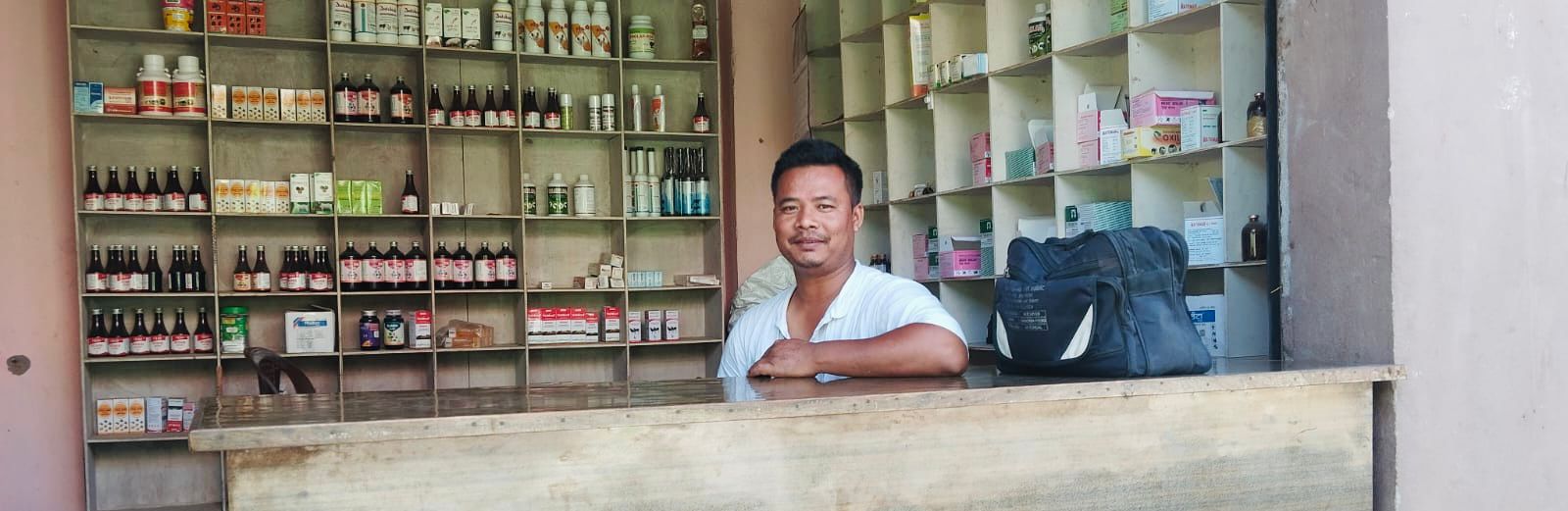
“The project trained us on animal nutrition and business approaches,” Chaudhary said. “The training helped me gain knowledge on feeding, breeding and infertility.”
The Village Livestock Promoter model, developed under CGIAR Initiative on Sustainable Animal Productivity and now continued through CGIAR Science Program on Sustainable Animal and Aquatic Foods, aims to bring livestock services closer to smallholder farmers in Nepal.
According to the Ministry of Agriculture and Livestock Development, Nepal has 1.8 million milking cattle and buffalo, producing about 2.6 million metric tons of milk annually—though productivity is relatively low. Yields often average less than one ton per cow per year. With better management, yields can improve.
But in many rural areas, farmers still have limited access to livestock extension and veterinary services because of limited staffing and resources, said Gangaram Yadav, senior livestock development officer at the Directorate of Livestock and Fisheries Development in Koshi Province.
“Farmers get services and inputs from trained technicians which can fulfil the gap that our extension providers cannot supply,” he said.
Many farmers are raising improved dairy breeds such as Holstein and Jersey cattle, but they do not have enough support on feeding and animal care. Poor feeding can cause infertility and low milk production. So unlike traditional livestock services that focus on treatment, VLPs provide farmers with advice on feeding, breeding, and preventive healthcare in their own communities. Because VLPs like Chaudhary come from the same communities, farmers can easily contact them and build trust in their services.
“Feeding, breeding, and health are the three major pillars of livestock production and productivity,” Yadav said. “VLPs can support farmers in all three sectors to improve livestock productivity.”
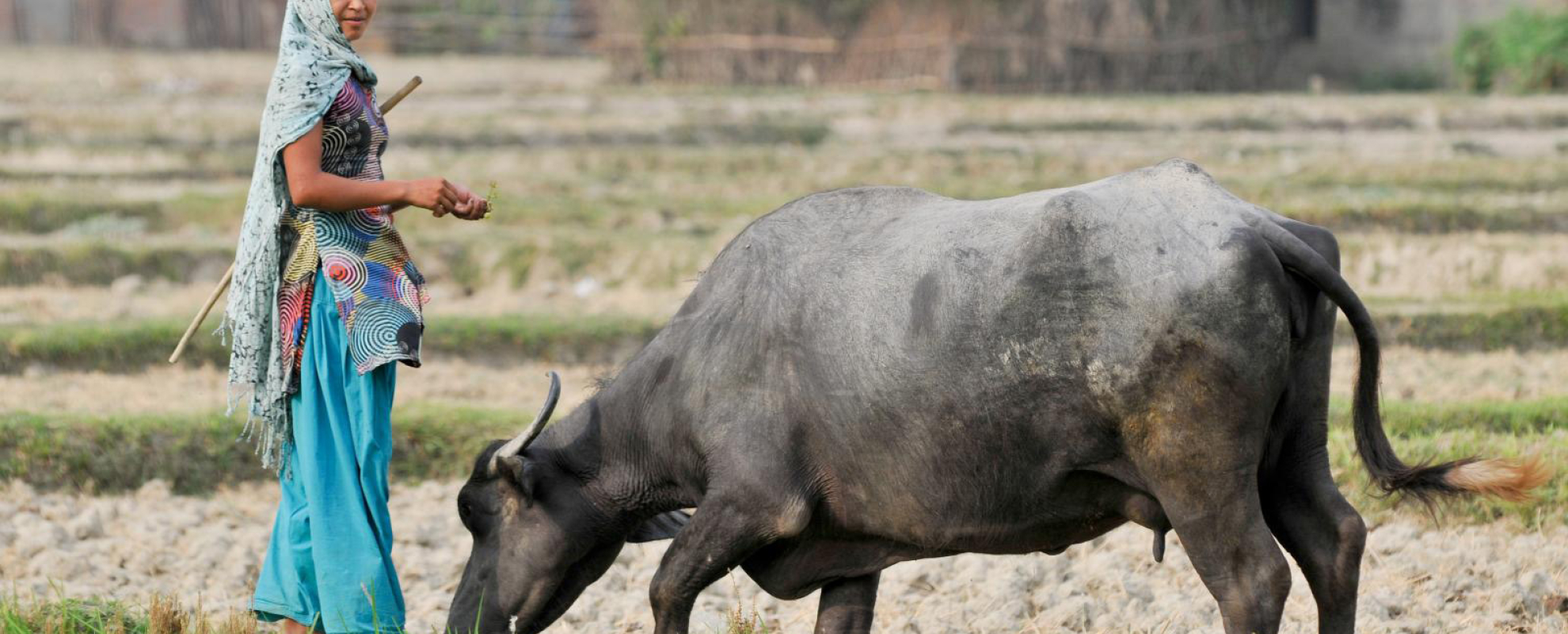
One of the farmers working closely with Chaudhary is Rajendra Kumar Khatri, a buffalo farmer affiliated with the Bhuwaneshwori Milk Producer Cooperative. Before receiving support from the VLP program, Khatri faced challenges with managing feed and infertility in his buffaloes.
Like many smallholder farmers, he depended mainly on traditional feeding practices and had limited access to technical advice on animal nutrition. Through the VLP program, Chaudhary introduced Khatri to improved feeding practices using a digital feed-balancing tool developed by ILRI.
“Now I incorporate more green forage and also compound feed in the diet of the buffalo,” Khatri said. “And I supply mineral mixture regularly from the agro-vet.”
Khatri also participated in a fertility camp organized by ILRI, where he received mineral supplements and veterinary support for his buffaloes. The changes gradually improved the productivity of his animals, he said, and boosted his income.
“Now both buffaloes give birth every year,” he said. “Milk production increased quite significantly from nine liters to 12 liters per day.” Khatri said having a local livestock service provider in the community has made livestock management easier and more reliable.
The impact of the VLP model is also becoming visible at the cooperative level. At the Bhuwaneshwori Milk Producer Cooperative, manager Tika Ram Ghimire said farmers now directly contact Chaudhary for livestock-related support. The cooperative also involves him in farmer training activities on livestock production and productivity.
Farmers now have easier access to artificial insemination services, feed, forage seeds, and preventive healthcare closer to their communities, said Ghimire. About 150 cooperative members also receive a subsidy of NPR 100 (USD 0.75) for artificial insemination services.
“Previously, farmers had to go to the town to get compound feed,” he said.
Today, about 200 farmers can access livestock inputs and services directly within their community through the VLP network, reducing travel time and costs. The cooperative has also observed increased use of compound feed and feed supplements among farmers—and their cows are now producing more milk.
The success of the pilot has also attracted support from provincial governments. In Koshi Province, the Provincial Livestock Training Centre is now collaborating with ILRI to provide training for additional VLP candidates, while the provincial government is investing in scaling the program.
From an initial group of 10 trained VLPs in 2022, there are now 62. The model is also gradually being woven into policy through different pathways in Nepal. Based on the positive results from the pilot phase, provincial governments in Koshi, Madesh, Bagmati, Lumbini, and Sudurpashchim have started integrating the VLP approach into their livestock development programs through training support, institutional partnerships, and provincial budget allocations.
For policymakers like Yadav, one of the strengths of the model is its sustainability. Rather than depending on government staff, the approach creates local livestock service providers who make their own living while supporting farming communities.
For Chaudhary, the biggest change is the stronger connection with farmers in his community, giving him more clients and a wider network.
“Becoming a VLP helped me gain practical ideas and also improve my business,” he said.