Agronomy

Mitigate+: Research for Low-Emission Food Systems

Challenge


The global food system is critical for food and nutrition security and livelihoods, yet produces 21–37% of greenhouse gas emissions, and is responsible for 33% of agricultural soil degradation, 20% of aquifer overexploitation and 60% of biodiversity loss. To support climate adaptation and mitigation and ensure a more sustainable future, a systems transformation is now urgent.

Many current interventions tend to miss the mark, due to a lack of research, data or general understanding of food systems approaches. Better knowledge among decision-makers is needed to stimulate both policy momentum and investment in food systems solutions.

Objective


This Initiative aims to reduce greenhouse gas emissions in seven countries that are regional top-tier emitters for food systems, reducing annual global food systems emissions by 6.5% by 2030.
You may also like

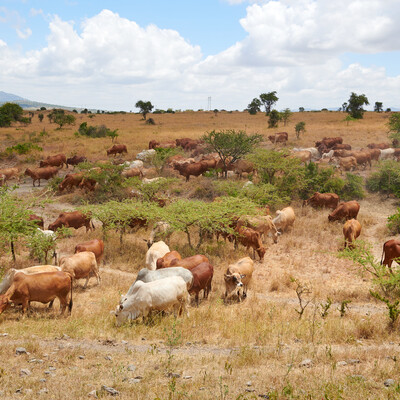
Livestock grazing in Kapiti Research Station (photo credit: ILRI/Eric Ouma)

Drones prove their worth in measuring livestock methane in Africa

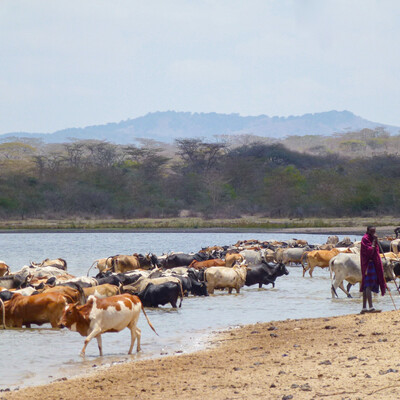
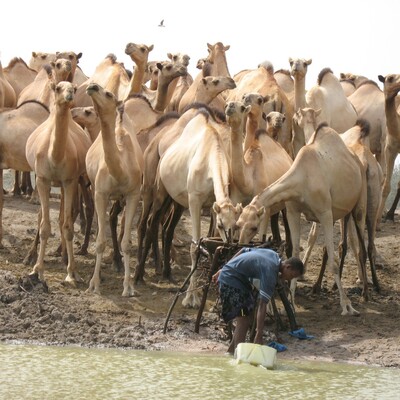
A Maasai pastoralist taking livestock to drink from the Olkitikiti Dam, Kiteto, Tanzania.

New science

Why Kenyan rangeland cattle need new methane emission factors

Black soldier fly larvae

ILRI News

If you look for local innovations, you will find them: Exciting next steps for the Living Lab for People in Nandi County

Calf (ILRI/Susan MacMillan).

Reducing livestock abortions and calf mortality to improve food security and lower GHG emissions in Tanzania and Kenya

Doyogena, Ethiopia (photo credit: ILRI\Zerihun Sewunet).

A closer look: Comparing methods to measure methane emissions from sheep

Milk being poured into a jug (ILRI / Kabir Dhanji).

ILRI News

Can Kenya meet dairy production and greenhouse gas emissions reduction targets by 2030?

IPCC vs CSIRO Tier 2 Emissions Comparison

ILRI News

Why livestock emission estimates might vary: The Tier 2 model effect

Related Publications

ILRI publication cover

Dataset for Tier 1 and 2 methodologies for estimating intake and enteric methane emission factors from smallholder cattle systems in Africa: A case study from Ethiopia

  • Balcha, Endale
  • Ndung'u, Phyllis Wanjungu
  • Getahun, Daniel
  • Graham, Michael
  • Marquardt, Svenja
  • Mulat, Daniel Girma
  • Merbold, Lutz
  • Wilkes, Andreas
  • Worku, Tigist
  • Gakige, Jesse
  • Arndt, Claudia

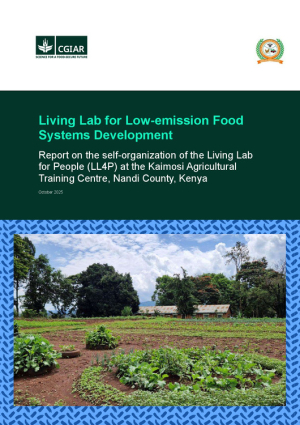
The Pathway towards a Living lab for the people (LL4P) in Nandi county Kenya

  • Habermann, Birgit
  • Kibet, Walter
  • Kachilei, Levy
  • Mwambi, Diana

Living Lab for People in Nandi County for Low-emission Food Systems

  • Kibet, Walter
  • Habermann, Birgit
  • Kachilei, Levy

Protocol for a Tier 2 approach to generate context-specific enteric methane emission factors (EF) for small ruminants’ production systems based on IPCC method

  • Korir, Daniel
  • Balcha, Endale
  • Wilkes, A.
  • Poole, Elizabeth J.
  • Marquardt, S.
  • Ndung’u, P.
  • Onyango, A.A.
  • Merbold, L.
  • del Prado, A.
  • Pardo, G.
  • Wisser, D.
  • Lanzoni, L.
  • Scholtz, M.
  • Katongole, C.
  • Lind, Vibeke
  • Assouma, M.H.
  • Dossa, L.H.
  • du Toit, L.
  • Rosenstock, T.
  • Steward, P.
  • Kagai, Jesse
  • Tadese, M.
  • Gibbons, J.
  • Odubote, I.K.
  • Bateki, C.A.
  • Kimoro, B.
  • Bronsvoort, B.M. de C.

  • Arndt, Claudia

Protocol for a Tier 2 approach to generate context-specific enteric methane emission factors (EF) for cattle production systems using IPCC method

  • Balcha, Endale
  • Wilkes, A.
  • Poole, Elizabeth J.
  • Marquardt, S.
  • Ndun’gu, P.
  • Onyango, A.A.
  • Merbold, L.
  • Korir, Daniel
  • del Prado, A.
  • Pardo, G.
  • Wisser, D.
  • Lanzoni, L.
  • Scholtz, M.
  • Katongole, C.
  • Lind, Vibeke
  • Assouma, M.H.
  • Dossa, L.H.
  • du Toit, L.
  • Rosenstock, T.
  • Steward, P.
  • Kagai, Jesse
  • Tadese, M.
  • Gibbons, J.
  • Odubote, I.K.
  • Bateki, C.A.
  • Kimoro, B.
  • Bronsvoort, B.M. de C.
  • Arndt, Claudia

Biodigester circular economy innovation

  • Mulat, Daniel