mature
Livestock Master Plans transform livestock sectors
For countries where livestock underpin livelihoods and food security, a well-designed Livestock Master Plan translates national ambition into targeted investment and smarter policy.
Useful for
- Development programs and NGOs
- Funders and investors
- Governments
- Private sector
- Researchers
What’s the challenge?
In many developing countries, livestock are a cornerstone of rural economies — but the sector often falls short of its full potential.
Although livestock provide nutrient-rich food, income, and a financial safety net for millions of rural families, the sector is also under pressure from several fronts. Climate change increases animal mortality, decreases productivity, and results in changing disease patterns. Value chains and markets remain underdeveloped, with some groups — often women and youth — barred from access.
Chronic underinvestment prevents livestock from contributing fully to nutrition, jobs, incomes, and economic growth. Even where political will exists, governments and investors lack the tools to identify where capital and policy will have the greatest impact.
What’s the solution?
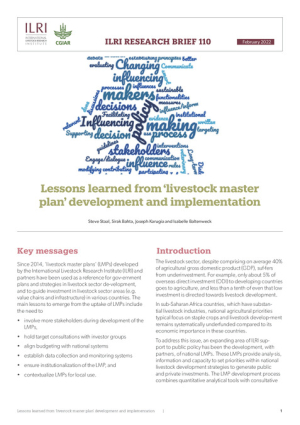
A Livestock Master Plan is a government-owned sector investment plan developed with support from the International Livestock Research Institute (ILRI) and its partners. The process starts with a formal country request, and, over a period of 18 months, it involves consultations with relevant stakeholders, baseline livestock sector analysis, and training and building capacity to develop a plan that is grounded in evidence and local realities.
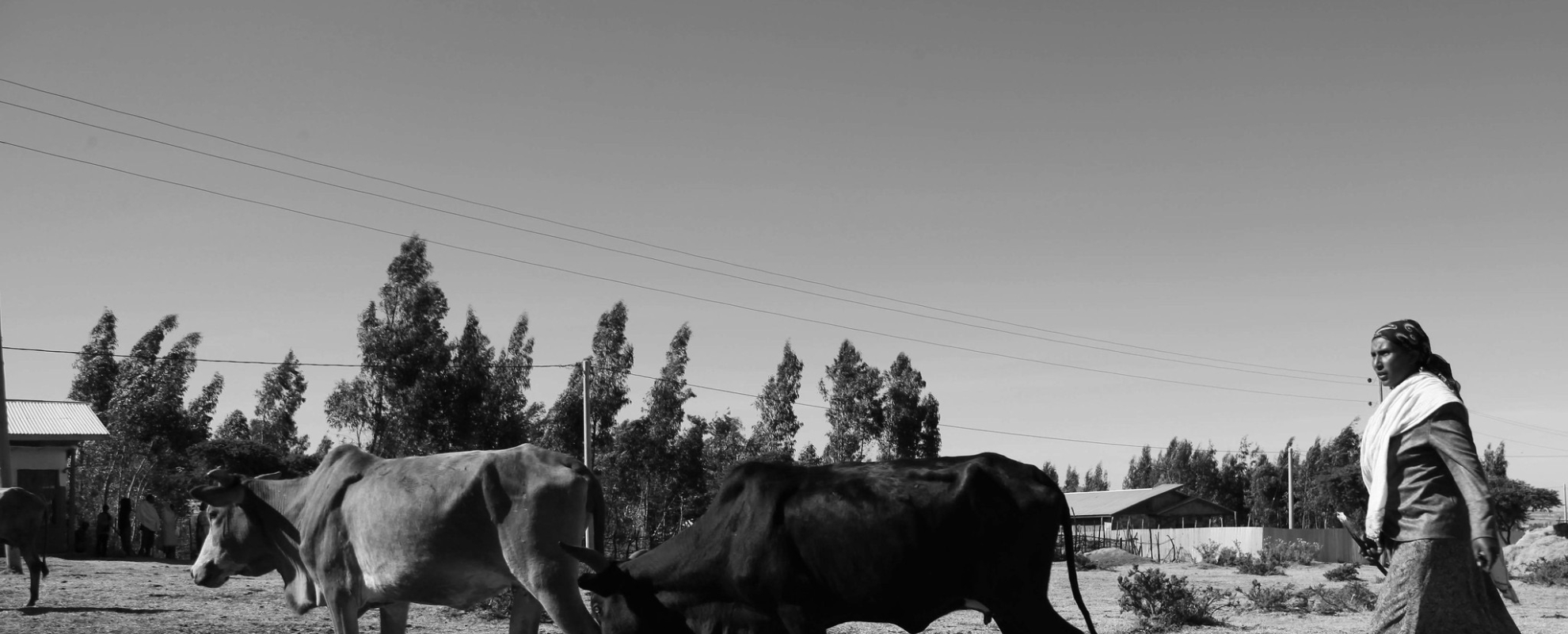
The result is a livestock sector strategy paired with a costed, actionable five-year investment plan and value chain road maps. It includes an investment analysis and a budget that covers financial and human resource requirements, giving governments, businesses, and investors a clear framework for decisions and a route to reduced poverty, higher sector revenue, and improved food and nutrition security — through greater investment in the livestock sector.
Want to use this in your work?
Contact our experts

Isabelle Baltenweck
Program Director : People, Policies and Institutions (PPI)

Sirak Bahta
Senior Agricultural Economist

Gebregziabher Gebreyohannes
Senior Scientist in Quantitative Genetics/animal breeding
Contributors
- African Union Interafrican Bureau for Animal Resources (AU-IBAR)
- CGIAR Trust Fund (CGIAR)
- Food and Agriculture Organization of the United Nations (FAO)
- Gates Foundation (Gates Foundation)
- International Livestock Research Institute (ILRI)
- Islamic Development Bank
- The French Agricultural Research Centre for International Development (CIRAD)
- World Bank (WB)
What impact has been achieved so far?
In 2013, ILRI supported the Government of Ethiopia to draw up the first national Livestock Master Plan, leading to investments from the Ethiopian government, international development partners, and private sector companies.
Since then, ILRI has helped governments across Africa and Asia translate livestock evidence into policies, strategies, and investments, informing major government and development-partner investments. These include World Bank-supported programs in Ethiopia and Uzbekistan, national investment plans in Tanzania and Rwanda, and Gates Foundation-supported planning in Bihar and Odisha.
In Bihar, the Livestock Master Plan also contributed to a USD 146 million aquaculture and livestock project supported by the International Fund for Agricultural Development. More recently, The Gambia’s Livestock Master Plan has supported a livestock investment project financed by the Islamic Development Bank.
USD +2.28 billion
of livestock investments
influenced
across Africa and Asia
Who can use, support, and scale this solution?

Governments can reach out to ILRI to start the process of developing a national Livestock Master Plan that can guide and encourage greater investment into sustainable and profitable livestock sectors.

Private sector investors, development programs, and NGOs can consult already completed Livestock Master Plans for evidence-informed and government-supported concrete steps on where and how to engage in the national livestock sector for maximum return on investment.

Researchers can rely on published Livestock Master Plans as sources of validated data and knowledge on livestock sector opportunities and constraints. The lessons emerging from their implementation may also point out demand for data collection and monitoring systems and other evidence gaps that researchers are well placed to help fill.