It Takes More Than Good Science to Scale Livestock Innovations
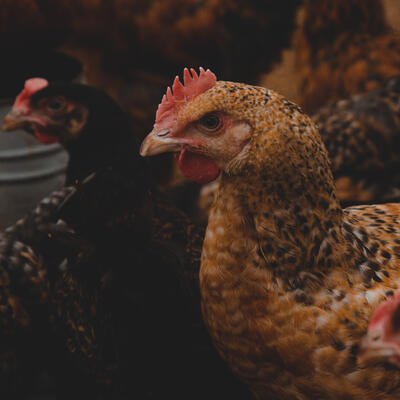
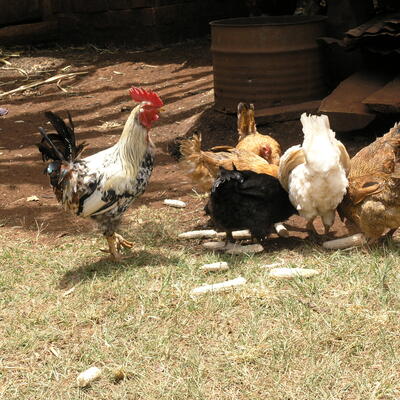
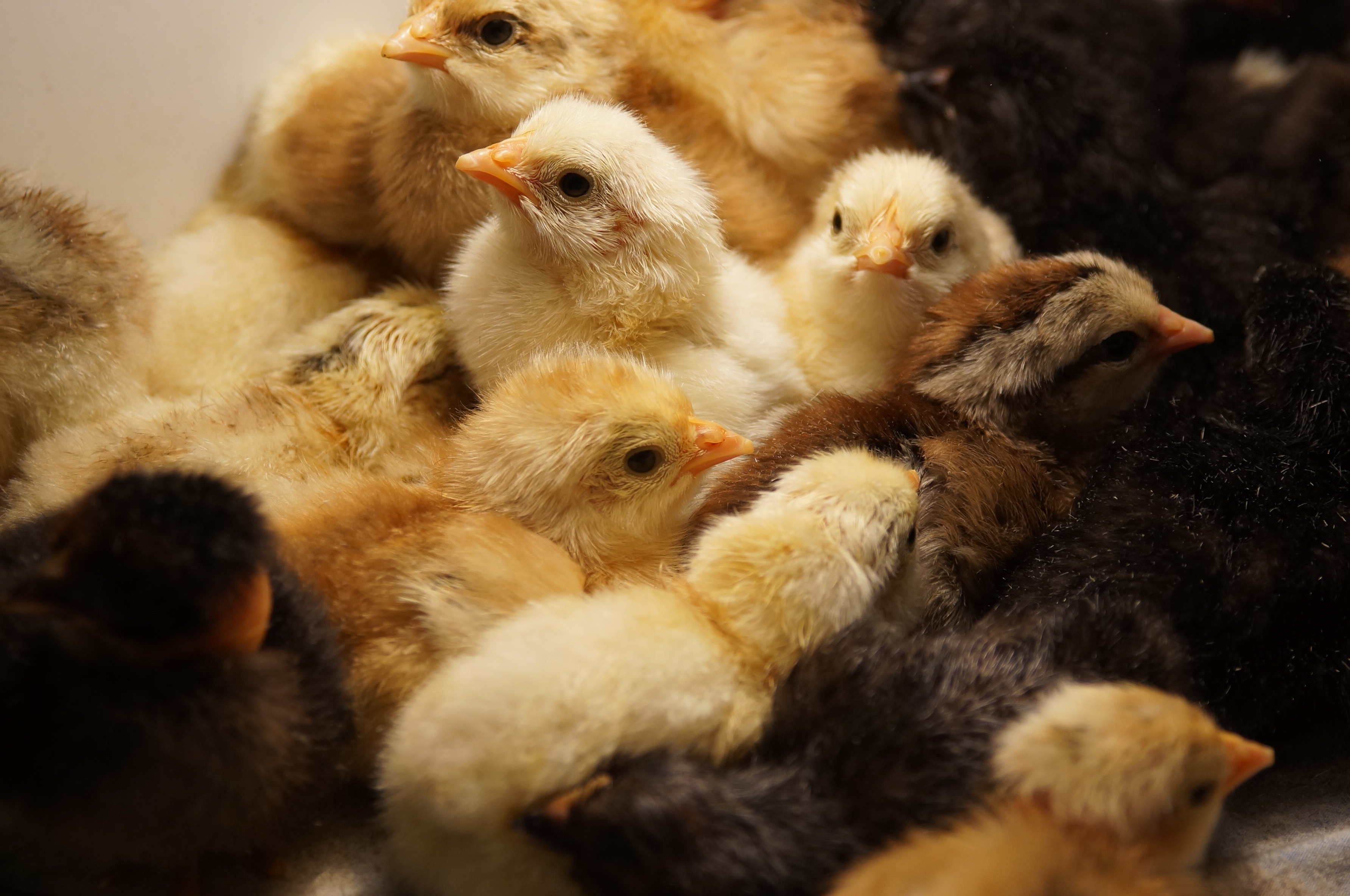
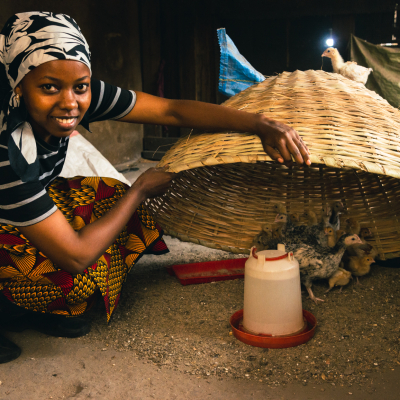
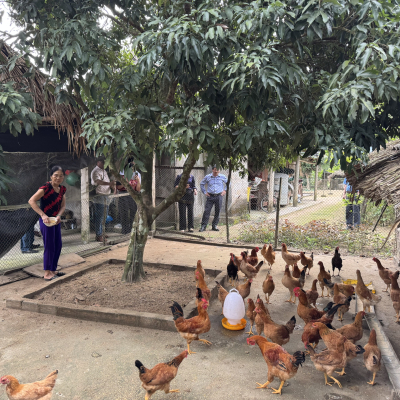
In Kenya, demand for improved indigenous chickens stands at approximately 120,000 day-old chicks per month. But supply can only meet about a fourth of that need, or around, 30,000 chicks a month.
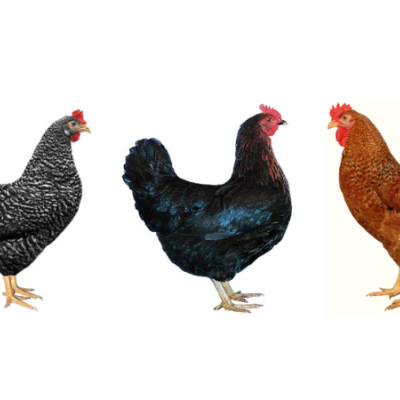
The Kenya Agricultural and Livestock Research Organization (KALRO) has developed three popular improved breeds—KC1, KC2, and KC3—but getting enough chicks to farmers remains a challenge. KALRO has largely maintained a centralized production and distribution model, while an earlier attempt to involve other multipliers encountered quality-assurance problems.
The science produced a promising bird. The challenge was building a system capable of getting enough birds to farmers without compromising their quality.
For Ijudai Jasada, a scaling expert at the International Livestock Research Institute (ILRI), this illustrates an important distinction.
“You can have a very good innovation, a very good breed, vaccine, feed, but as long as it fails to achieve impact, then you can’t say this is a successful innovation,” he said. “There’s a difference between invention and innovation.”
The question is not only whether livestock science can produce technologies that work, but what must happen next.
Moving from invention to impact
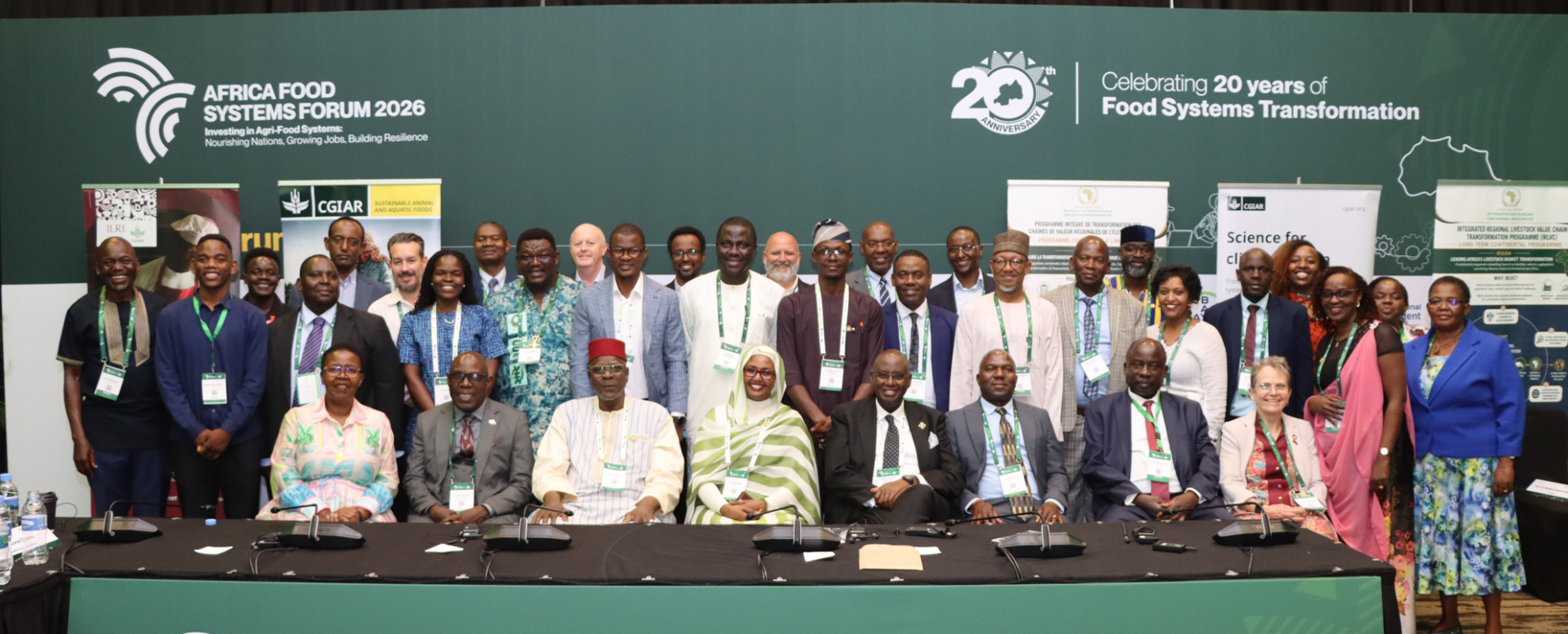
This concern ran through discussions at the Africa Food Systems Forum 2026 in Kigali, where the Second ministerial deep dive on livestock brought together governments, researchers, regional institutions and private-sector actors.
Professor Lindiwe Majele Sibanda, Chair of Council at Zimbabwe’s National University of Science and Technology, Extraordinary Professor at the University of Pretoria and Co-Chair of the Food Planet Prize, captured the shift: “Africa’s livestock priority is no longer recognition. It is delivery.”
But delivery requires more than technology. Innovations need financing, production, distribution and farmers willing to adopt them. Their quality must also be maintained as they reach more people.
Building a system around the chicken
When ILRI, KALRO and public- and private-sector partners examined the chicken supply problem in May 2026, their conclusion was not simply to produce more birds.
Scaling required a different division of labor. KALRO could safeguard genetic integrity and quality assurance while private hatcheries, multipliers and mother units expanded production. This would require commercially viable businesses, certification and traceability, supported by county governments, cooperatives, feed suppliers, financial institutions and extension services.
“It’s not just a single innovation,” Jasada explained. “There have to be bundles of packages that come to support innovations to scale, looking at the environment, looking at the partnerships, looking at the institutions.”
He described the approach as “controlled decentralization”: expanding delivery while protecting the genetic quality that makes the breeds valuable.
Thinking about the journey before the destination
The KC experience raises a fundamental question: when should scaling begin?
Traditionally, researchers develop and test an innovation before considering how to expand its use.
“We come up with the innovation before trying to see how this innovation fits within the whole ecosystem,” Jasada said.
He argues that researchers should consider delivery models, financing, production, distribution, quality assurance and infrastructure much earlier. Innovations requiring private-sector involvement must also offer businesses a viable commercial proposition.
“If some of those questions had been answered earlier on, we would have been able to think about deployment in a decentralized manner instead of a vertical business model,” he said of the KC breeds.
Researchers cannot anticipate every obstacle, but they can involve potential delivery partners earlier and design innovations with their eventual operating environment in mind.
Strengthening vaccination systems
Similar challenges arise in animal health.
At the AFSF Ministerial, Mucai Kunyiha, group chief executive of CKL Africa, a company manufacturing and distributing animal-health products across East Africa, including vaccines, observed: “Vaccination is a system, not an event.”
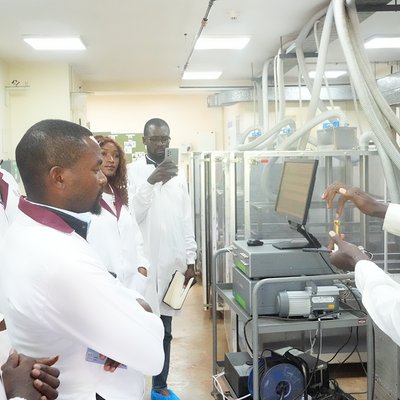
In a subsequent interview, Kunyiha explained that bringing an animal-health product to market requires regulatory approval, evidence of safety and efficacy, financing and distribution. Product development is risky, making commercial investment difficult.
Even an available vaccine must reach an animal.
Vaccination programs are sometimes funded through temporary campaigns, although controlling many livestock diseases requires sustained, coordinated efforts.
“Even if you get money for three seasons, you haven’t solved the farmer’s continuing problem,” Kunyiha said.
The challenge is financing systems that keep vaccines affordable while sustaining manufacturers, distributors and vaccinators.
Aligning new ideas with local contexts
In Kenya, devolved animal-health responsibilities can complicate coordination between counties.
“One county is vaccinating while the other one is not. That helps nobody because the disease doesn’t know the county boundaries,” Kunyiha explained.
Effective vaccination requires connecting suppliers, veterinarians, para-veterinarians and farmers. Kunyiha described arrangements where veterinary associations helped organize farmers while suppliers provided vaccines and animal-health professionals administered them.
“Private companies, for instance, can import a vaccine, but getting it into animals is another challenge,” he said.
Understanding farmer perceptions
Sometimes, the barrier is not financing or regulation, but how farmers interpret a product.
Kunyiha recalled an antibiotic formulated with an analgesic to reduce injection pain. Ordinarily, an animal might kick when injected. When some animals reacted less, livestock keepers interpreted the absence of kicking as evidence that the product was ineffective.
“They thought the product doesn’t work: because the cow is not kicking, it’s not reacting,” he recalled.
The example demonstrates why successful adoption requires understanding farmers’ experiences, expectations and perceptions.
Communication matters, but so does designing innovations around the communities expected to use them.
Designing research with the end in mind
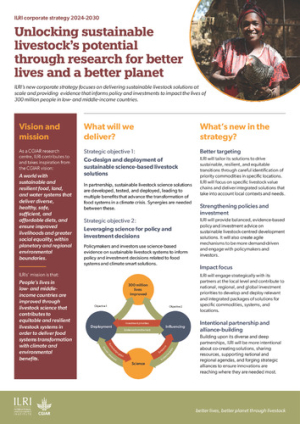
ILRI’s 2024–2030 strategy emphasizes developing and deploying livestock solutions alongside the policies, partnerships and investments needed for impact.
The chicken and vaccination examples show why technical performance and delivery cannot be separated. Effective scaling depends on local markets, institutions, businesses and farmers. A model that works in one setting may not work in another.
Yet the underlying lesson is consistent.
A better chicken breed sitting at a research center does not increase a farmer’s income. A vaccine in a vial does not protect an animal.
The scientific breakthrough matters. So does the system that allows people to benefit from it. Building that system cannot wait until the research is finished.
Further reading
- ILRI adopts new framework for scaling up livestock research for development ILRI News, 16 April 2020.
- Promises and pitfalls of making livestock vaccination more accessible ILRI News, 26 November 2023.
- Scaling better and faster: Towards a new framework for international livestock research ILRI News, 15 October 2019.
Related Publications
Prevalence, quantification, and household-level risk factors associated with Salmonella spp. infection in chickens in Boussouma commune, Burkina Faso