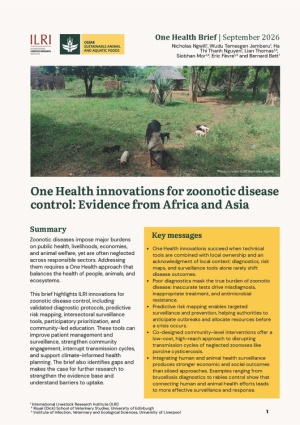
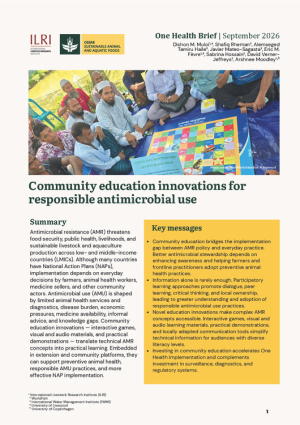
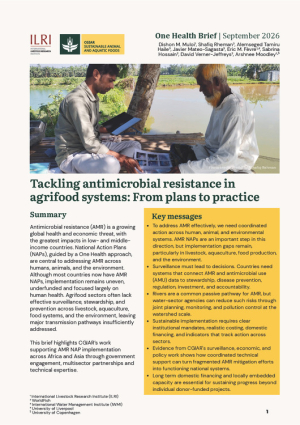
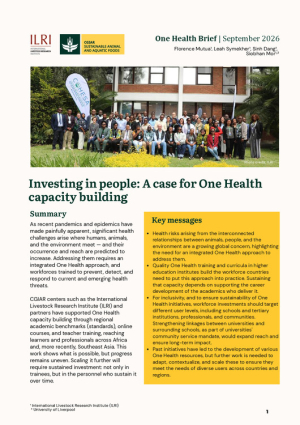
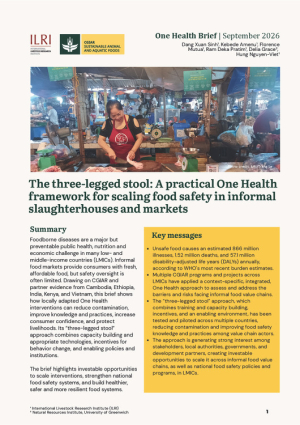
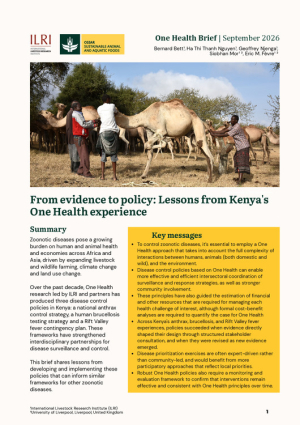
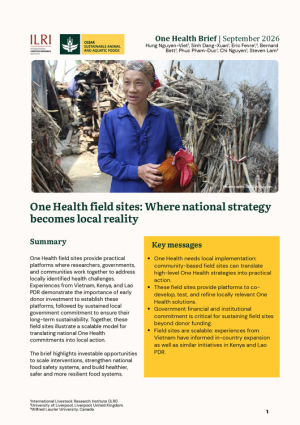
The past few years have seen widespread global commitment to the One Health approach for addressing zoonotic diseases, antimicrobial resistance (AMR), and food safety risks. Yet turning national strategies into local implementation remains a challenge, especially in low- and middle-income countries (LMICs).
For over four decades, CGIAR centers such as ILRI, WorldFish, IFPRI and IWMI, alongside local and national partners, have conducted One Health research and interventions across Africa and Asia. This series of One Health briefs brings together evidence and experience from this work to identity models for putting One Health into practice. Together, the briefs offer an actionable implementation framework for decision-makers.
Across the briefs, five lessons for implementation emerge:
- Embedding in context: Interventions succeed when the people affected by them help design and run them, and stall or fail when they are imposed from outside. Tools, insights and strategies are necessary but not sufficient: trust, local knowledge and capacity determine whether they actually get used.
- Government ownership: One Health platforms and units are more likely to be sustained when governments provide mandate, leadership and domestic financing, rather than relying on donor-funded and -supported projects.
- Investing early: Catalytic, multi-year funding can help build governance and trust before a model can stand on its own. It’s also critical for moving from promising pilots towards national-level solutions.
- Building the infrastructure for coordination: Actors in the animal, human, and environmental health sectors don’t automatically collaborate better following commitment to One Health as a concept. Effective coordination requires the deliberate development and maintenance of structures such as technical working groups, national platforms, and integrated service-delivery units.
- Cross-context learning: South-South and peer exchange can help countries to find, adapt and implement the innovations and strategies that work in their own contexts.
This work was produced as part of the CGIAR Sustainable Animal and Aquatic Foods Program (SAAF), which works across Africa, Asia, and Latin America to improve access to nutritious foods, reduce emissions and support inclusive livelihoods.
We thank all donors supporting CGIAR through the CGIAR Trust Fund.