Secondary navigation

  • Search
  • Microsites

Main navigation

  • About
    • Overview
    • People
    • Supporters
  • Research
    • Impact areas
      • Climate adaptation and mitigation
      • Environmental health and biodiversity
      • Gender, equality, youth and social inclusion
      • Nutrition, health and food security
      • Poverty reduction, livelihoods and jobs
    • Research support
      • Research compliance
      • Communication and knowledge management
      • Intellectual property and legal unit
      • Data and research methods
    • Themes
      • Health
      • Livestock, Genetics, Nutrition, and Feed Resources
      • People, Policies, and Institutions
      • Livestock, Climate, and Environment
    • Projects
    • CGIAR research initiatives
    • BecA-ILRI Hub
    • Innovations scaling and impact
    • Capacity development
    • Facilities
      • Centre for tropical livestock genetics and health
      • ILRI Genebank
      • Kapiti research station
      • Mazingira centre
      • One health centre
      • Poultry facility
      • The CGIAR AMR hub
      • Tick unit
      • Bioscience facility
      • Genomics platform
      • ILRI-Hyderabad livestock research facilities
  • Where we work
    • Eastern and southern africa
      • Kenya
      • Ethiopia
      • Tanzania
      • Uganda
      • Zimbabwe
      • Burundi
    • West Africa
      • Burkina Faso
      • Mali
      • Nigeria
      • Senegal
    • South Asia
      • India
      • Nepal
    • East and Southeast Asia
      • Vietnam
    • Explore our work in the countries
  • News & Events
    • News
    • Events
    • ILRI in the media
  • Knowledge
    • Outputs
      • Publications
      • Journal articles
      • Presentations
      • Infographics
      • Browse archive
    • Data
      • Datasets
      • Apps
    • Multimedia
      • Videos
      • Podcasts
      • Stories
  • Join Us
    • Careers
    • Subscribe
International Livestock Research Institute
  • Overview
  • People
  • Supporters

CGIAR RESEARCH INITIATIVES

ILRI is actively engaged in several CGIAR initiatives and platforms.

  • Impact areas
    • Climate adaptation and mitigation
    • Environmental health and biodiversity
    • Gender, equality, youth and social inclusion
    • Nutrition, health and food security
    • Poverty reduction, livelihoods and jobs
  • Research support
    • Research compliance
    • Communication and knowledge management
    • Intellectual property and legal unit
    • Data and research methods
  • Themes
    • Health
    • Livestock, Genetics, Nutrition, and Feed Resources
    • People, Policies, and Institutions
    • Livestock, Climate, and Environment
  • Innovations scaling and impact
  • BecA-ILRI Hub
  • CGIAR research initiatives
  • Projects
  • Capacity development
  • Facilities
    • Centre for tropical livestock genetics and health
    • ILRI Genebank
    • Kapiti research station
    • Mazingira centre
    • One health centre
    • Poultry facility
    • The CGIAR AMR hub
    • Tick unit
    • Bioscience facility
    • Genomics platform
    • ILRI-Hyderabad livestock research facilities
International Land Coalition Rangelands Initiative

International Land Coalition Rangelands Initiative: Making rangelands secure

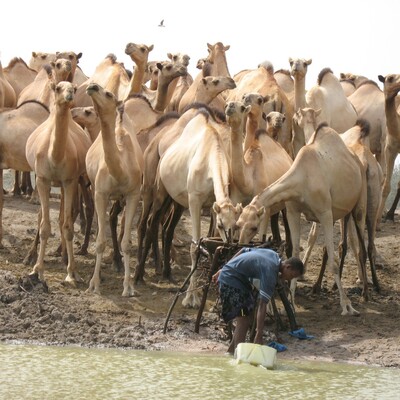
Camels drinking at a water pan in Wajir County, Kenya

ACTIVE Feb 2028

Emerging public health threats in Africa’s drylands

  • Eastern and southern africa
    • Kenya
    • Ethiopia
    • Tanzania
    • Uganda
    • Zimbabwe
    • Burundi
  • West Africa
    • Burkina Faso
    • Mali
    • Nigeria
    • Senegal
  • South Asia
    • India
    • Nepal
  • East and Southeast Asia
    • Vietnam
  • Explore our work in the countries
  • News
  • Events
  • ILRI in the media
SAAF_ActivityReport_AdoptingTechnologies.pdf.jpg
2025

Adopting technologies to enhance productivity, resilience and equity in ruminant livestock resources under pastoral systems of Africa

  • Ojango, Julie M.K.
two_pager_ strategy.pdf.jpg
2024

Unlocking sustainable livestock’s potential through research for better lives and a better planet: ILRI Corporate Strategy 2024–2030

  • International Livestock Research Institute
  • Outputs
    • Publications
    • Journal articles
    • Presentations
    • Infographics
    • Browse archive
  • Data
    • Datasets
    • Apps
  • Multimedia
    • Videos
    • Podcasts
    • Stories
  • Careers
  • Subscribe

  • Services
  • Bioinformatics
  • Gallery
  • Funders

Main navigation

  • About
    • Overview
    • People
    • Supporters
  • Research
    • Impact areas
      • Climate adaptation and mitigation
      • Environmental health and biodiversity
      • Gender, equality, youth and social inclusion
      • Nutrition, health and food security
      • Poverty reduction, livelihoods and jobs
    • Research support
      • Research compliance
      • Communication and knowledge management
      • Intellectual property and legal unit
      • Data and research methods
    • Themes
      • Health
      • Livestock, Genetics, Nutrition, and Feed Resources
      • People, Policies, and Institutions
      • Livestock, Climate, and Environment
    • Projects
    • CGIAR research initiatives
    • BecA-ILRI Hub
    • Innovations scaling and impact
    • Capacity development
    • Facilities
      • Centre for tropical livestock genetics and health
      • ILRI Genebank
      • Kapiti research station
      • Mazingira centre
      • One health centre
      • Poultry facility
      • The CGIAR AMR hub
      • Tick unit
      • Bioscience facility
      • Genomics platform
      • ILRI-Hyderabad livestock research facilities
  • Where we work
    • Eastern and southern africa
      • Kenya
      • Ethiopia
      • Tanzania
      • Uganda
      • Zimbabwe
      • Burundi
    • West Africa
      • Burkina Faso
      • Mali
      • Nigeria
      • Senegal
    • South Asia
      • India
      • Nepal
    • East and Southeast Asia
      • Vietnam
    • Explore our work in the countries
  • News & Events
    • News
    • Events
    • ILRI in the media
  • Knowledge
    • Outputs
      • Publications
      • Journal articles
      • Presentations
      • Infographics
      • Browse archive
    • Data
      • Datasets
      • Apps
    • Multimedia
      • Videos
      • Podcasts
      • Stories
  • Join Us
    • Careers
    • Subscribe

Secondary navigation

  • Search
  • Microsites

Genomics platform

ILRI GENOMICS

Whole genome sequencing (WGS) technology is currently revolutionizing genetic research all over the world. However, low-income countries in Africa are still lagging behind even though the current advances suit their unique needs more than ever before. Through Next generation sequencing (NGS), genomic research has been fundamentally transformed and the continually emerging new developments are significantly reducing the cost of sequencing to affordable levels. For clinical microbiology applications, the NGS technology is beginning to show extreme potential for ultra-fast and accurate molecular typing and diagnosis. The combination of low cost and rapid turnaround time offered by the current and the emerging desk-top sequencers, makes pathogen WGS the key to accurate diagnostic tool and the ultimate epidemiological typing method with the digital, portable, and universally applicable capabilities. Compared to the current diagnostic methods, microbial clinical sequencing is by far more informative and capable of distinguishing very closely related strains. Furthermore, microbial genome sequencing is transforming our understanding of the evolution of pathogen virulence factors and the molecular basis that leads to the development and spread of antimicrobial resistance.
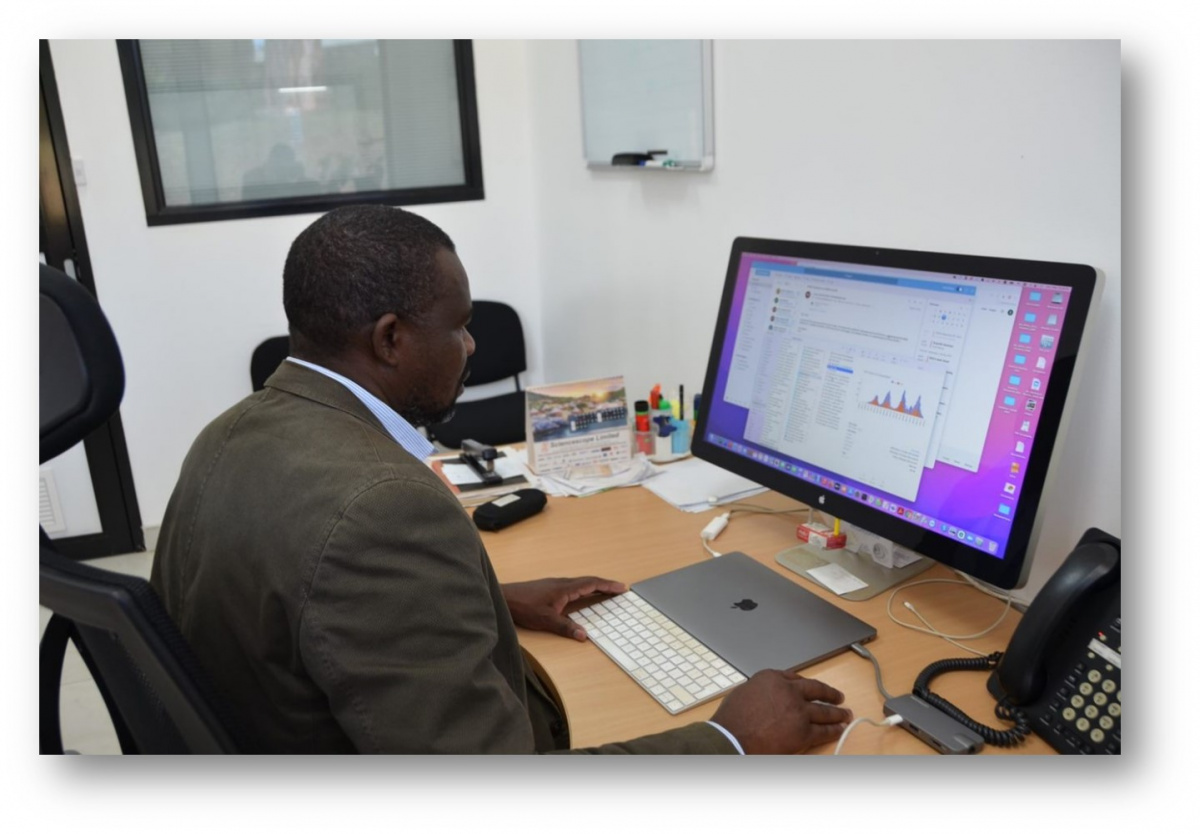

Genomic data analysis and bioinformatics

Given the complex nature of microbial infection is Sub-Saharan Africa (SSA) where cases of multiple pathogen infection are common, a universal diagnostic approach offered by whole genome sequencing in the context of metagenomics approach, provides the most effective solution to accurate diagnosis and pathogen typing. Setting a genomic pathogen diagnostic and epidemiology platform in SSA will help: 1) develop methods for epidemiological typing to define transmission pathways and support outbreak investigations; 2) develop methods for drug susceptibility testing using known markers for antibiotic resistance especially for slow-growing bacteria such M. tuberculosis complex and also for viral genotyping; 3) develop local resources for capacity building in genomics that will enable Africans to contribute to the global genomics research arena. For the countries in SSA to benefit from the current genomic revolution, there is a need to strengthen research capacity, training, and collaborations that will enable the continent to contribute fully to global health improvement. Although SSA is still poorly resourced in terms of healthcare funding, the universality of pathogen sequencing, means that a single sequencing machine can offer a wider diagnostic repertoire bridging the gap left by the different generic diagnostic methods. Thus, improve efficiency, accuracy and cost reduction. As both research and a clinical tool, WGS platform is valuable in providing genomic information of known and unknown pathogens upon which individual pathogen-specific diagnostic tools can be developed that is sensitive and compatible with the local strains and genotypes.

Contacts

  • Samuel O. Oyola

    Samuel O. Oyola

    Senior Scientist: Molecular Biologist and Head of Genomics

Services
sequencing platforms

Fellowships

ILRI continues to build genomic capacity in Africa and beyond by offering short- and long-term training to Fellows and Scientists seeking to employ modern genomic technologies in general life science research and also for targeted applications in medicine, diagnostics, public health, One health, climate change, animal health and in agriculture.

Currently the ILRI Genomic platform is running short- and long-term fellowships on pathogen genomic surveillance funded by the Rockefeller Foundation and the Africa CDC.

Visit this site for new announcements for fellowships and training opportunities on genomics and its applications in life sciences.


Services

Molecular biology

Library preparations

RT-qPCR analysis

Nucleic acid extractions

SEQUENCING PLATFORMS

High throughput sequencingtechnologies (HTST) have been build using a combination of expertise from different fields of science including chemistry, molecular biology, software, and engineering. Most of the current HTST (except for the Oxford Nanopore technology) have been built upon the principle of the Sanger’s Nobel prize winning discovery of dideoxynucleotide chain termination reaction. 

Read more

Bioinformatics

BIOINFORMATIC INFRASTRUCTURE

Success in whole genome sequencing data requires a significant investment in bioinformatics infrastructure. Bioinformatics tools that enable fast and easy quality-controlled data generation and interpretation is our priority. The genomic platform is being developed as a regional bioinformatic hub to offer genomic analysis services and training center for developing bioinformatic capacity in the region.

We have set up bioinformatic analysis pipelines to analyse the sequence data within the shortest time possible and produce a simplified report on quality, type and distribution of DNA polymorphisms, antibiotic resistance, or virulence markers. Standard data output is generated through analysis software for WGS which has been established and set to extract clinically relevant information in an automated fashion. Interpretation software is integrated with the server system and continuously updated with database containing pathogen genomes and a catalogue of point mutations or drug mutation genes. Mechanisms for remote connection and access to international data centres are being established. 

A metagenomics pipeline has also been set-up with capability of remote connection to the National Centre for Biotechnology Information (NCBI) databases to allow alignment of reads to the reference sequences in order to comprehensively identify bacteria, viruses, fungi and parasites. The connections ensure that useful information of public health benefits are shared nationally, regionally and internationally, as well as with the scientific community to promote progress in basic and translational research.

Apart from the physical infrastructure, human resource capacity is under continuous development to produce a new generation of African bioinformaticians and genomic scientists. Bioinformatic scientists from various institutions worldwide get invited as technology ambassadors to provide training and support to this initiative.

Gallery

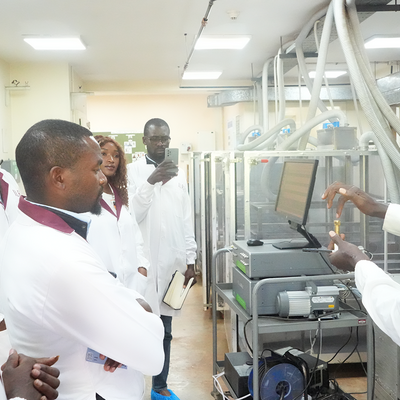
Blue Pippin Instrument for size selection of DNA for Next-Generation Sequencing
Covaris Ultrasonicator Instrument for DNA shearing for NGS analysis
Agilent Tapestation and Bioanalyzer Instrument sequencing library qualitative and quantitative analysis
QuantStudio Real-Time quantitative PCR system set up under Genomic Platform for gene expressions analysis and various genomic applications, such as analyses of microRNAs and noncoding RNAs, copy number variation and protein expression; SNP genotyping; and
A series of Illumina technologies at the ILRI Genomic platform, including the ultra-high throughput HiSeq 2500.
Myra Liquid handling robot for setting reactions and Mic RT-qPCR machine

Genomics Team

Funders

The German Federal Ministry of Economic Cooperation and Development

Rockefeller Foundation

Africa-Centers for Disease Control and Prevention

One Health Research, Education and Outreach Centre in Africa

ILRI logo

ILRI Kenya

PO Box 30709
Nairobi 00100, Kenya
  • +254-20 422 3000
  • +254-20 422 3001
  • ILRI-Kenya@cgiar.org

ILRI Ethiopia

PO Box 5689
Addis Ababa, Ethiopia
  • +251-11 617 2000
  • +251-11 617 2001
  • ILRI-Ethiopia@cgiar.org

Get Involved

  • Subscribe to our Newsletter
  • Facebook
  • Twitter
  • Slideshare
  • Flickr
  • Youtube
  • Linkedin
  • Pinterest
  • Instagram

We would like to thank all funders who supported this research through their contributions to the CGIAR Trust Fund.

CGIAR logo
  • Copyright and permissions
  • © 2026 International Livestock Research Institute
  • Creative commons