Resilient herds, sustainable futures: Policy dialogue calls for climate-smart, inclusive livestock development
Climate-smart breeding is not only about productivity: it’s also about building resilience.
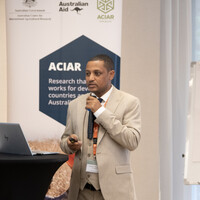
Shigdaf Mekuriaw
National project coordinator, Ethiopia
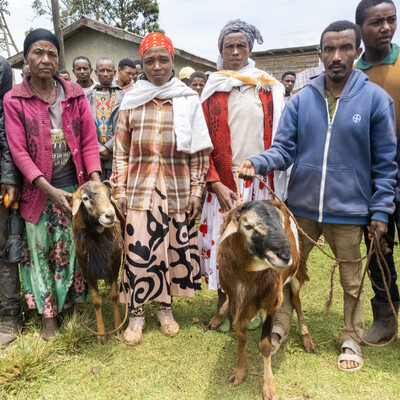
While food security indicators improved in participating households, in CBBP households, 74.16% were classified as food secure based on the Household Food Insecurity Access Scale, compared to only 61.76% of non-participant households. However, dietary diversity remained low across intervention sites, underlining the need for complementary interventions.
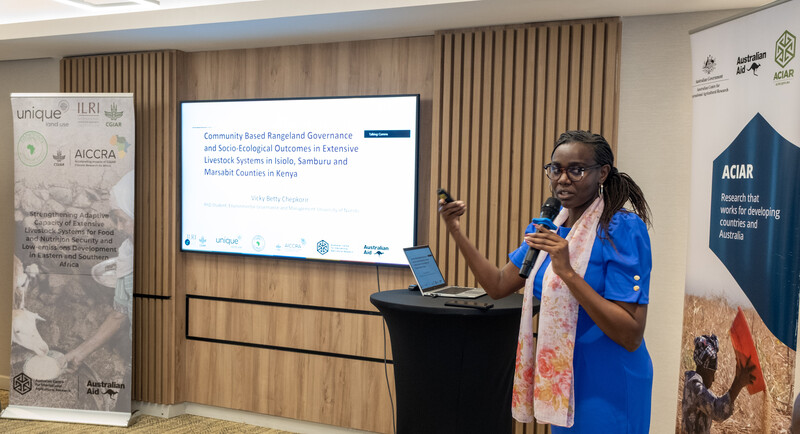
Kenya: Rangeland governance in the spotlight
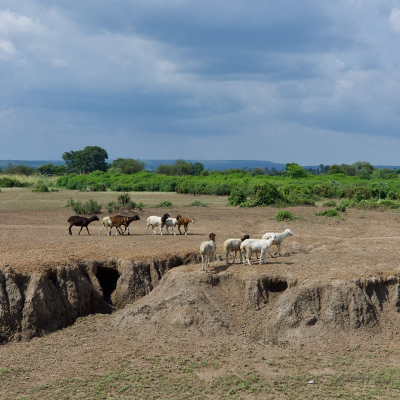
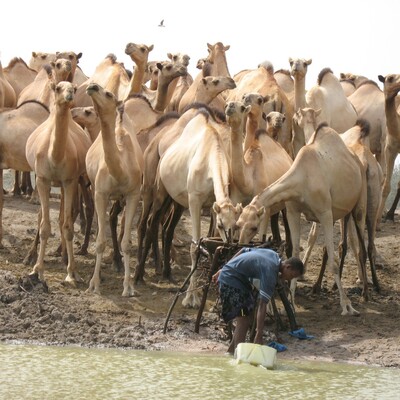
From northern Kenya, Vicky Betty Chepkorir, a doctoral researcher at the University of Nairobi, presented on community-based rangeland governance in Isiolo, Samburu, and Marsabit counties. She painted a complex picture of overlapping and sometimes conflicting governance structures—formal county and national systems, and traditional pastoralist institutions.
“We need to bring traditional institutions into the formal fold to truly manage rangelands sustainably.''
Policy fragmentation, Chepkorir said, undermines coordinated action on rangeland health, adaptive capacity, and community-led resource management. Her recommendations included creating a national coordination mechanism for rangeland governance, harmonizing county and national policies, and deliberately integrating traditional governance systems into formal frameworks.
Cross-cutting concerns
Closing the presentations, ILRI's Therese Gondwe addressed gender and social inclusion in livestock policy frameworks across the three countries. She stressed that empowering women, youth, and marginalized groups is a matter of fairness and effectiveness: livestock interventions achieve greater impact when all voices are included in planning and implementation. This includes engaging men in efforts to promote women’s empowerment in addressing household food and nutrition security.
Gondwe also emphasized the importance of locally representative data, particularly for measuring GHG emissions accurately:
“Accurate, local GHG data isn’t just science—it’s leverage for policy and climate finance. There is a need for empowerment indices to track gender progress, nutrition-sensitive planning in livestock projects, and mainstreaming of credible GHG measurement methodologies into climate finance applications.
Policy implications and call to action
Across all three countries, a clear message emerged: well-targeted, evidence-based livestock interventions can deliver “triple wins” in terms of boosting adaptive capacity, enhancing food and nutrition security, and lowering emissions. However, these highly context-specific outcomes require locally adapted solutions and strong policy support.
Key policy priorities identified during the session included:
- scaling climate-smart breeding and animal health innovations while integrating nutrition education and gender empowerment
- harmonizing rangeland governance policies and building coordination mechanisms that bridge traditional and formal systems
- embedding gender and social inclusion in livestock and climate policies, with measurable indicators
- strengthening public-private partnerships to improve technology dissemination and market access for livestock keepers
- mainstreaming climate finance strategies backed by robust GHG data collection and monitoring
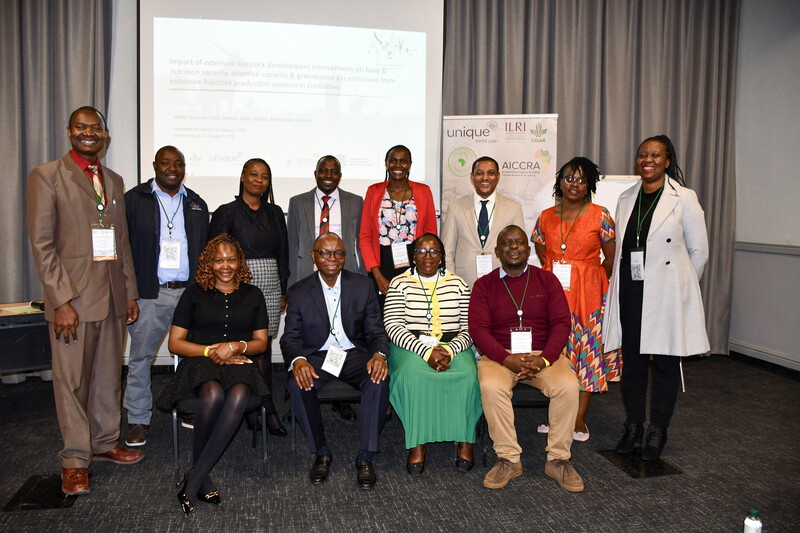
Regional relevance and next steps
The discussion underscored that extensive livestock systems, which support most of Africa’s cattle, sheep, and goats, are critical to rural economies but face mounting environmental and socio-economic pressures. In eastern and southern Africa’s arid and semi-arid lands, pastoralists and agro-pastoralists contend with feed shortages, animal health challenges, droughts, and climate variability — pressure points intersecting gender inequalities and limited access to services.
Session participants agreed that coordinated regional action, informed by cross-country evidence, is essential. Better integration of livestock, nutrition, and climate strategies, underpinned by participatory governance and locally tailored interventions, can help transform these systems into engines of resilience and low-emissions growth.
As the dialogue closed, the sense of urgency was palpable. With climate change intensifying and food security challenges mounting, Johannesburg’s call was clear: strengthen adaptive capacity, champion gender equity, and align policies with on-the-ground realities to ensure Africa’s herds and the communities that depend on them thrive in a changing climate.