
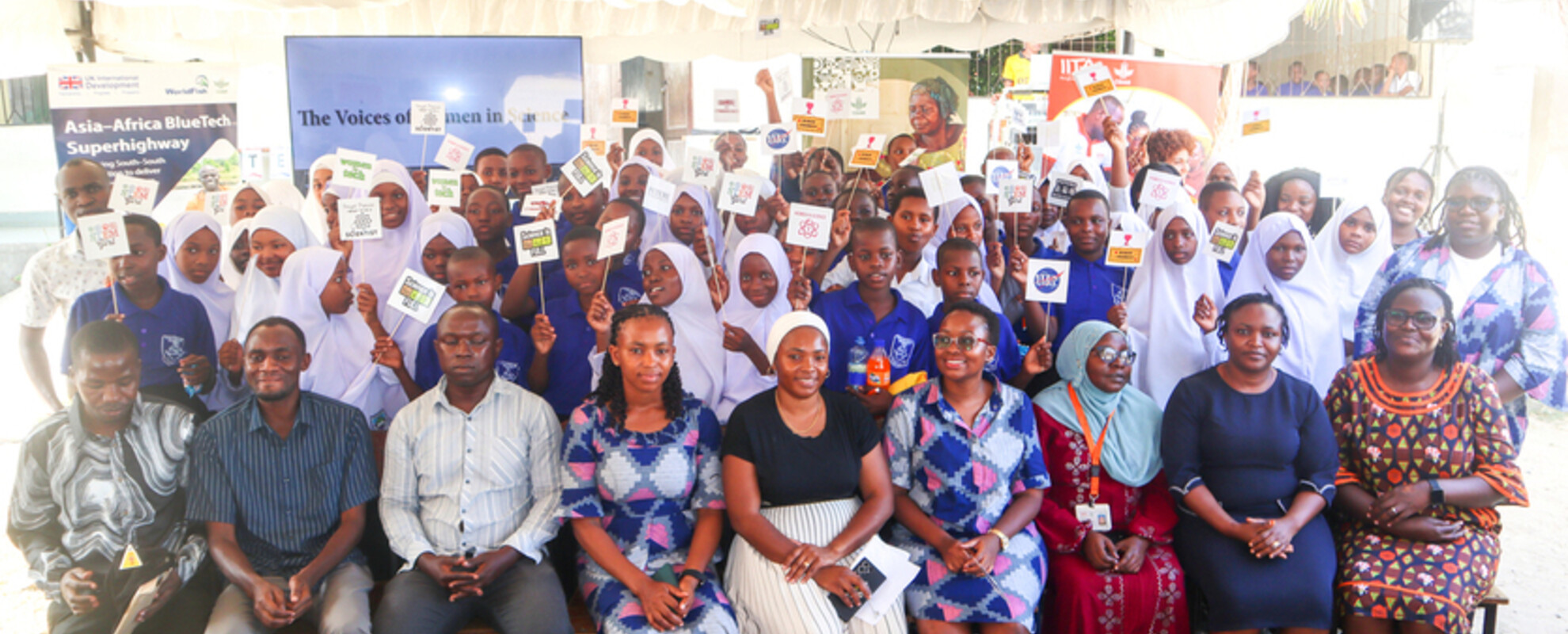
Group photo of CGIAR women with teachers and students during international Day of Women and Girls in Science (Photo credit: IITA/Hadi Rashid)

CGIAR women scientists champion inclusive STEM pathways for girls in Tanzania

This year’s International Day of Women and Girls in Science focused on practical examples and proven approaches that are advancing more inclusive science, technology, engineering, and mathematics (STEM) ecosystems. Under the theme “From vision to impact: Redefining STEM by closing the gender gap”, the celebrations the world over showcased innovations that promote equality, underscoring a persistent reality: women still make up less than one-third of the world’s researchers.

In Tanzania, this call to action comes at a critical time. Teaching and learning STEM subjects in many secondary schools remain constrained by limited laboratory equipment and science materials, making lessons overly theoretical and abstract. At the same time, persistent gender stereotypes and unsupportive learning environments such as the perception of science as a male field continue to discourage girls from fully engaging in science subjects. Currently, only 36 percent of students in STEM fields are women, and in computer science degree programs, girls make up merely 10 percent of the student population.

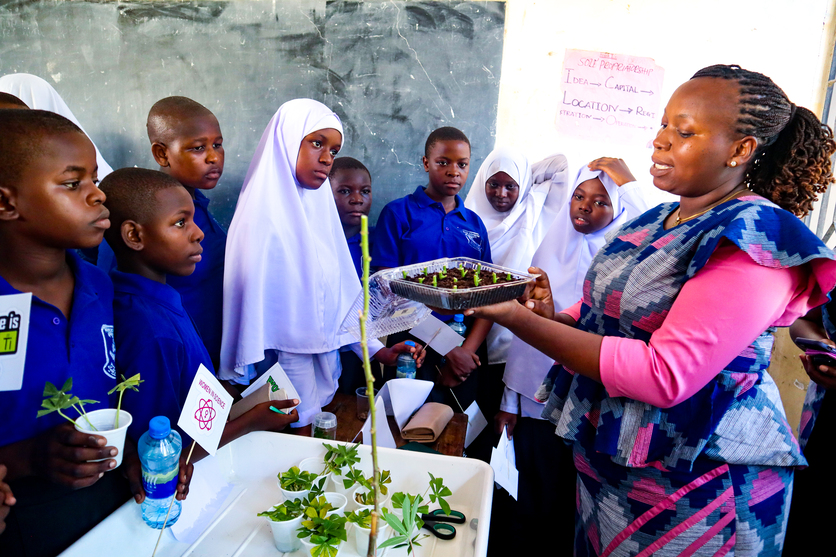
Demonstrating a practical solution to these challenges, women staff from CGIAR centers in Tanzania visited Mikocheni Secondary School in Kinondoni Municipal Council, Dar es Salaam, to commemorate the day. The outreach inspired young girls to pursue STEM careers by combining mentorship, hands-on learning, and real-life exposure to scientific work.
 

"CGIAR in Tanzania is joining the world in observing this day through education and actions that inspire girls in our neighboring secondary schools to pursue STEM careers, thus contributing to a more inclusive and sustainable future," explained Mwantumu Omary, Assistant Scaling Specialist at IITA.

“We are excited about your visit. I urge our female students to actively engage and ask questions that will provide the answers you seek for your science aspirations," said Tabia Mbwana, a teacher at Mikocheni Secondary School.

The initiative reinforced responsive learning environments for girls, complementing the government's efforts to improve teaching and learning infrastructure.  Teachers play a central role in shaping students’ attitudes toward science, yet their potential to help girls overcome socio-cultural and psychological barriers is often underutilized. Strengthening this support system is essential to advancing gender equity in STEM education.

"Our female students are performing better than their male counterparts in science subjects. This is because teachers do their best to encourage and support them to perceive science as a simple subject," explained Evarist Athuman, a teacher at Mikocheni Secondary School.

To bridge the gap between theory and practice, young women scientists from CGIAR Tanzania shared their career journeys, including the subject combinations that shaped their entry into research. They demonstrated their daily work, introducing students to digital tools for diagnosing plant diseases, soil testing kits for assessing soil health and fertility, tissue culture and propagation techniques, value addition processes, and sustainable marine-based nutrition solutions.

These interactive sessions brought science to life and sparked enthusiasm among teachers and students. Both expressed interest in starting a science club, requesting the support of CGIAR Tanzania, to sustain mentorship and experiential learning opportunities for students.

CGIAR women staff from the International Institute of Tropical Agriculture (IITA), the International Livestock Research Institute (ILRI), the International Rice Research Institute (IRRI), and WorldFish participated in the school visit. The initiative aligns with Tanzania's efforts to close the gender gap in STEM and contribute to gender equity in science education. By connecting young girls with women scientists and providing practical exposure to scientific work, CGIAR centers are supporting the government's efforts of creating inclusive learning environments that empower girls to pursue science-related careers.