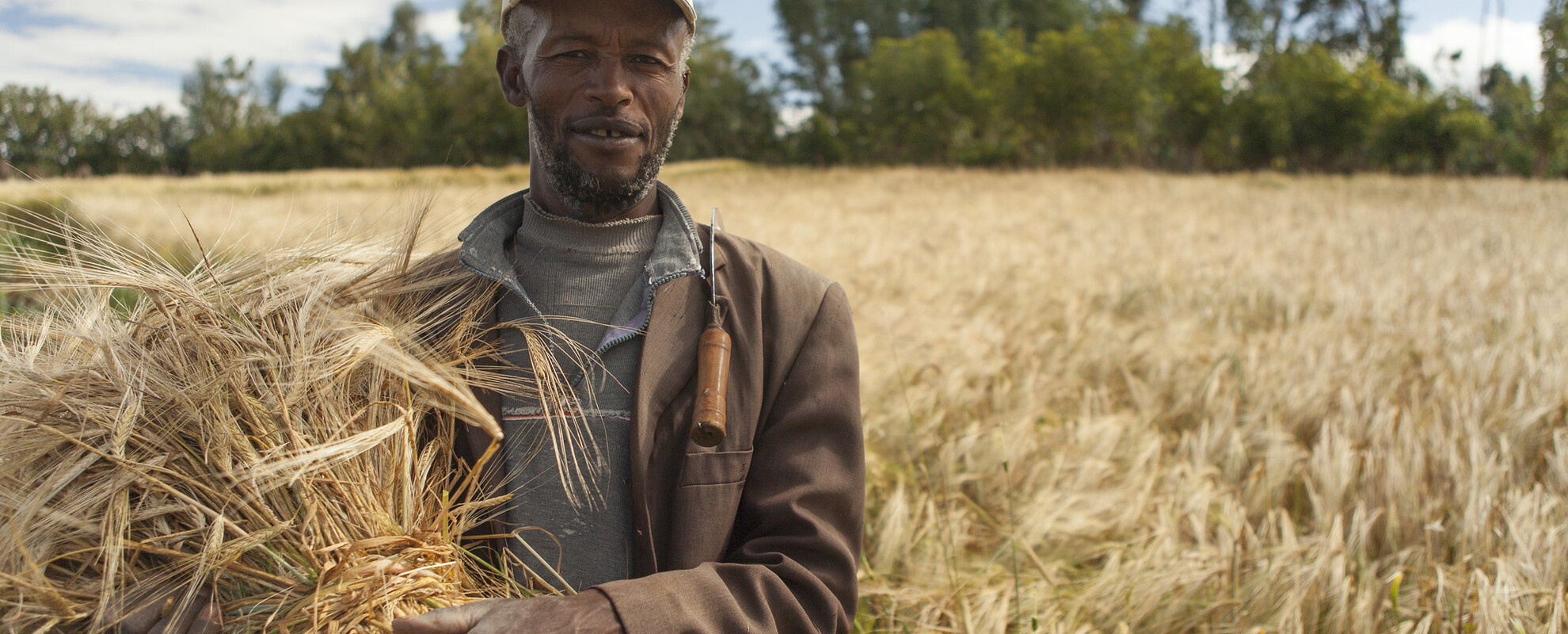
ILRI and CIMMYT sign strategic Memorandum of Understanding to accelerate impact in crop-livestock systems
The International Livestock Research Institute (ILRI) and International Maize and Wheat Improvement Center (CIMMYT) have signed a new Memorandum of Understanding (MoU), building on a strong track record of successfully delivering projects jointly, strengthening and expanding their partnership to accelerate impact and jointly tackle some of the most complex challenges in global food systems, and support countries to achieve their food security objectives.
ILRI and CIMMYT are part of the CGIAR research system working to build a food secure world through food systems transformation. Both centers bring more than 50 years of experience working to improve food security, livelihoods and resilience to the world’s small holder farmers.
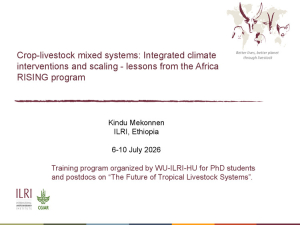
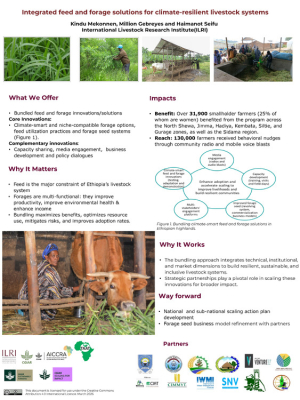
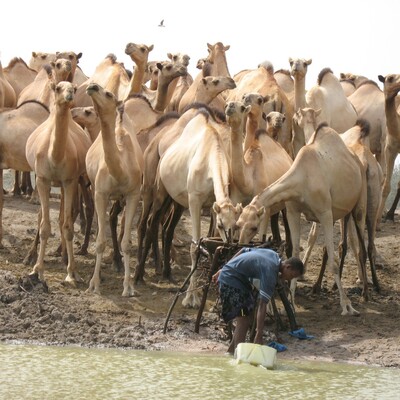
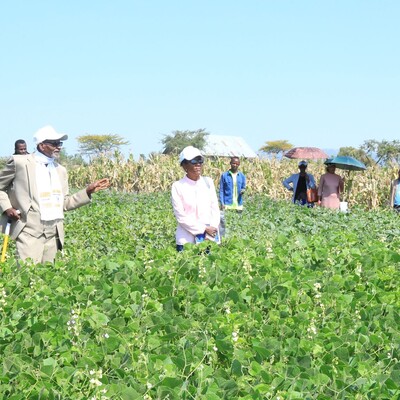
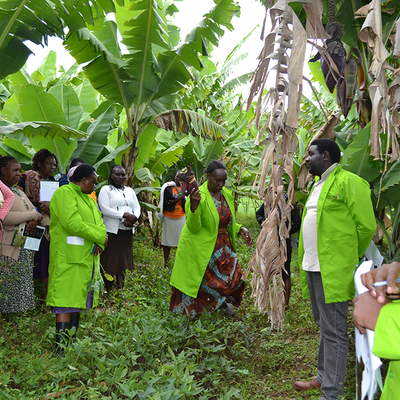
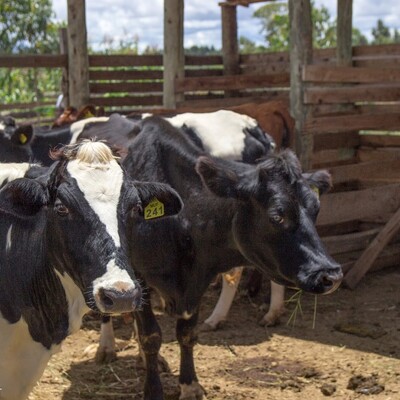
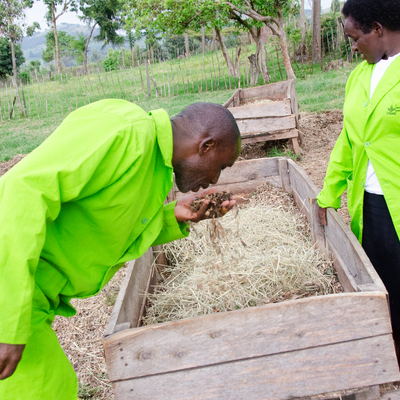
Mixed crop–livestock systems underpin the livelihoods of the majority of smallholder farmers in sub-Saharan Africa and Latin America. These systems provide multiple benefits including food, income, manure for fertilizer and resilience to shocks. ILRI and CIMMYT have worked together, particularly in Zimbabwe and Sudan on projects that look to improve mixed cropping systems through improve technologies, drought tolerant fodder species and improved market access.
Building on this strong history of partnership, this agreement formalizes a strategic commitment to deepen research collaboration across crop and livestock systems. It also recognizes the strong partnerships that each has nurtured, which will help to ensure greater impact. Signed by ILRI Director General Appolinaire Djikeng and CIMMYT Director General Bram Govaerts, the MoU harnesses the complementary strengths of both institutions to deliver greater value for smallholder farmers, investors, and national partners.
“Our shared research legacy has already delivered important innovations in food security and sustainable agriculture,” said Djikeng. “This new phase focuses on leveraging that synergy for co-creating with our partners in our targeted countries for more integrated solutions that address today’s challenges.”
Govaerts noted: “ILRI and CIMMYT bring distinct but highly complementary scientific capabilities. Together, we can co-develop transformative innovations and attract coordinated investments that achieve greater impact at scale.”
Early in 2026, research leaders from both institutes will convene to advance high-potential, demand-driven concepts into investor-ready collaborative programs. Priority areas include dual-purpose food and feed production, climate change mitigation, and resilience-building across key regions such as the Sahel, the Horn of Africa and Asia.
The collaboration also paves the way for coordinated country and investor engagement, alignment of complementary research assets, exploration of opportunities to enhance efficiency and cost effectiveness, and joint development of substantial, integrated investment propositions.
About ILRI
The International Livestock Research Institute (ILRI) is a non-profit institution working for better lives and better planet through livestock. For five decades ILRI has undertaken livestock research for development, contributing to solving the challenges facing millions of people engaged in raising animals, processing, selling, and consuming milk, meat, and eggs throughout Africa and Asia. ILRI is a CGIAR research center co-hosted by Kenya and Ethiopia and is the only CGIAR center dedicated to addressing multiple development challenges through sustainable livestock research solutions.
About CIMMYT
CIMMYT is a cutting edge, non-profit, international organization dedicated to solving tomorrow’s problems today. It is entrusted with fostering improved quantity, quality, and dependability of production systems and basic cereals such as maize, wheat, triticale, sorghum, millets, and associated crops through applied agricultural science, particularly in the Global South, through building strong partnerships. This combination enhances the livelihood trajectories and resilience of millions of resource-poor farmers, while working towards a more productive, inclusive, and resilient agrifood system within planetary boundaries.
For more information:
Michael Victor, Head, Communication, Advocacy and Knowledge Management (ILRI) – m.victor@cgiar.org
Nahyane Bakkali, External Communications Manager (CIMMYT) – n.bakkali@cgiar.org
Related Publications
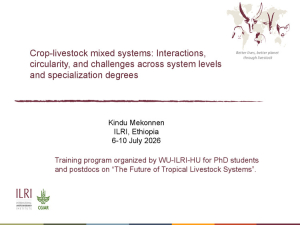
Crop-livestock mixed systems: Interactions, circularity, and challenges across system levels and specialization degrees