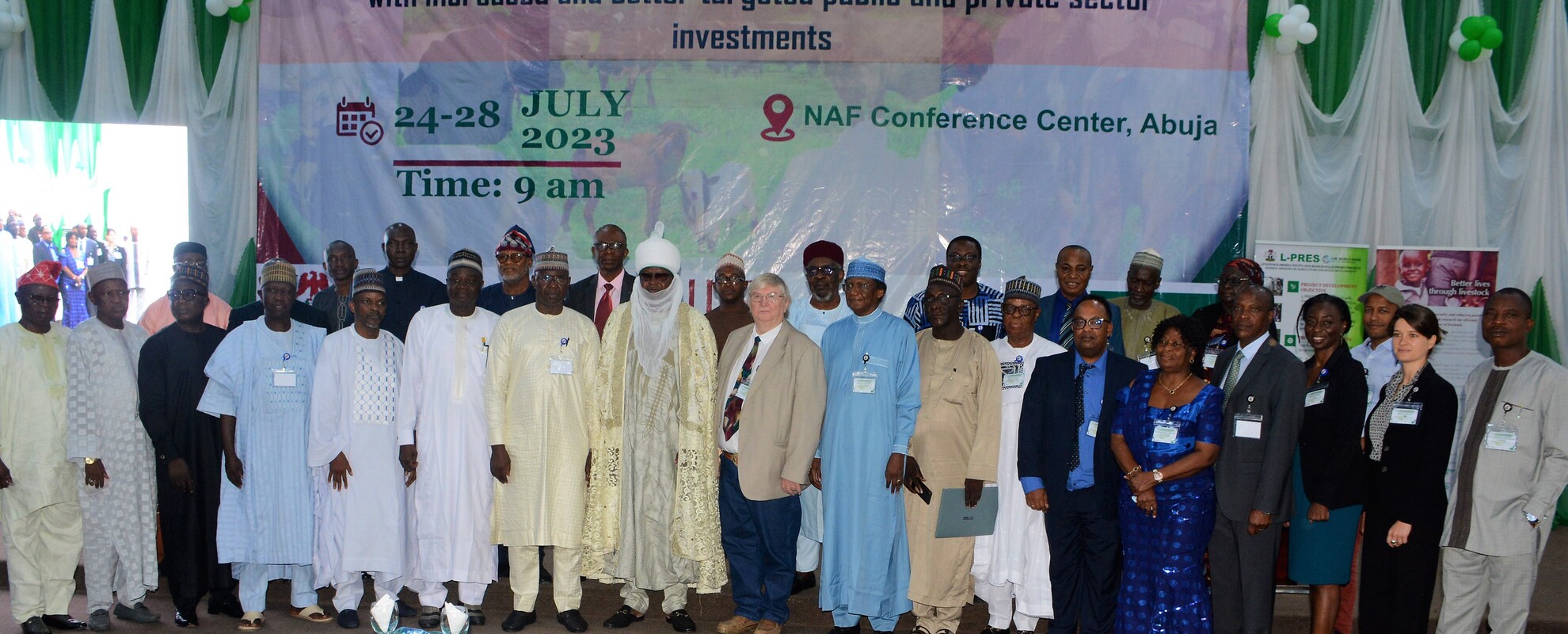
A timeline of key activities and engagements of the Nigeria Livestock Master Plan in 2025
Through direct partnership with the Federal Ministry of Livestock Development (FMLD), strong collaborations with national and international research institutions, and strategic engagements with state actors, value chain practitioners, and other partners, ILRI plays an important role in Nigeria’s ongoing livestock sector transformation. With FMLD leading the way, 2025 marked a pivotal year for the transformation of Nigeria’s livestock sector.
Here we report key engagements and milestones from ILRI’s work on the development of the Nigeria Livestock Master Plan (N-LMP), a major contribution to the country’s promising efforts on livestock sector transformation.
From technical workshops to round table discussions with policy makers and culminating in ILRI’s participation during the inaugural meeting of Nigeria’s national council on livestock development, each engagement focused on bringing to bear analytical evidence for unlocking the vast potential of Nigeria’s livestock value chains. The engagements in 2025 build on decades of technical assistance to Nigeria and in the current clime directly support stakeholders with the realization of a shared vision fora more efficient, productive, inclusive, and climate-smart livestock sector in Nigeria.
January 2025 - Workshop to validate findings from the N-LMP’s baseline study (hosted by ILRI & CIRAD)
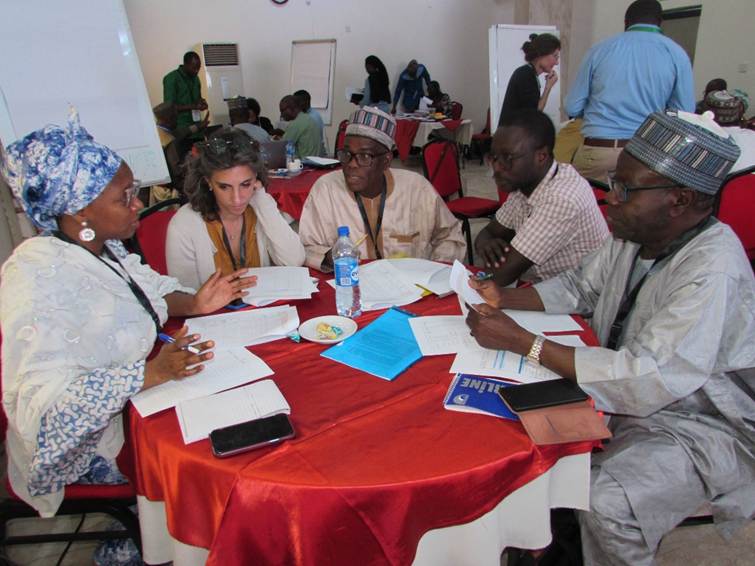
ILRI and CIRAD kicked off the year by co-organizing a workshop with technical experts to validate input data and results from the baseline assessments of the N-LMP.
Purpose: The primary purpose of the workshop was to provide an inclusive platform for dialogue where technical experts and value chain actors could validate underlying assumptions, data and findings of the baseline assessments conducted in priority livestock value chains and locations across Nigeria, evaluate relevant scenarios of livestock sector futures, and jointly design interventions to address sector constraints and initiate desired transformation of the sector under different contexts of the future.
Outcome: Key outcomes of the workshop were:
- Expert-validated databases and maps on the distributions and status (on production, animal health, etc.) of livestock animals, farming households, and specialized farms under differing operation systems and across locations.
- A documentation of stakeholder-envisioned pathways of future change in the main (social, geo-political and economic) factors driving the livestock sector.
- Prioritized technological, market-based and institutional interventions that align with stakeholders’ vision for the sector and anticipated future trends.
Given its focus on obtaining stakeholder input into the analytical assessments of the sector’s status and defining the direction for transformation of the sector, this workshop provided the evidence base upon which the rest of the N-LMP activities in 2025 were built.
“The three days spent with over 30 experts representing more than 15 livestock-focussed departments, institutions, or associations across Nigeria were well worth the effort. The wealth (and breadth) of livestock-sector experience convened, plus the very high levels of commitment shown by the experts ensures the N-LMP is being built with the most robust input possible. This workshop has been a successful example of the peer-learning that is possible and needs to be continually harnessed as Nigeria finds its feet with long-term livestock sector planning that is anchored in rigorous evidence”
- Dolapo Enahoro
April 2025 - Strategic engagements with the Minister of Livestock Development and the Presidential Livestock Reforms Implementation Committee (PLRIC).
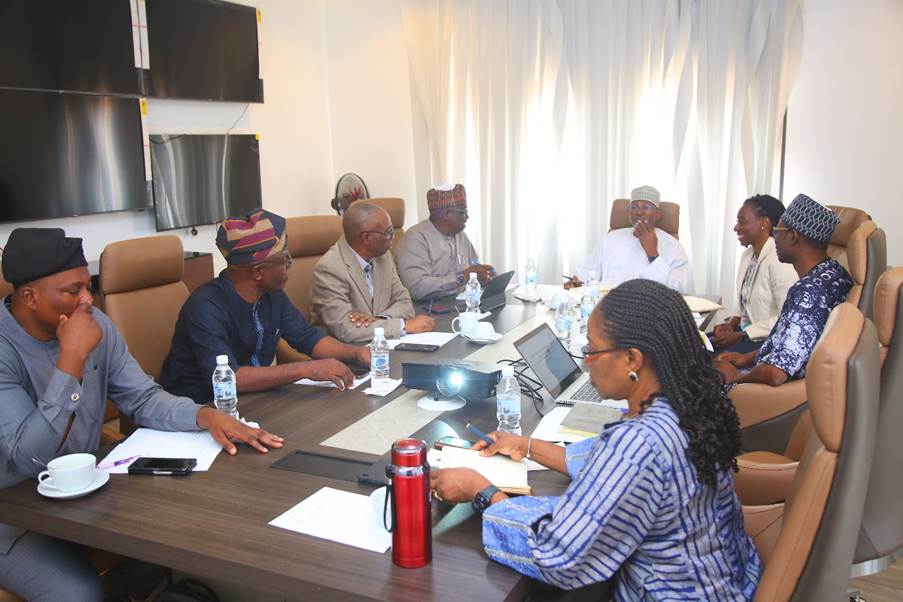
The Nigeria Livestock Master Plan (N-LMP) development team, led by ILRI senior scientist Dolapo Enahoro, met in separate meetings with the Honorable Minister of Livestock Development, Alhaji Idi Mukhtar and the Presidential Livestock Reforms Implementation Committee (PLRIC), PLRIC was established and is chaired by President Bola Ahmed Tinubu, and co-chaired by Professor Attahiru Jega to reposition livestock as central to national development, peace building, and economic modernization. One of the early recommendations of this committee was the structure, organisation and operations of the Federal Ministry of Livestock Development (FMLD), in 2024.
Purpose: To socialize the N-LMP, aligning technical direction with political vision, and ensuring that the Plan becomes a living tool for reform and coordinated action in the livestock sector.
Outcome: PLRIC committee members confirmed the N-LMP’s alignment with national reforms and its potential contributions to conflict mitigation, economic competitiveness, and inclusive development, highlighting its relevance for managing pastoral systems and resilience of the sector.
“We see this Master plan as a platform that brings science and strategy together,” the minister said. “With ILRI’s expertise, we can start building systems that deliver real value across ministries, value chains, and communities.”- Alhaji Idi Mukhtar
May 2025- State-Level Cascading at Adamawa and Oyo State.
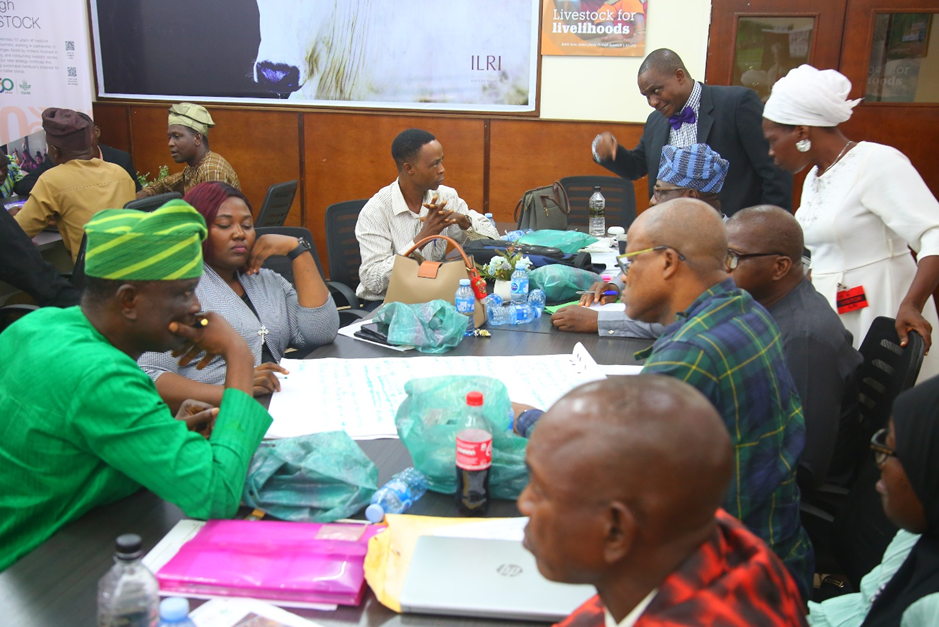
Two workshops were conducted in Adamawa and Oyo states to cascade the master plan to the state level to ensure inclusive participation and contextual relevance. These workshops brought together key state-level stakeholders from the public and private sectors, academia, producer organisations, and development partners to engage with the N-LMP and contribute to its localisation. The overarching objective of the state-level workshop was to provide a comprehensive overview of the Nigeria Livestock Master Plan (N-LMP) and facilitate a participatory process for aligning the plan with the realities, priorities, and aspirations of the state’s livestock sector.
Outcome:
Stakeholders gained a clear understanding of the N-LMP process, including the classification of production zones and systems. They were also able to review and validate the quantitative and qualitative data for each livestock value chain by identifying critical infrastructure gaps, and priority interventions to support state-level livestock development.
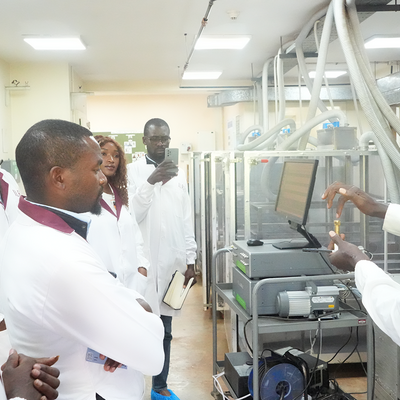
May 2025- Learning visit by Nigeria's Federal Ministry of Livestock Development (FMLD) to Tanzania.
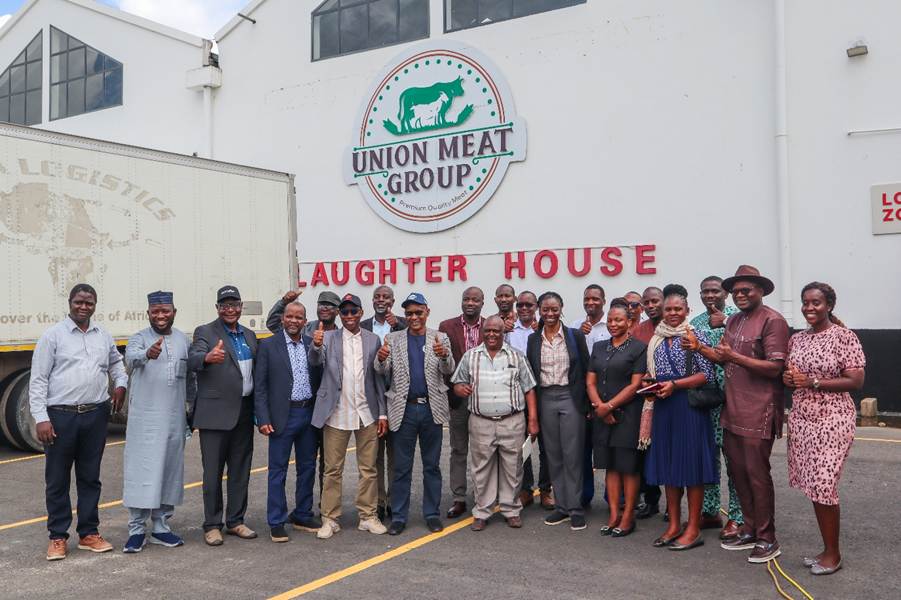
The LMP team of ILRI, facilitated a learning visit by representatives from the Nigeria's Federal Ministry of Livestock Development (FMLD) to Tanzania, which offered powerful insights into how strategic planning can translate into tangible benefits for farmers and the private sector.
Tanzania’s successful LMP was initially developed with ILRI support in 2018 and is a strong example of how government-championed initiatives can transform a sector. Hence the need for the study tour by the Nigerian delegates to have a firsthand view and learn from the success.
July 2025- Technical round table meeting with the Permanent Secretary and Directors
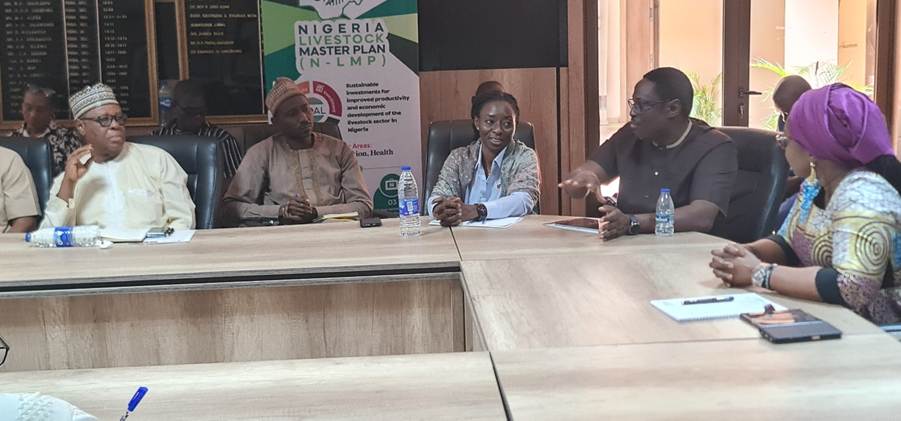
An extended technical session with the Executive Committee of FMLD, made up of the Permanent Secretary and departmental directors, was useful for harmonizing development of the NLMP to ongoing initiatives and planned activities of the Ministry.
Purpose: Meet with the recently appointed Permanent Secretary and Senior Directors (some of whom had been involved in the N-LMP process) of FMLD to provide a progress update on N-LMP development and secure commitment for its implementation,
Outcome: The ILRI team and FMLD’s Executive Committee discussed the plan in detail and agreed on some important next steps towards incorporating the N-LMP as an investment plan for the Ministry’s 10-year strategy, the Nigeria Livestock Growth Acceleration Strategy (NL-GAS).
This engagement provided a concrete decision on how the N-LMP aligns to and can help inform the strategic direction of the nascent Ministry.
July 2025 – High-level Stakeholders Engagement meeting for the Nigeria Livestock Growth and Acceleration Strategy (NL-GAS)
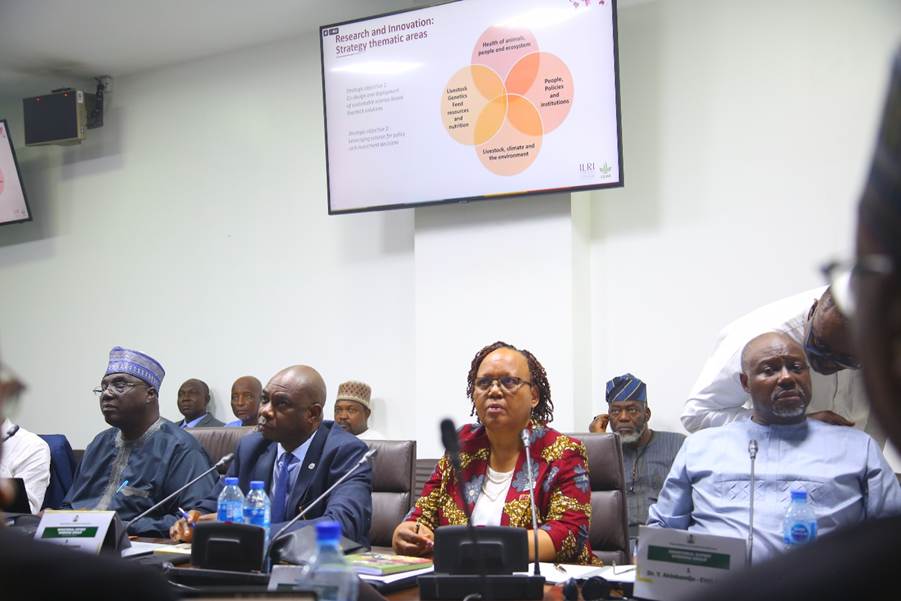
The Federal Ministry of Livestock Development presented their strategy document (NL-GAS) outlining plans to grow Nigeria's livestock sector from $32 billion to $74 billion (base case) or $91 billion (high case) by 2035. The strategy focuses on two main approaches: expanding livestock herd population and increasing productivity, with 10 key pillars including livestock value chain development, animal health, feed development, water resources, finance, peacebuilding, infrastructure, extension services, and youth/women engagement.
ILRI’s Deputy Director General, Siboniso Moyo alongside Tunde Amole, ILRI's Country Representative, jointly gave a pitch on how the NLMP activities in the country can support the execution of the ten-year strategy. Drs Moyo and Amole demonstrated how the expert-validated data, methodology, and results of the N-LMP are immediately useful as bases for implementation of the NL-GAS.
The following were highlighted as what N-LMP brings (directly) to NL-GAS and to the wider Livestock Sector Strategy:
- Priority-value chain and production-system specific assessments of the livestock sector, generating evidence for building a Livestock Sector Strategy that addresses the vast heterogeneity that is inherent in Nigeria’s livestock sector.
- Suites of technological, market-based, and institutional interventions for specific agro-ecologies and livestock production zones, value chains, and livestock production systems
- Intervention and Investment Pathways addressing divergent objectives and/or future socio-economic/geo-political contexts
- Review of all existing policies and strategy documents.
- The roles of public institutions and donor agencies to attract and support private investments in the livestock sector.
- Return on investment analysis justifying public and private investments in the sector.
Purpose: To engage with FMLD and with other national institutions in strengthening (the articulation and implementation of) the 10 pillars of NL-GAS.
Outcome: Based on the extensive and detailed work of the N-LMP, ILRI was requested to actively contribute to up to six pillars, and nominated to lead pillar 10 (on Statistics and Information) of the NL-GAS. This nomination entails convening other contributing institutions for the development of action plans for implementation of NL-GAS.
September 2025 - Final Validation of the Livestock Systems Assessment (LSA) & Livestock Sector Strategy (LSS)
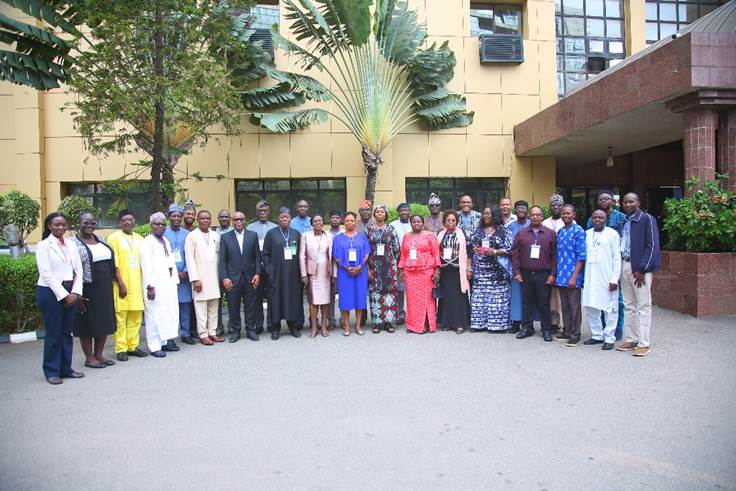
This validation workshop marked a significant milestone, concluding a process that started two years ago. Its two main objectives were to review and validate the results of the Livestock Sector Analysis (LSA), the Livestock Sector Strategy (LSS), and the roadmaps, as well as to officially transfer the validated findings from the N-LMP to FMLD and L-PRES for review, thereby ensuring government leadership, ownership, and implementation of the results.
Outcome:
The results of the Livestock Sector Analysis (LSA), the Livestock Sector Strategy (LSS), and the roadmaps were validated and endorsed by stakeholders.
September 2025 — Handover of the LSA & LSS Reports to FMLD
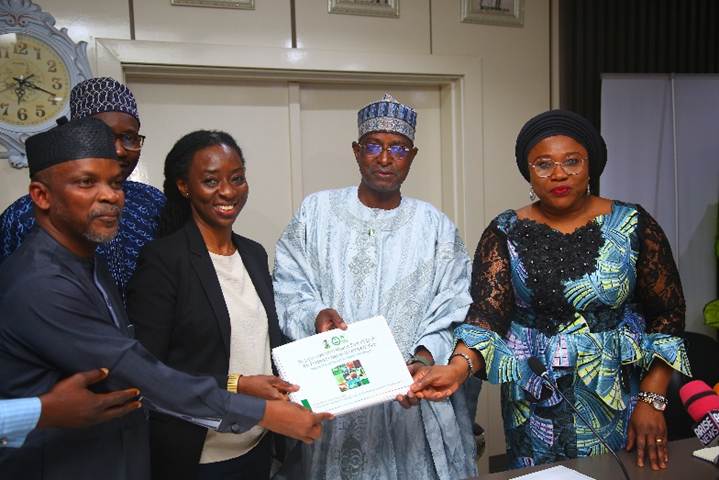
ILRI formally handed over the final technical reports to the Ministry. This engagement received extensive media coverage and has previously been documented.
Outcome:
The handover marks a major step in translating science from analysis into policy action.
September 2025 – Detailed engagement with Senior Directors of FMLD, led by the Director of Veterinary services and Chief Veterinary Officer of Nigeria (CVON)
Purpose: To socialize the LMP to the veterinary leads and other relevant departments, indicating the specific roles expected from everyone.
October 2025 — Inauguration of the National Council on Livestock Development (NCLD)
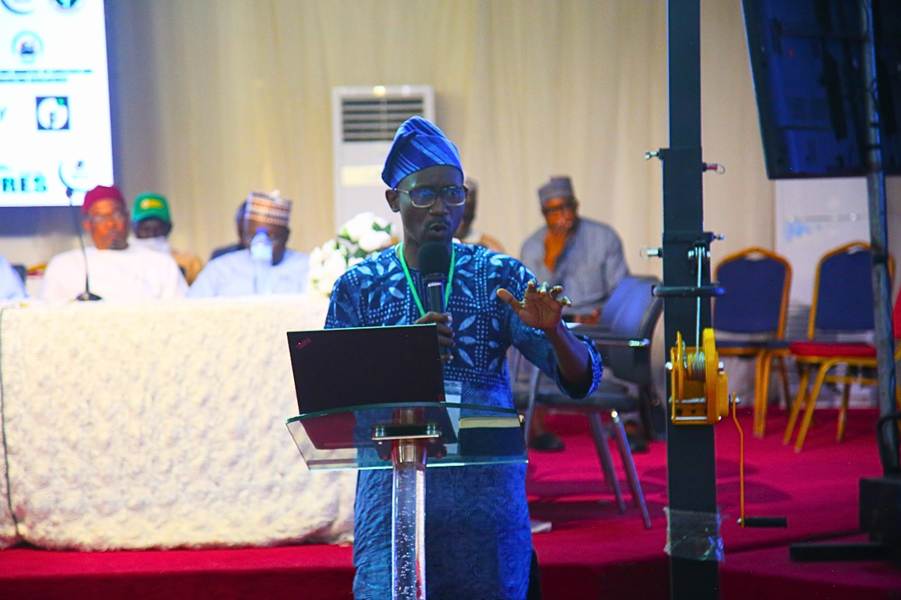
The Federal Ministry inaugurated the National Council on Livestock Development to coordinate national livestock policies, budgets, and implementation of NLMP recommendations.
Purpose: Strengthen high-level coordination
Conclusion
From the first baseline validation to the inauguration of the National Council on Livestock Development, 2025 demonstrated what becomes possible when evidence, policy leadership, and strong partnerships work together.
ILRI still continues to support Nigeria in translating the N-LMP into lasting impact leading to a rise in productivity, expanding economic opportunities, and building a more resilient livestock sector for farmers and communities across the country.
For more information on N-LMP engagements visit:
- Nigeria officially inaugurates the development of a Livestock Master Plan
- ILRI unveils the Nigeria livestock master plan at the Nigerian Veterinary Medical Association Congress and Annual General Meeting
- Building a data-driven future for Nigeria’s livestock sector
- Key insights from the Nigerian Livestock Sector Assessment workshop
- Nigeria LMP – Aligning science, strategy and political will
- Nigeria's Livestock Master Plan learns from Tanzania’s success
- ILRI presents results of Livestock Sector Analysis and Strategy for Nigeria: Major step towards a national livestock master plan
Visit the ILRI Livestock Master Plan website for more information.