Towards an inclusive and efficient beef market system in Northwest of Vietnam – Identifying appropriate interventions for market system development
Improving governance, market linkages and the technical capacity of actors could help Vietnam’s beef market system better serve as a tool for poverty reduction and food security. For this to happen, however, issues such as protocols for product traceability, and market information and supply, herd health management and food safety enforcement will need to be addressed for the market to operate more efficiently.
These are the findings of a 25-26 June 2025 market systems analysis workshop in Son La Province, Vietnam. Held under the CGIAR Sustainable Animal and Aquatic Foods (SAAF) Program, the event brought together stakeholders from across the beef value chain to map out the beef cattle market system and identify hindrances to the development of a more inclusive and efficient market.
Son La is one of the key sites for SAAF’s mission in the country. The program is building on the success of the former CGIAR Initiative on Sustainable Animal Productivity (SAPLING) to strengthen the beef value chain as a tool for poverty reduction through collaborative market systems interventions that enhance the inclusivity and efficiency of the beef market system.
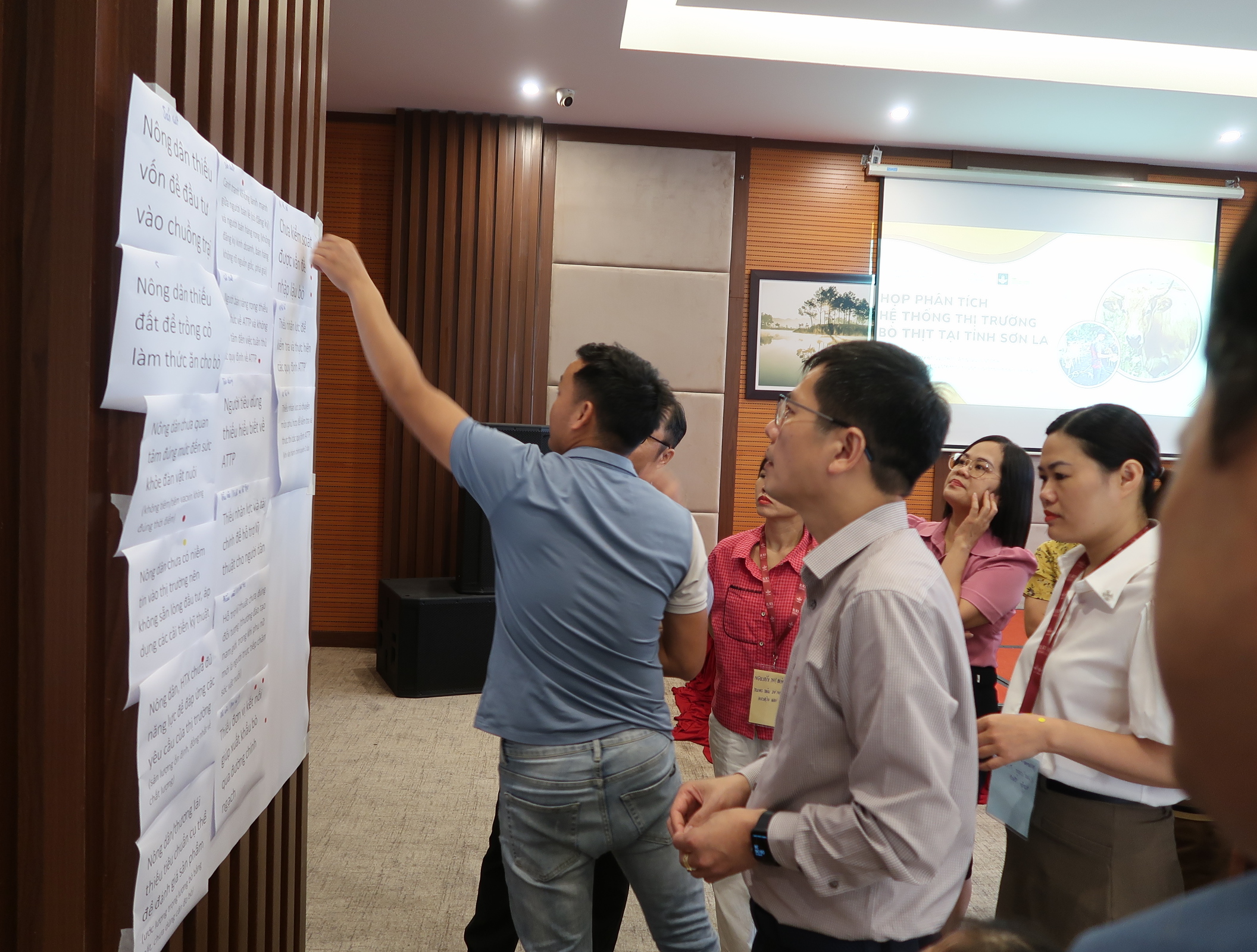
During the workshop, 25 representatives of farmer cooperatives, local traders, butchers, processors, extension officers, financial institutions and relevant government agencies analysed the roles and relationships of various actors in the market and their challenges.
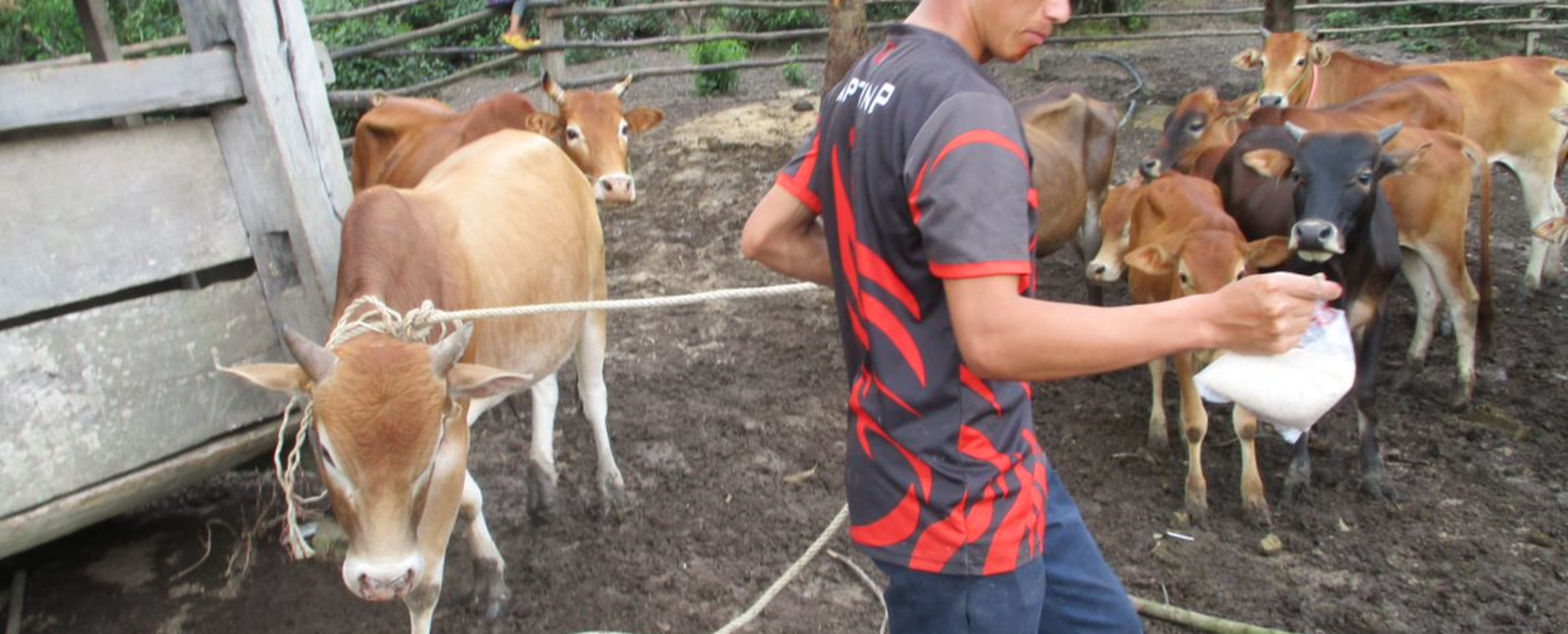
Farmers were identified as the backbone of the system, with small-scale producers accounting for 80% of total beef supply in the country. Medium and large farms, including cooperatives, contribute 15% and 5% of supply, respectively.
Traders play a key role in distributing cattle: buyers from within and outside the province maintain supply chains extending to Vietnam’s capital, Hanoi, and neighbouring provinces, as well as cross-border markets like China. The increasing use of online platforms such as Facebook and Zalo has transformed the way these traders coordinate transactions and negotiate with farmers.
Traders play a key role in distributing cattle: buyers from within and outside the province maintain supply chains extending to Vietnam’s capital, Hanoi, and neighbouring provinces, as well as cross-border markets like China. The increasing use of online platforms such as Facebook and Zalo has transformed the way these traders coordinate transactions and negotiate with farmers.
Five main constraints in the beef market system in Son La were identified:
- limited appreciation of herd health management among farmers;
- inadequate farmer capacity to meet certain market requirements (stability, volume and consistency);
- ineffective market linkages for legal cattle exports;
- inefficient control of illegal cattle imports; and
- insufficient human resources to enforce food safety regulations.
Bac Van Muoi, head of Khoa Village Cooperative, pointed out a sharp decline in live cattle prices over the past year, from 90,000 Vietnamese dongs (VND) per kilo (about USD 3.5) to 50,000–60,000 VND per kilo (about USD 2.5) yxyxyxyy. The price decrease was attributed to the closure of China's informal trade channels and rising competition from illegal imports from several southeast Asian countries. These factors affect profits and discourage farmers from maintaining or expanding their herds.
Stakeholders raised concerns over ineffective disease control, particularly due to low vaccination rates against foot-and-mouth disease and lumpy skin disease. Poor herd health not only affects productivity but also reduces consumer trust.
Workshop attendees also discussed the lack of market information transparency and traceability systems. Without standardized protocols for traceability or reliable market data, farmers and small businesses struggle to meet the requirements of high-value buyers such as supermarkets and institutional consumers.
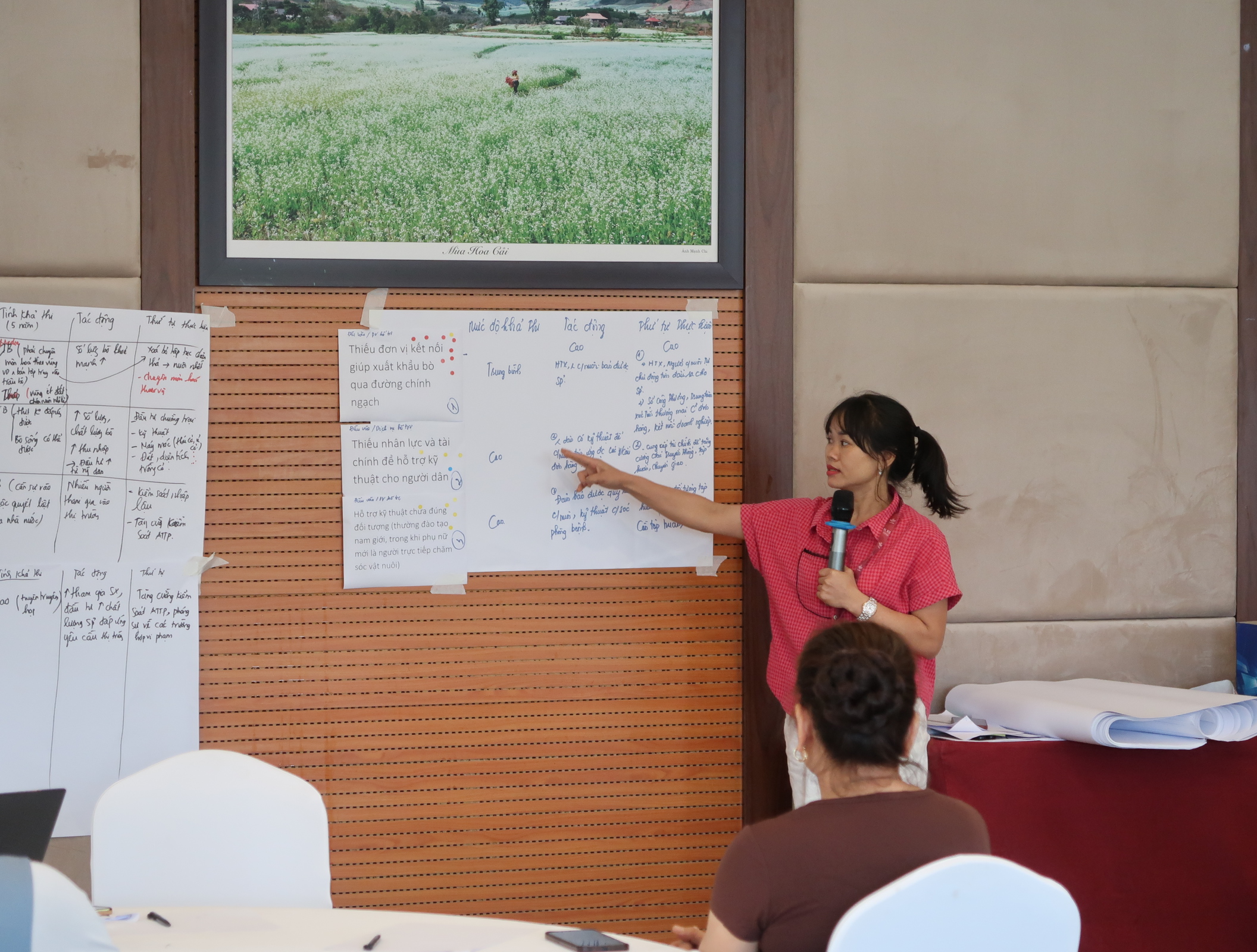
Nguyen Ngoc Toan, director at the livestock sub-department, highlighted misinformation–particularly rumours related to disease outbreaks or beef quality–as a threat to market stability.‘Strengthening risk communication and transparency is important in building consumer trust and protecting livelihoods across the value chain,’ he said.
The workshop was co-organized by Son La’s Sub-Department of Animal Health and Fisheries and the International Livestock Research Institute (ILRI). The event’s findings will inform the design of future interventions under the SAAF Program.
The Sustainable Animal and Aquatic Foods (SAAF) Program (2025-2030), a global initiative by CGIAR, is charting a path to sustainably enhance access to animal and aquatic-source foods, improve food and nutrition security, and support livelihoods. In Vietnam, the program's focus centres on transforming the beef cattle, pig, and wildlife value chains by addressing health risks and fostering economic growth through six interlinked areas of work: productivity; climate and environment; One Health; market, policy solutions and scaling; gender, youth and social inclusion; and digital and data solutions. In Vietnam, the program will be implemented in Son La and Thai Nguyen provinces and co-led by ILRI and the Alliance of Bioversity and CIAT in close partnership with national and provincial partners.
See the presentation here.


Related Publications
Exploring heterogeneous motivations for adopting cow comfort practices among smallholder dairy farmers in Kenya - A best-worst scaling approach
Prevalence of and risk factors for leptospirosis exposure in cattle in Ho Chi Minh City, Viet Nam, 2022