Hidden mastitis, higher emissions: Why early detection matters
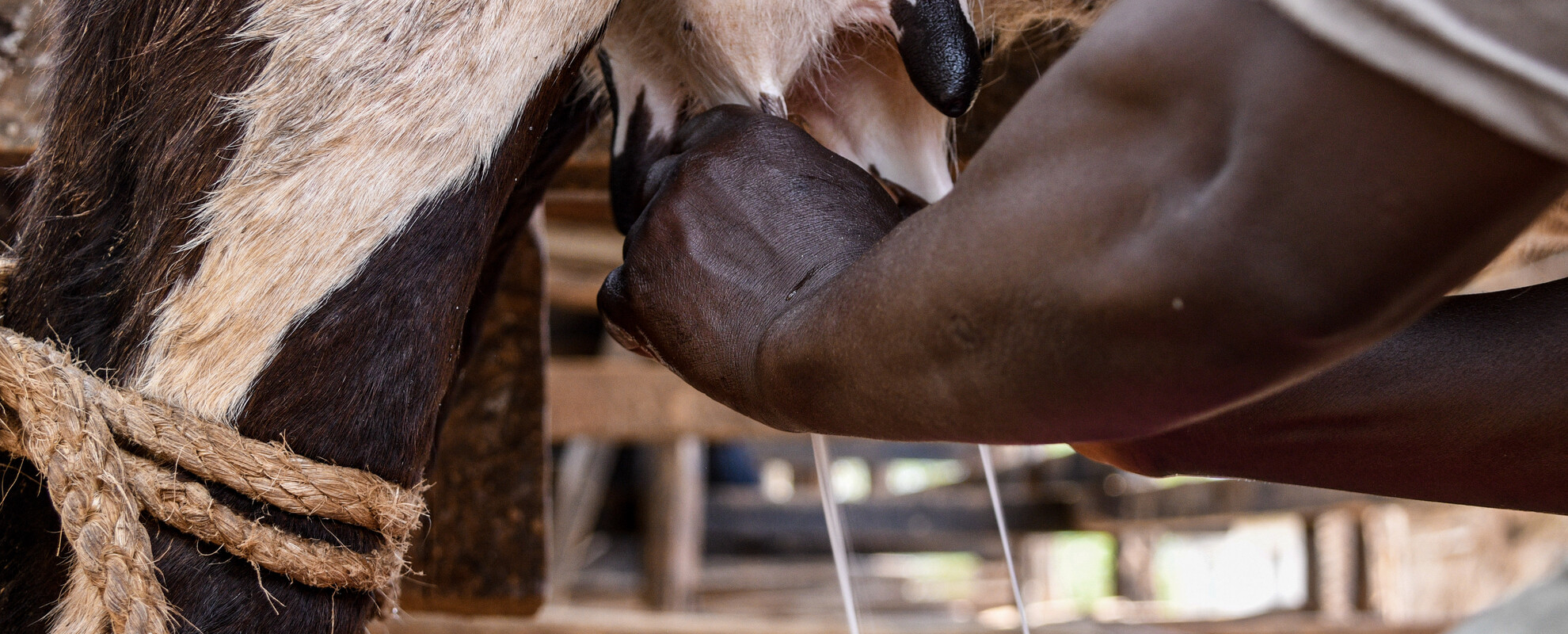
A dairy cow can look healthy, produce milk that appears normal, and harbor an infection. The cause is often mastitis –– an inflammation of the udder, usually caused by bacteria entering through the teat canal.
Mastitis occurs in two forms. Clinical mastitis causes visible symptoms, such as swollen or painful udders, abnormal milk, and reduced milk production. Subclinical mastitis, however, often goes unnoticed since cows appear healthy despite being infected.
According to research from Kajiado County and recent findings by the International Livestock Research Institute (ILRI), subclinical mastitis affects more than half of dairy cows on many Kenyan smallholder farms.For farmers who depend on a few cows for household income, even modest reductions in milk production can have significant consequences.
The effects extend beyond the farm gate. When mastitis reduces milk production, greenhouse emissions per liter of milk can increase because the cow still requires feed and energy for maintenance while producing less milk. Thus, preventing disease can help dairy systems become both more productive and more environmentally efficient.
To improve early detection and prevention of subclinical mastitis, researchers at ILRI’s Mazingira Centre, Livestock, Climate and Environment program, and Health program are advancing research on mastitis prevention and its links with dairy productivity and greenhouse gas emissions intensity. Working with partners, ILRI has developed science-based resources that help farmers detect infections and prevent mastitis.
Detecting infections early
For many farmers, mastitis has traditionally been associated only with visible signs of illness.
"Everything I knew about mastitis was clinical. I watched my herd carefully for the usual signs and symptoms and normally treated them for signs. But the California mastitis test (CMT) test showed that some cows had mastitis yet they had no symptoms," explains Margaret Wendo, a dairy farmer in Kiserian, Kajiado County.
Since adopting routine CMT screening, Wendo has been able to detect mastitis earlier and take prompt action, even when cows show no visible symptoms.
Her experience reflects a common challenge among dairy farmers. Clinical mastitis is relatively easy to recognize through its symptoms. With subclinical mastitis, however, cows often show no signs of illness while bacteria continue damaging the udder. As the infection progresses unnoticed, milk yield and quality decline, treatment costs rise, and the risk of it spreading through the herd increases.
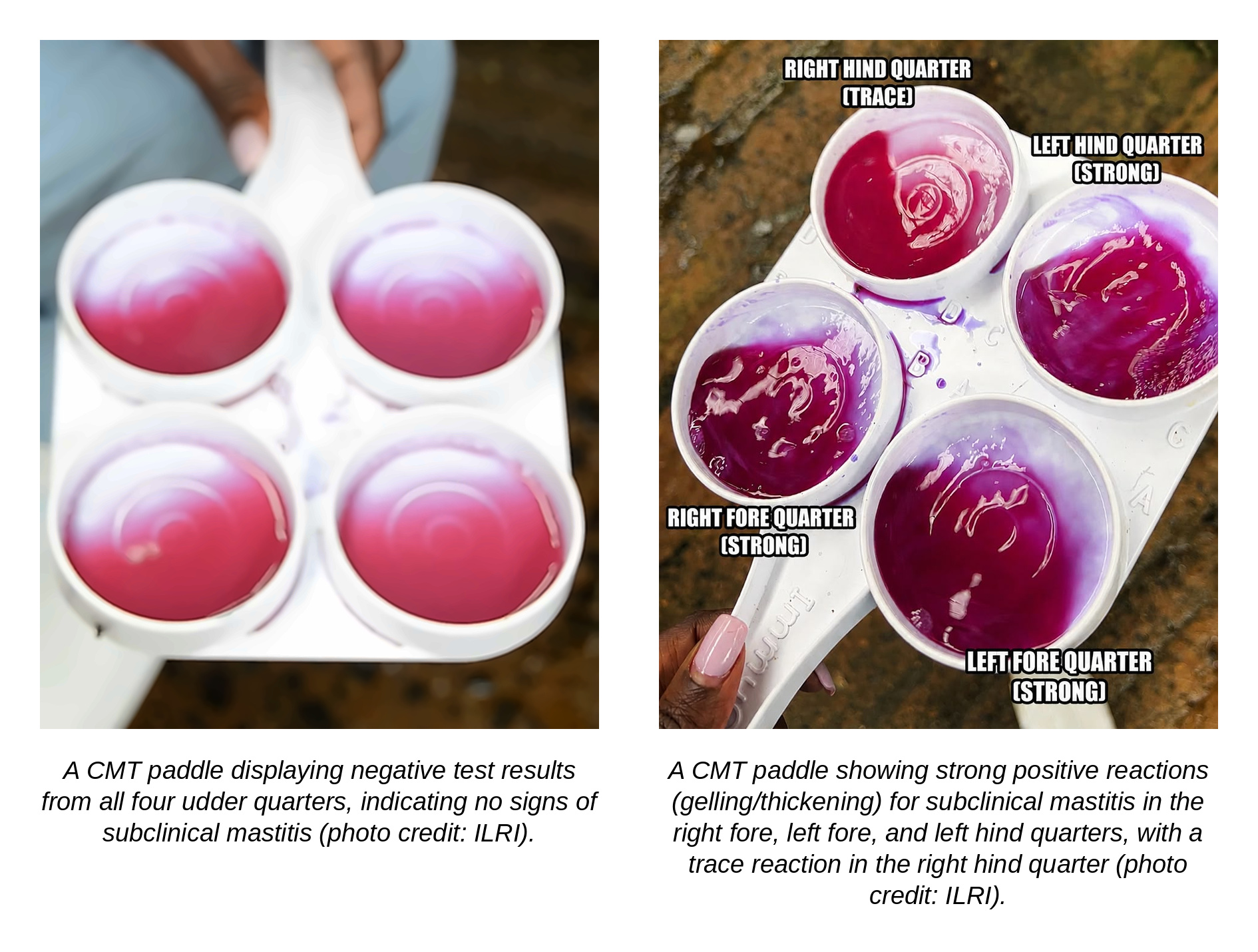
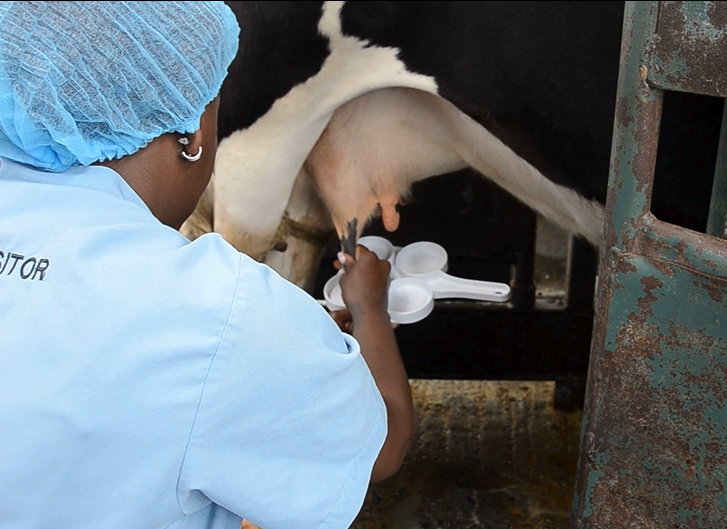
Because subclinical mastitis has no visible symptoms, routine screening can play an important role in early detection. One widely used tool is the California mastitis test (CMT), which can detect infections before milk production declines.
This simple, affordable, and rapid test involves collecting a small amount of milk from each udder quarter and mixing it with CMT reagent. If the mixture remains liquid, the result is negative. Thickening or gel formation indicates elevated somatic cell counts and a possible udder infection that may require further assessment.
Responding quickly and appropriately
Once mastitis is detected, immediate action depends on the infection type and severity.
If a cow tests positive but looks healthy and produces normal-looking milk, it may have subclinical mastitis. Farmers should regularly screen milk using CMT and seek veterinary or animal-health advice if animals are repeatedly positive. Where possible, a milk sample should be tested to confirm the infection and determine the appropriate treatment.
Changes such as clots or flakes in the milk, or a quarter of the udder being swollen, hot, or painful, may indicate clinical mastitis. In such cases, farmers should consult a veterinarian or animal health worker and, where possible, collect a milk sample before treatment. If the cow is visibly sick, for example, she stops eating, develops a fever, appears weak or dehydrated, or struggles to stand, urgent veterinary assistance is needed.
Where antibiotics are prescribed, farmers should follow veterinary guidance on the drug, dose, and treatment duration, as well as the required milk and meat withdrawal periods.
Protecting cows through good hygiene
While treatment is important, prevention remains the most effective way to protect cows from mastitis. Many mastitis infections occur during milking through contaminated hands, shared towels, poorly cleaned equipment, and through dirty bedding, manure, muddy floors, and other contaminated areas where cows rest.
Simple, low-cost practices can significantly reduce these risks. Farmers should wash their hands before milking and between cows, use a clean cloth for each cow, disinfect teats before and after milking, keep housing, bedding, and milking areas clean and dry, and consistently follow proper milking procedures.
These everyday practices help prevent infections before they occur, reducing treatment costs while improving milk quality and animal welfare. By maintaining milk production, they also help reduce emissions intensity, allowing farmers to produce more milk from the same resources.
Healthy cows, more efficient dairy systems
Preventing mastitis is about more than animal health. Healthy cows produce more milk, generate better returns for farmers, and make better use of feed and other resources.
“The connection between animal health and environmental performance is increasingly important as the livestock sector seeks practical ways to reduce greenhouse gas emissions while meeting growing demand for nutritious foods.”says Endale Gurmu, Postdoctoral Fellow in Livestock, Climate and Environment, ILRI Mazingira Centre. “Preventing diseases that reduce productivity is one way of improving emissions efficiency without requiring major investments from farmers.”
To support farmers, ILRI partnered with Mediae, producers of Shamba Shape Up, an East African agricultural television program, to share science-based guidance on mastitis prevention in its June and August 2026 episodes. The institute also developed farmer-friendly resources, including educational posters and short tutorial videos on hygienic milking, early detection, and CMT screening, translating research into everyday actions that farmers can adopt.
Each of the two mastitis episodes aired twice, in English on Saturday and in Kiswahili on Sunday, reaching Shamba Shape Up’s estimated weekly audience of 2–4 million viewers. The episodes were also posted on Mediae’s YouTube channel, Africa Knowledge Zone, where Series 16 drew more than 727,000 views, across Kenya, Tanzania and Uganda.
With practical, affordable measures already within reach, smallholder farmers can reduce the risk of clinical and subclinical mastitis, keep their cows healthier, improve milk production and quality, and contributing to more productive, lower-emission dairy systems.
Explore the knowledge products and resources
Farmer materials
- Shamba shape up, June 2026 mastitis feature (video)
- Shamba shape up, August 2026 mastitis feature (video)
- What is cow mastitis? (farmer resource)
- What is the California mastitis test (CMT)? (farmer resource)
- Hygienic milking practices to prevent mastitis (farmer resource)
- Milking routine for subclinical mastitis control (step-by-step tutorial video)
- How to perform the California mastitis test (CMT) (step-by-step tutorial video)
Scientific materials
- Preventing mastitis in dairy cows: Practical guidance on understanding, early detection, effective treatment, milking hygiene, and reducing milk losses (training manual)
Acknowledgment
ILRI gratefully acknowledges the contributions of its researchers from the Mazingira Centre and Health program, together with collaborators from Michigan State University, The Roslin Institute, Edinburgh Napier University, and Environmental Defense Fund. We acknowledge support from the Global Methane Hub, Centre for Tropical Livestock Genetics and Health, the Ballmer Foundation, Environmental Defense Fund, and CGIAR Climate Action Science Program. We also thank Mediae Company for collaborating on the farmer training resources and “Shamba shape up” feature, helping bring research-based knowledge to farming communities across East Africa.