How growing forage for livestock turned a small plot into a thriving family business
In Ethiopia's Hadiya Zone, smallholder farmers are turning small plots of oats into profitable forage seed businesses that provide supplementary income, helping families cope with feed shortages, adapt to a changing climate, and plan for the future.
For most of his life, Ayele Tibebu has farmed in the highlands of Misha district in the Hadiya Zone of Central Ethiopia. A father of five, he worked hard on his land. But a shortage of good-quality animal feed and the rising cost of keeping livestock healthy has made it difficult to get ahead.
“Without quality feed, we could not make progress,” Ayele says. “It affected the supply of our milk and meat and our ability to provide nutritious animal products for our families.”
Across Ethiopia, these challenges are growing. Erratic rainfall, shrinking farmlands, longer dry periods, and poor access to improved planting material make feed shortages more frequent, putting extra pressure on smallholder farmers who depend on livestock for food and income.
A small start
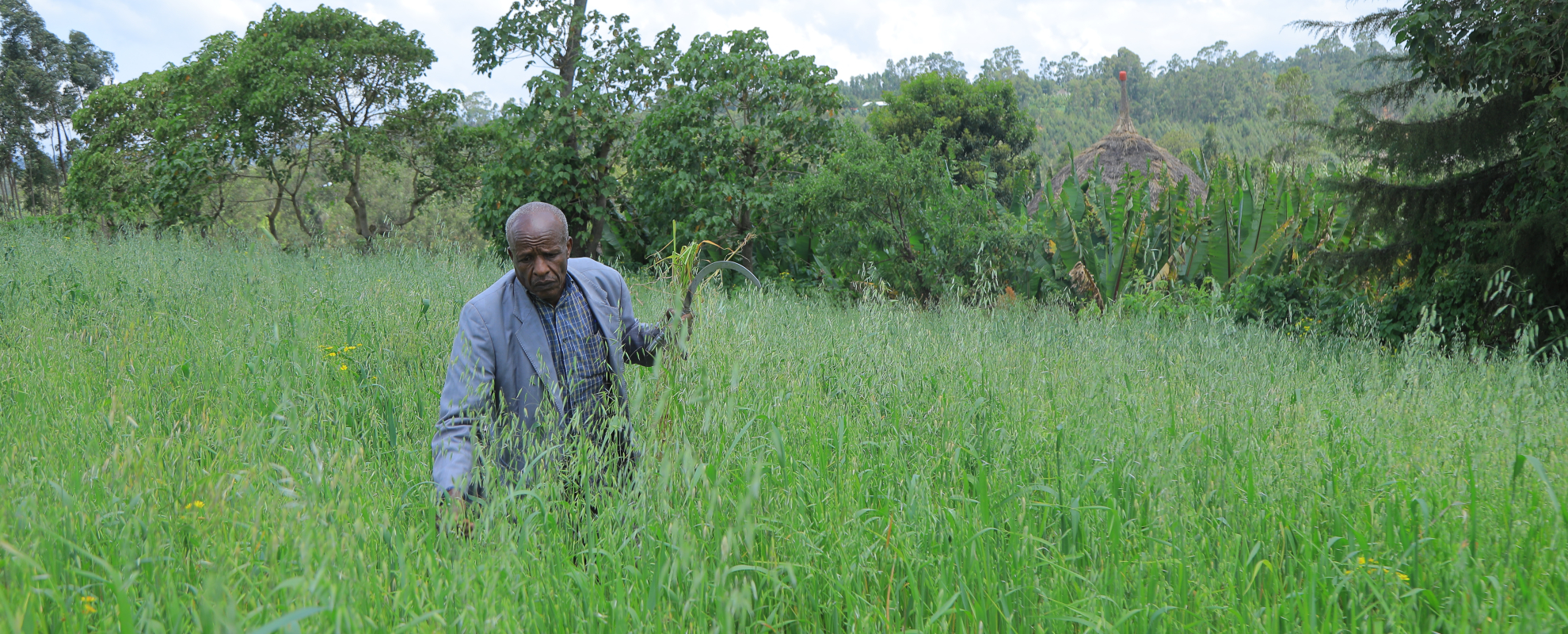
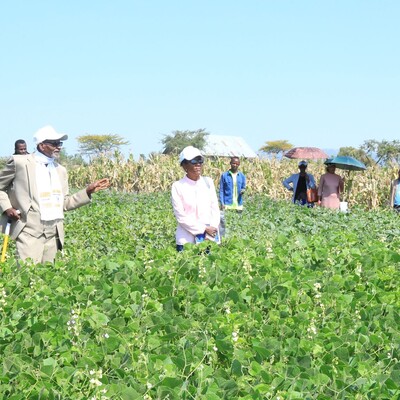
In 2024, Tibebu decided to try something new. Inspired by his cooperative's early success with forage seed, he planted oats on just 0.25 hectares of land. He managed the crop carefully, and at the end of the season, he harvested 600 kilos of high-quality oat seed. Demand for improved forage seed in the area was high, and he sold his entire harvest for ETB 45,000 ( USD 288).
That early success opened new opportunities. In 2025, he expanded to 0.375 hectares and produced 900 kilos of oat seed. As demand grew, prices rose sharply to ETB 120,000 ( USD 770) per ton. Forage seed quickly became one of the most profitable activities on Tibebu’s farm.
Investing in the farm and the family
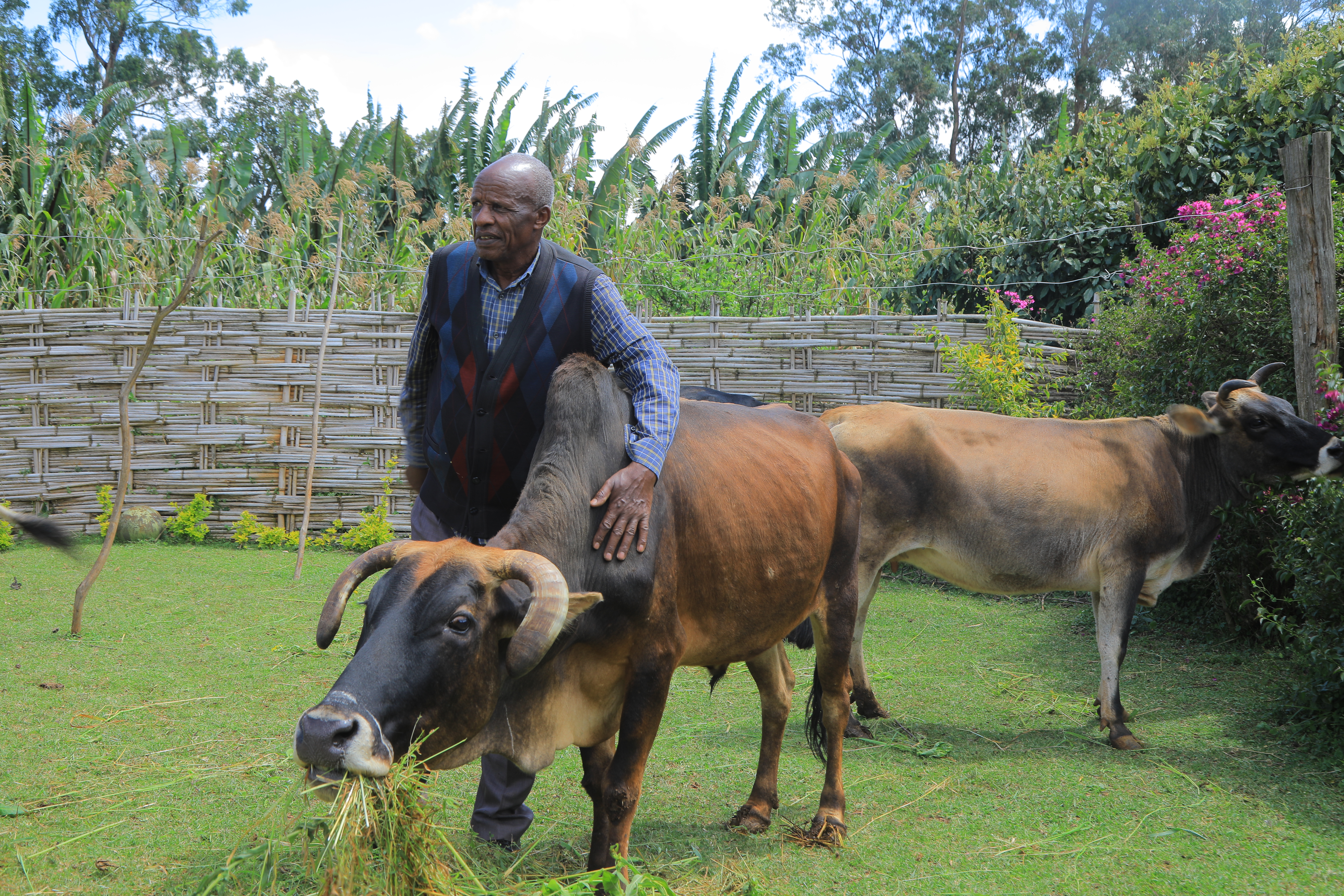
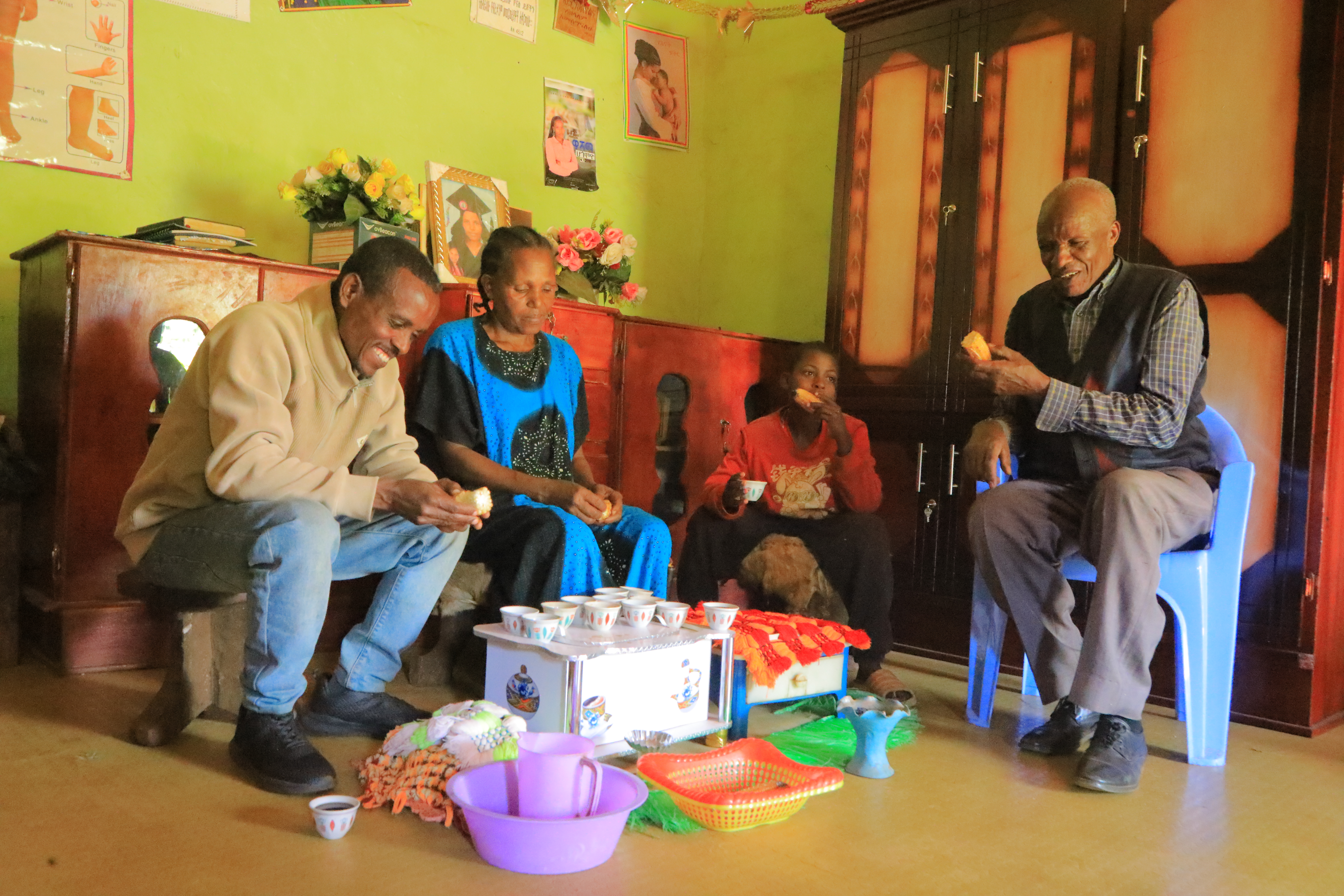
Tibebu used his forage seed earnings, together with other household income, to invest in his farm. He bought an ox, meaning he no longer has to rent animals for ploughing. He also bought a Jersey heifer to boost the family's milk supply, and he planted high-value fruit trees, such as avocados, to diversify income and nutrition sources for his family. He now has enough regular income to cover essential costs—such as fertilizer and improved seed—without struggling.
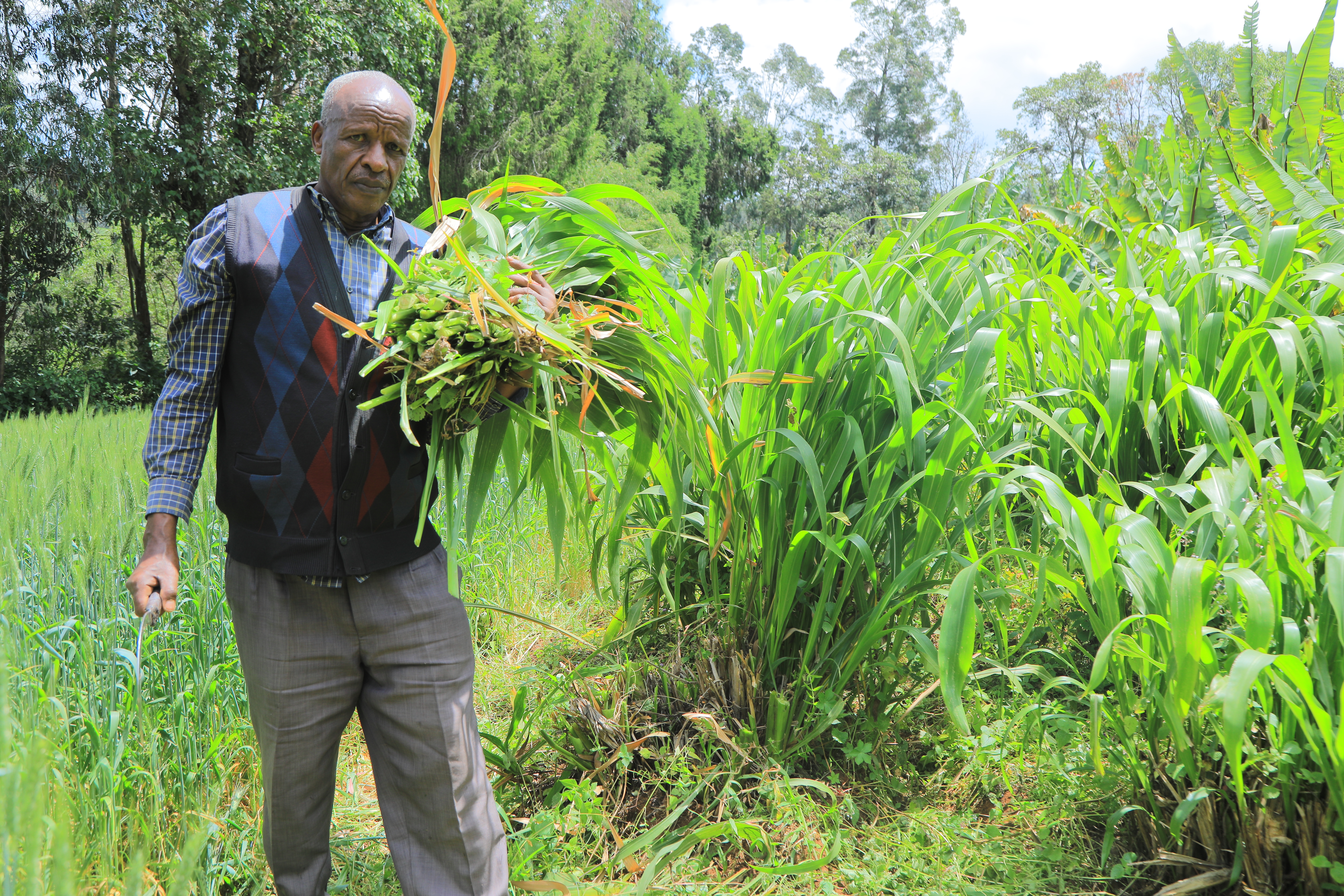
Tibebu has also improved the way he feeds his own livestock. Around his homestead, he now grows several improved forage grasses, including phalaris, Guatemala, elephant, and desho. Because these grasses grow during different seasons, his animals have nutritious feed all year round, and the farm is better protected when the rains are poor or late. Perennial grasses such as desho also keep the soil covered, which helps to reduce erosion in sloping areas.
“I started on a very small piece of land,” Tibebu says. “But that small start has given my family a more secure future.”
Part of a bigger effort
Ayele's journey is part of a wider initiative to commercialize forage seed. It is led by the International Livestock Research Institute (ILRI) through the TAAT II project, working with local extension and research institutions. Farmers receive Early Generation Seed (EGS)—high-quality seeds and cuttings developed by research centers—along with training in seed production, certification and marketing.
The Licha Farmers’ Union, a key ILRI partner in the Central Ethiopia region, brings together 83 primary cooperatives representing 10,000 member farmers. One of these groups is the Gombora Primary Cooperative, where Tibebu serves as chairman. Members pooled 25 hectares of land for forage seed production and together produced 19 metric tons of quality declared seed (QDS).
The regional agricultural-input quality-control and quarantine authority sets the standards, and checks that only seed meeting them reaches farmers. With support for seed quality assurance and certification and access to reliable markets, members were able to obtain fair prices for their seed.
“Quality assurance and a reliable market made the difference. Once farmers trusted both, they invested their land and their time in producing seed.” says Million Gebreyes, a social scientist at ILRI.
Looking ahead
For the 2027 season, Ayele plans to expand his oat seed plot to 0.5 hectares. As a model farmer, he is showing his neighbors that forage seed is more than just feed for livestock. It is a real business opportunity.
“This represents an essential shift for Ethiopia's livestock sector,” Gebreyes, says. “When farmers move into forage seed agribusiness, they drive local economic growth and ensure a steady supply of quality feed, which is the foundation of better livestock productivity.”
“Researchers and governments now need to build on this forage-seed commercialization pilot to ensure broader forage biomass commercialization,” adds Kindu Mekonnen, a senior scientist in crop-livestock systems at ILRI.
There is a substantial and growing gap in both the availability of quality forage and reliable market linkages between rural, peri-urban, and urban dairy milk sheds, as well as in livestock fattening systems. Strengthening commercial forage seed production can help to establish a reliable supply for farmers, and creating opportunities for people throughout the value-chain to produce and market forages as a viable business.
“Better feed also matters for the climate,” Mekonnen says. “Well-fed animals produce more, which means lower greenhouse gas emissions for each liter or kilogram of milk or meat. A reliable local seed supply also means farmers can plant forages when they need them, rather than waiting on distant sources in a difficult season.”
Farmers can produce formal forage seed when the right institutional arrangements are in place, Mekonnen says. The next step is scaling up the approach, with support from zonal and regional governments. Stronger links between EGS production at Worabe Agricultural Research Center and organized seed producer associations will also be important.
This work is supported by the TAAT II project and the CGIAR Sustainable farming and scaling for impact science programs.
Related Publications
Crop-livestock mixed systems: Interactions, circularity, and challenges across system levels and specialization degrees